Pool Automation Buying Guides
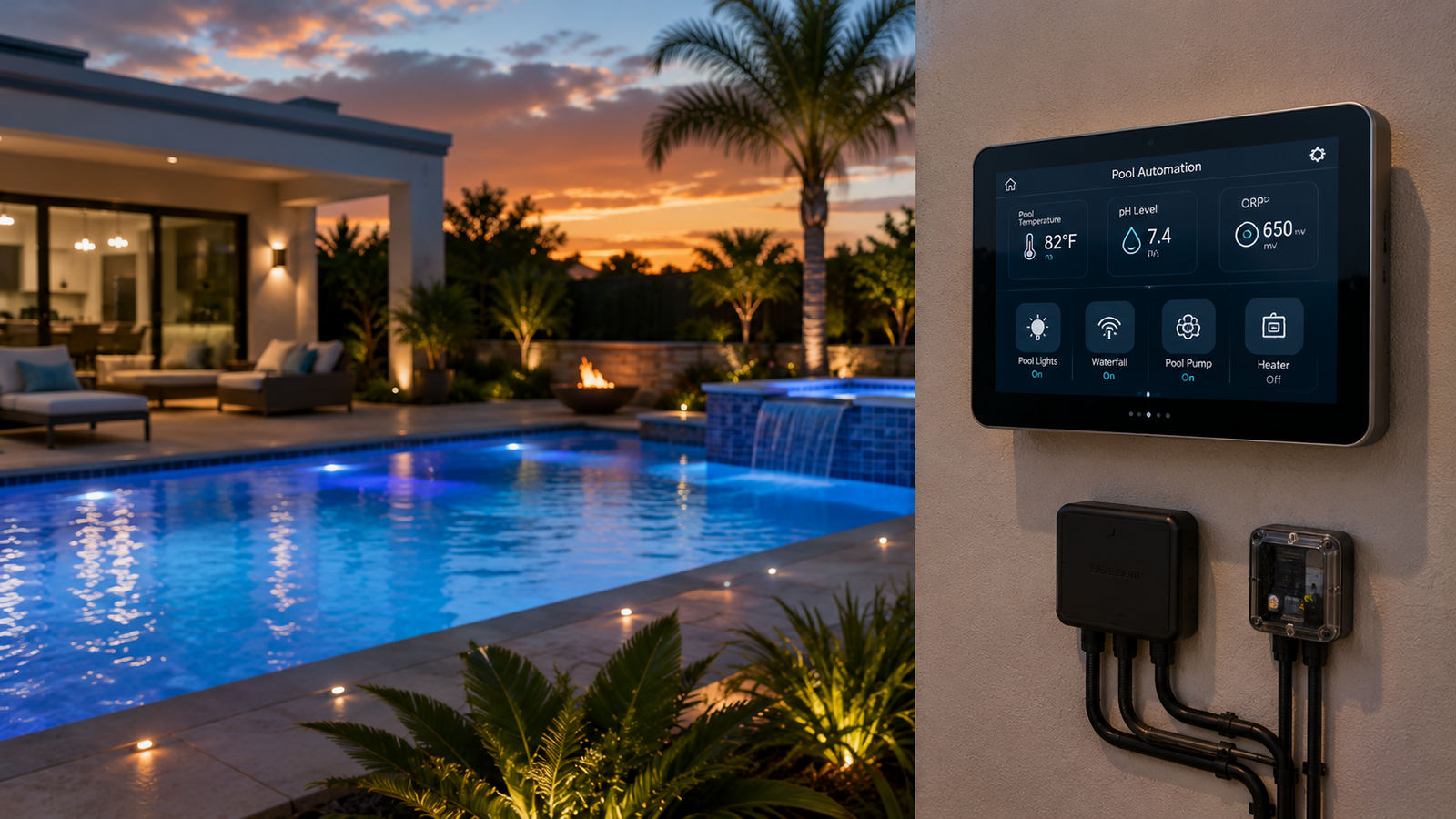
Plan automation around the equipment you already own, the circuits and valves you need to control, app expectations and future expansion.
What to compare first
Browse pool automation buying guides covering pumps, heaters, valves, lights, sanitizers, scheduling, app control and equipment compatibility.
Inventory equipment
List pumps, heaters, lights, sanitizers, valves, water features and any spa functions.
Check compatibility
Verify voltage, communication protocols, relay capacity and manufacturer support before buying.
Plan expansion
Leave capacity for future circuits, valves or features instead of sizing only for today.
Start with the guide that matches your decision
Use this index to move from a broad overview to the specific sizing, compatibility or comparison question you need to solve. Each linked page is part of the approved Pool Equipment Guide content map.
Understand the main options
| Option | What distinguishes it | Focus | Current selection |
|---|---|---|---|
| Relay control | Switches compatible loads on and off; capacity and voltage must match. | Key distinction | View Options |
| Digital communication | Can expose speed, temperature or diagnostic controls when supported. | Key distinction | View Options |
| Valve actuator | Moves compatible valves between programmed positions for pool, spa or features. | Key distinction | View Options |
Choose by compatibility before features
Define the job
Write down the pool type, size, climate, debris or heating load, and the result the equipment must deliver.
Verify the system
Check plumbing, flow, electrical service, control compatibility, physical space and manufacturer requirements.
Compare daily operation
Consider schedules, cleaning steps, noise, water use, energy demand and how often you will interact with the equipment.
Plan for service
Look at access, consumables, replacement parts, winterization and the availability of qualified service where needed.
Compare more than the purchase price
Installation, operating energy, water use, cleaning frequency, consumables and repair access can change the practical value of pool equipment. Use Best Pool Automation Systems for the broad decision, then narrow the choice with All Pool Automation and Pool Automation Comparisons.
Common comparison errors
Frequently asked questions
Can pool automation control any variable-speed pump?
Not necessarily. Basic relay control and full digital speed control are different, and compatibility depends on the pump and controller communication support.
How many relays do I need?
Count every independently controlled load, then consider future additions. Some equipment uses digital communication and may not consume a relay in the same way.
Can automation control a pool and spa combination?
Yes, many systems support shared-equipment pool/spa configurations with valve actuators and temperature controls. The plumbing layout must be compatible.
Does pool automation need internet access?
Local schedules may continue without internet on many systems, but remote app access and cloud features typically require network connectivity.
Can I automate an existing pool?
Often yes. Retrofit feasibility depends on the electrical panel, equipment compatibility, available space and communication wiring.
Should all equipment be the same brand?
A single ecosystem can simplify compatibility, but mixed-brand systems may work when supported. Verify every major component before purchasing.
Who should install pool automation?
Because automation panels involve line voltage, bonding, controls and sometimes gas-heater interlocks, installation should be handled by qualified professionals following code and manuals.
What should I document before setup?
Record equipment model numbers, voltage, breaker assignments, valve functions, desired schedules and network details. This makes configuration and troubleshooting easier.
Use the specific guide for your pool
Begin with compatibility and the actual job the equipment must perform. Then compare operating demands and ownership cost before selecting a product category.