
Smart Pool Sensors Explained
Understand what connected pool sensors actually measure, how readings reach an app and why calibration and manual confirmation still matter.
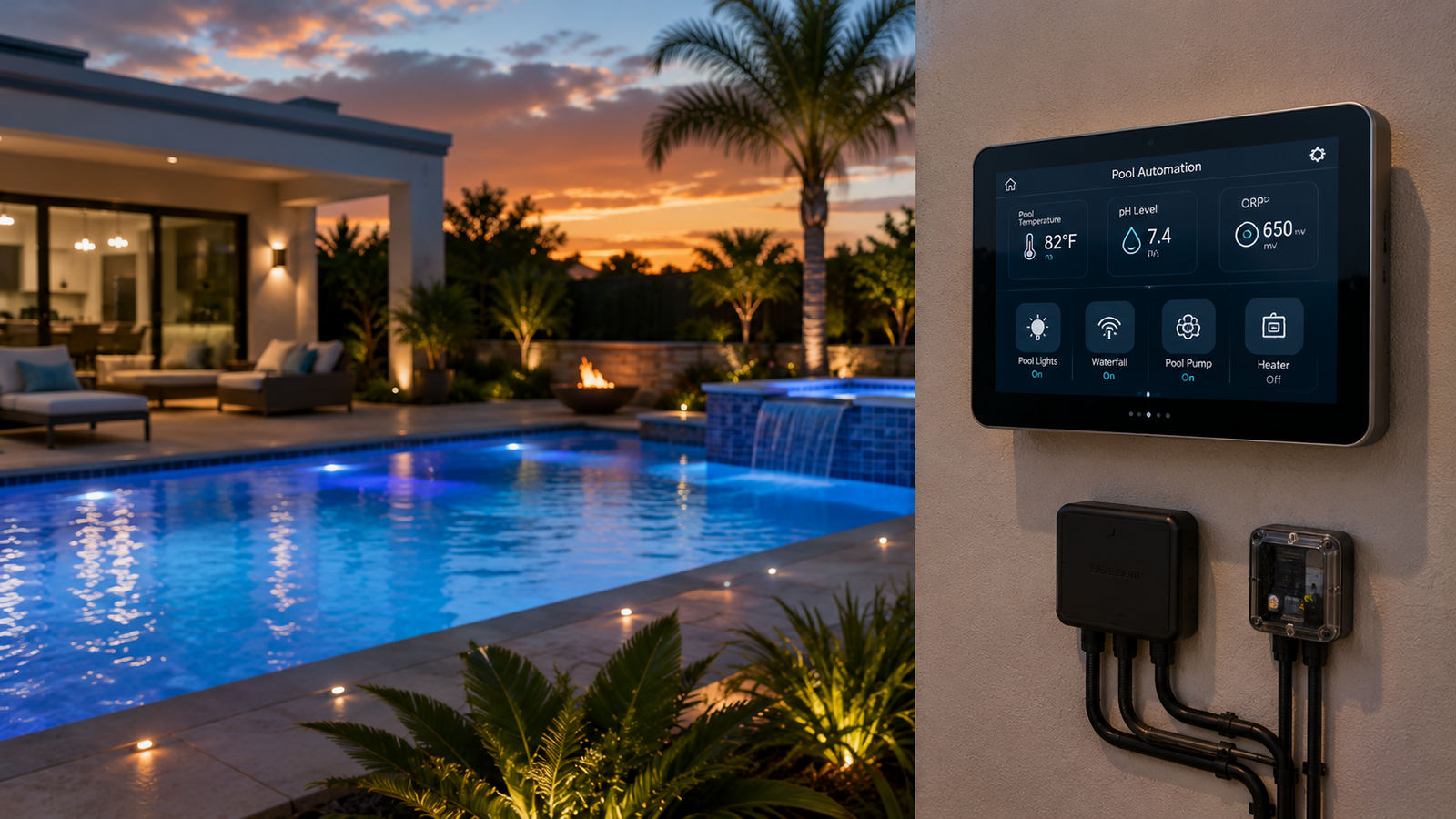
What pool owners should know first
The key principles below help separate routine ownership tasks from model-specific or professional service work.
Not all readings are direct
Temperature and pH may be measured directly; sanitizer status may be inferred through ORP or other methods rather than a direct free-chlorine reading.
Calibration matters
A sensor can provide precise-looking numbers that are wrong when the probe is dirty, aged or poorly calibrated.
Use alerts as prompts
Confirm unusual readings with a reliable manual test before making a large chemical correction.
Common smart pool sensor types
Use these points as a practical decision and maintenance framework, then follow the exact manual for your equipment.
Temperature
Thermistors or digital sensors track water and sometimes air or solar temperature.
pH
A glass-electrode probe estimates acidity and requires cleaning, calibration and proper storage.
ORP
Oxidation-reduction potential reflects the water’s oxidizing environment but is influenced by pH, cyanuric acid and other conditions; it is not a universal direct chlorine measurement.
Conductivity or salinity
Sensors estimate dissolved-ion concentration and may support salt-system monitoring, but results depend on temperature compensation and calibration.
How readings become alerts
Use these points as a practical decision and maintenance framework, then follow the exact manual for your equipment.
Sampling location
Inline probes need adequate flow and correct plumbing orientation; floating monitors sample where they drift.
Connectivity
Readings may travel through Bluetooth, Wi-Fi, a gateway or an automation controller.
Thresholds
Apps compare readings with configured ranges and send alerts, trends or dosing commands where supported.
Calibration and validation
Use these points as a practical decision and maintenance framework, then follow the exact manual for your equipment.
Use fresh standards
Calibrate with the solutions and interval specified by the manufacturer.
Keep probes clean
Scale, oils and biofilm can slow response or shift readings.
Cross-check manually
Use a dependable drop test, photometer or other approved method to confirm unexpected results.
Common mistakes to avoid
Frequently asked questions
What can smart pool sensors measure?
Depending on the system, they may measure temperature, pH, ORP, conductivity, salinity or flow-related conditions. The app’s displayed labels should not be assumed to represent a direct laboratory measurement.
Do smart sensors replace manual pool testing?
No. They are useful for trends and alerts, but regular manual testing is still needed to confirm sanitation and balance, especially before chemical adjustments.
What is ORP in a pool?
ORP is an electrical measurement of the water’s oxidizing potential. It responds to sanitizer activity but is also affected by pH, cyanuric acid and contaminants.
How often should a pH probe be calibrated?
Use the interval in the sensor manual and recalibrate whenever readings drift or after cleaning or replacement. Frequency depends on probe design and operating conditions.
Why does the app disagree with my test kit?
Possible causes include sampling location, probe fouling, calibration error, temperature effects, old reagents or a test-method limitation. Repeat both tests correctly before deciding which result is credible.
Can a floating sensor control a chemical feeder?
Some ecosystems support automated dosing, while others provide monitoring only. Automated chemical control requires compatible hardware, safeguards and careful commissioning.
Do salt sensors measure chlorine?
Usually no. Salinity or conductivity indicates salt concentration, not the amount of free chlorine currently sanitizing the water.
What should I do after a sensor alert?
Check circulation and inspect the sensor, then confirm the reading with a reliable manual test. Make measured corrections based on pool volume, product label and complete water chemistry.
Related Pool Equipment Guide resources
Use the manual, verify conditions and make measured changes
Understand what connected pool sensors actually measure, how readings reach an app and why calibration and manual confirmation still matter. Match every procedure to the exact equipment model, pool configuration and local requirements. Stop and use qualified service whenever the task involves hazardous voltage, gas, combustion, refrigerant, structural work or an unsafe chemical condition.