Pool Equipment Buying Guides
Browse buying guides for pool cleaners, pumps, filters, heaters, automation, covers, chemicals and accessories, with sizing and compatibility advice.
A practical route through pool equipment buying guides
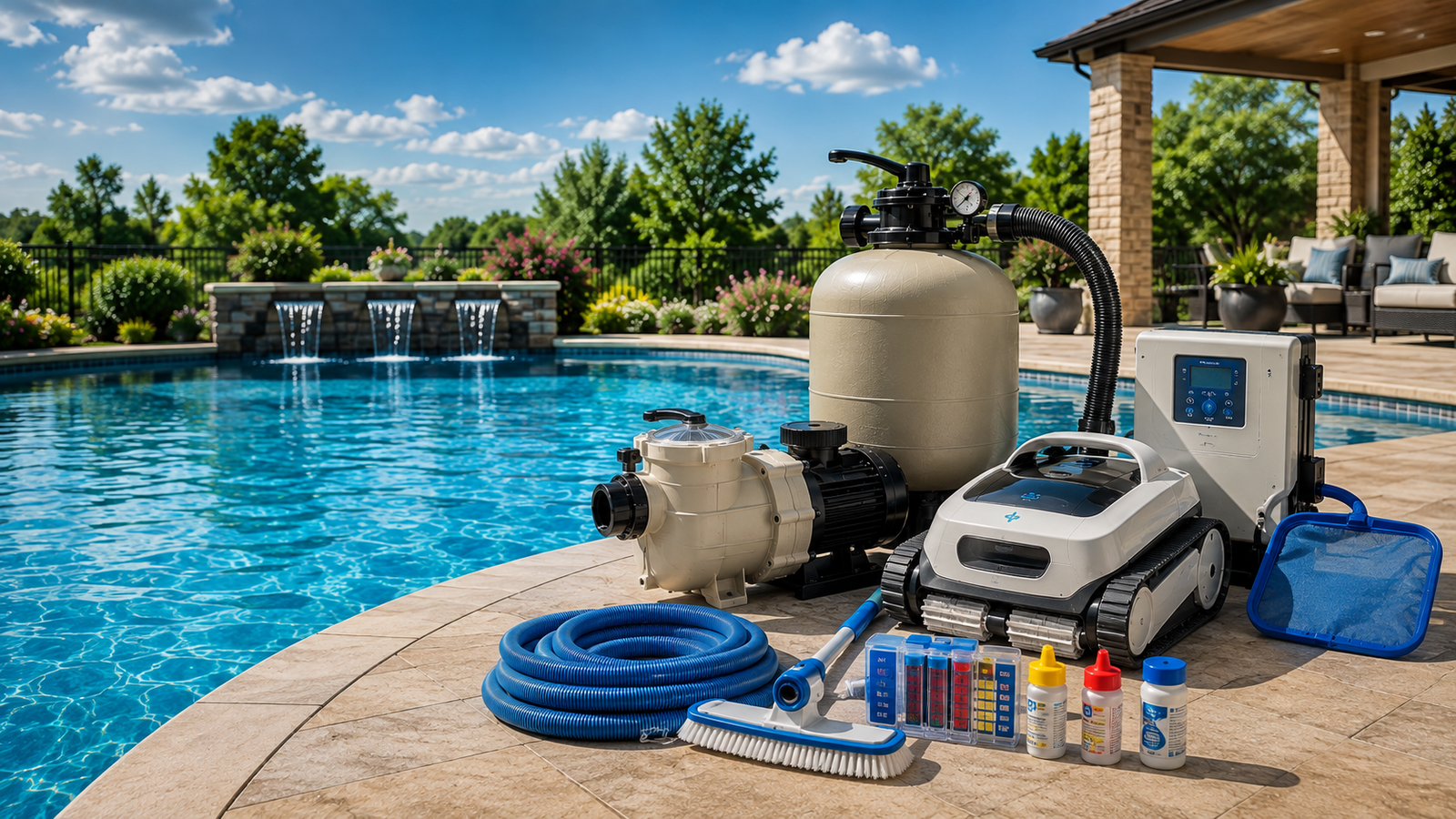
This buying-guide index organizes the major equipment decisions in the order they affect the system: circulation, filtration, sanitation, heating, cleaning, controls, safety and daily maintenance.
Define compatibility
Record pool type, dimensions, surface, plumbing, electrical service and existing equipment before comparing features.
Compare maintenance
Consider cleaning, consumables, service access, replacement parts and the skills required for safe upkeep.
Plan equipment together
Confirm that flow, controls, connections and operating ranges work with the rest of the pool system.
What this category covers
Use these sections to narrow the equipment or information path that fits your pool.
Cleaners and vacuums
Compare robotic, suction, pressure-side and manual cleaning approaches.
Pumps and circulation
Size flow and pressure while prioritizing efficient variable-speed operation.
Filters
Choose cartridge, sand or DE filtration around flow, maintenance and water goals.
Heating
Compare gas heaters, heat pumps and solar assistance by climate and use pattern.
Sanitation and chemistry
Select chlorination, salt systems, testing and chemical-management tools.
Covers, lighting and automation
Evaluate convenience, safety, heat retention, controls and electrical compatibility.
What to verify before buying
Start with the pool
Document volume, surface, plumbing, electrical service and operating goals.
Size the system together
Pump, filter, heater and plumbing must work as a system rather than isolated products.
Compare ownership cost
Include energy, consumables, service access and replacement components.
Use qualified trades
Electrical, gas, structural and complex plumbing work may require licensed professionals and permits.
Compare the main decision areas
| Decision | What to check | Why it matters |
|---|---|---|
| Compatibility | Dimensions, voltage, connections, controls and operating range | Prevents mismatched equipment and unsupported features |
| Capacity | Pool volume, flow, load, climate and usage | Ensures the equipment can handle realistic peak demand |
| Maintenance | Cleaning steps, consumables, access and replacement parts | Shapes long-term cost and reliability |
| Installation | Plumbing, electrical, bonding, permits and qualified trades | Supports safe, code-compliant operation |
Use a system-first buying process
Begin with the pool and equipment-pad facts, then compare products that meet those constraints. Review manufacturer manuals before purchase because model families can differ in voltage, flow limits, installation clearances, communication protocols and maintenance procedures.
Common category-index mistakes
Frequently asked questions
Which pool equipment should be chosen first?
Start with the hydraulic system: plumbing, pump and filter. Heating, sanitation, automation and cleaning equipment should be selected around that foundation.
Can pool equipment be oversized?
Yes. Oversizing can increase cost or create operational problems, although some components benefit from reasonable capacity margin. Use manufacturer sizing data and system calculations.
What information is needed before buying pool equipment?
Know pool volume, surface, plumbing sizes, electrical service, equipment-pad space, climate and desired operating schedule.
Should all pool equipment be the same brand?
It is not always necessary, but using one ecosystem can simplify automation and communication compatibility.
How important is energy efficiency?
Pumps and heaters can be major operating loads. Efficient sizing, variable-speed operation, covers and smart schedules can materially affect costs.
When is professional installation recommended?
Use qualified professionals for line-voltage electrical work, gas connections, bonding, major plumbing changes and code-sensitive safety equipment.
How should warranties affect a buying decision?
Review warranty duration, installation requirements, registration, authorized-service availability and exclusions before purchase.
Related Pool Equipment Guide resources
Build a compatible shortlist
Use the category map above to identify the right equipment type, then verify capacity, installation requirements and compatibility against current manufacturer documentation before purchasing.