Smart Pool Systems Explained
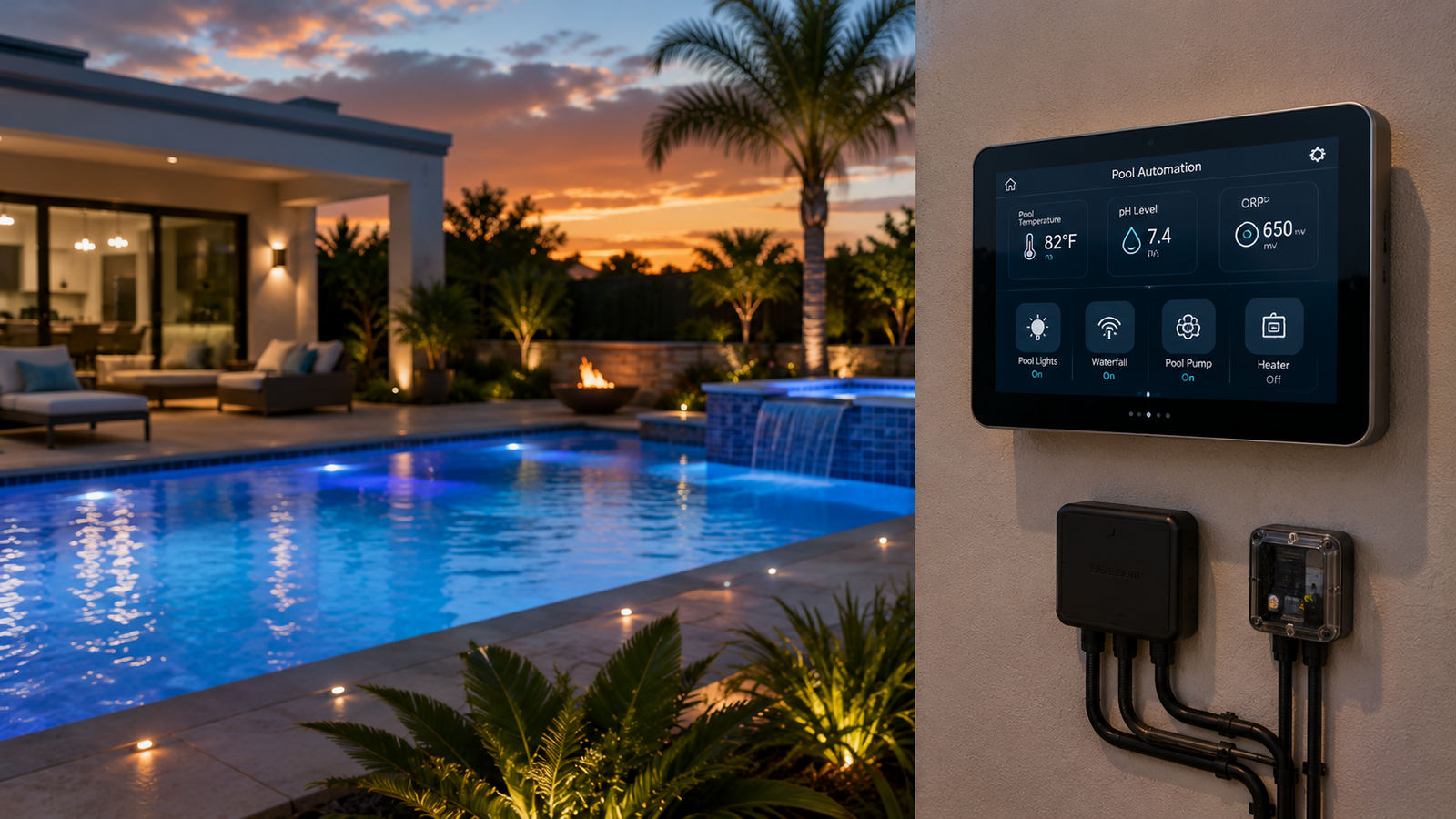
Learn how a central controller coordinates pumps, heaters, lights, valves, water features and chemistry equipment through schedules and remote interfaces.
What pool owners should know first
The key principles below help separate routine ownership tasks from model-specific or professional service work.
Controller is the hub
Relays, communication buses and valve outputs connect equipment to a central logic system.
Apps are one interface
Local panels, web interfaces and mobile apps send commands, but the equipment pad still requires safe physical configuration.
Compatibility must be mapped
Not every pump, heater, light or sanitizer exposes the same level of control to every automation platform.
Core parts of a smart pool system
Use these points as a practical decision and maintenance framework, then follow the exact manual for your equipment.
Load control
High-voltage loads may be switched through appropriately rated relays, while compatible variable-speed pumps often use digital communication.
Valve actuators
Motorized actuators rotate valves between configured positions for pool/spa modes, water features or heating routes.
Sensors
Water and air temperature sensors inform heating, freeze protection and scheduling. Chemistry systems may add pH or oxidation-reduction sensing.
User interfaces
An outdoor panel, indoor panel, remote, browser or app provides scheduling and manual control.
What automation can control
Use these points as a practical decision and maintenance framework, then follow the exact manual for your equipment.
Circulation
Set pump speeds or relay schedules for filtration, cleaning, heating and water features.
Heating
Apply temperature setpoints and mode logic while respecting heater flow and interlock requirements.
Lighting and features
Create circuits, scenes or groups for lights, fountains and auxiliary loads within controller capacity.
Alerts and service
Some systems provide equipment status, fault messages, remote monitoring and firmware updates.
Limits and planning considerations
Use these points as a practical decision and maintenance framework, then follow the exact manual for your equipment.
Internet dependence
Local schedules may continue during an internet outage, but remote access may not. Behavior varies by platform.
Electrical capacity
Panel spaces, relay ratings, conductor sizes, bonding and code requirements must be reviewed by qualified professionals.
Vendor ecosystems
Mixed-brand equipment may offer basic on/off control but not every advanced feature.
Common mistakes to avoid
Frequently asked questions
What is a smart pool system?
It is an automation platform that coordinates connected pool equipment through a controller, schedules, sensors and user interfaces such as an app or touchscreen.
Can one app control the pump, heater and lights?
Often yes when the equipment and controller are compatible and properly configured. Some third-party devices may support only limited functions.
Does pool automation work without Wi-Fi?
Many systems retain local schedules and panel control without internet access, but remote app features may stop. Confirm the behavior of the specific platform.
Can older pool equipment be automated?
Basic on/off loads may sometimes be controlled through rated relays, while advanced speed or diagnostic control may require compatible communication. A professional should review the equipment and electrical system.
What are valve actuators used for?
They move compatible pool valves between programmed positions, such as pool and spa circulation or water-feature routing.
Do smart pool systems test water chemistry?
Only when compatible sensing or dosing equipment is installed. Even then, calibration and manual verification remain important.
Can automation reduce energy use?
Scheduling and variable-speed control can reduce unnecessary runtime when configured appropriately. Savings depend on the equipment, hydraulic needs and utility rates.
Who should install a pool automation system?
Because installation can involve line voltage, bonding, gas-heater interlocks and plumbing actuators, use qualified pool and electrical professionals as required by local code and manufacturer instructions.
Related Pool Equipment Guide resources
Use the manual, verify conditions and make measured changes
Learn how a central controller coordinates pumps, heaters, lights, valves, water features and chemistry equipment through schedules and remote interfaces. Match every procedure to the exact equipment model, pool configuration and local requirements. Stop and use qualified service whenever the task involves hazardous voltage, gas, combustion, refrigerant, structural work or an unsafe chemical condition.