
Best Pool Automation Systems
Compare pool automation systems by equipment compatibility, app control, scheduling, valve control, expansion capacity and smart-home integration.
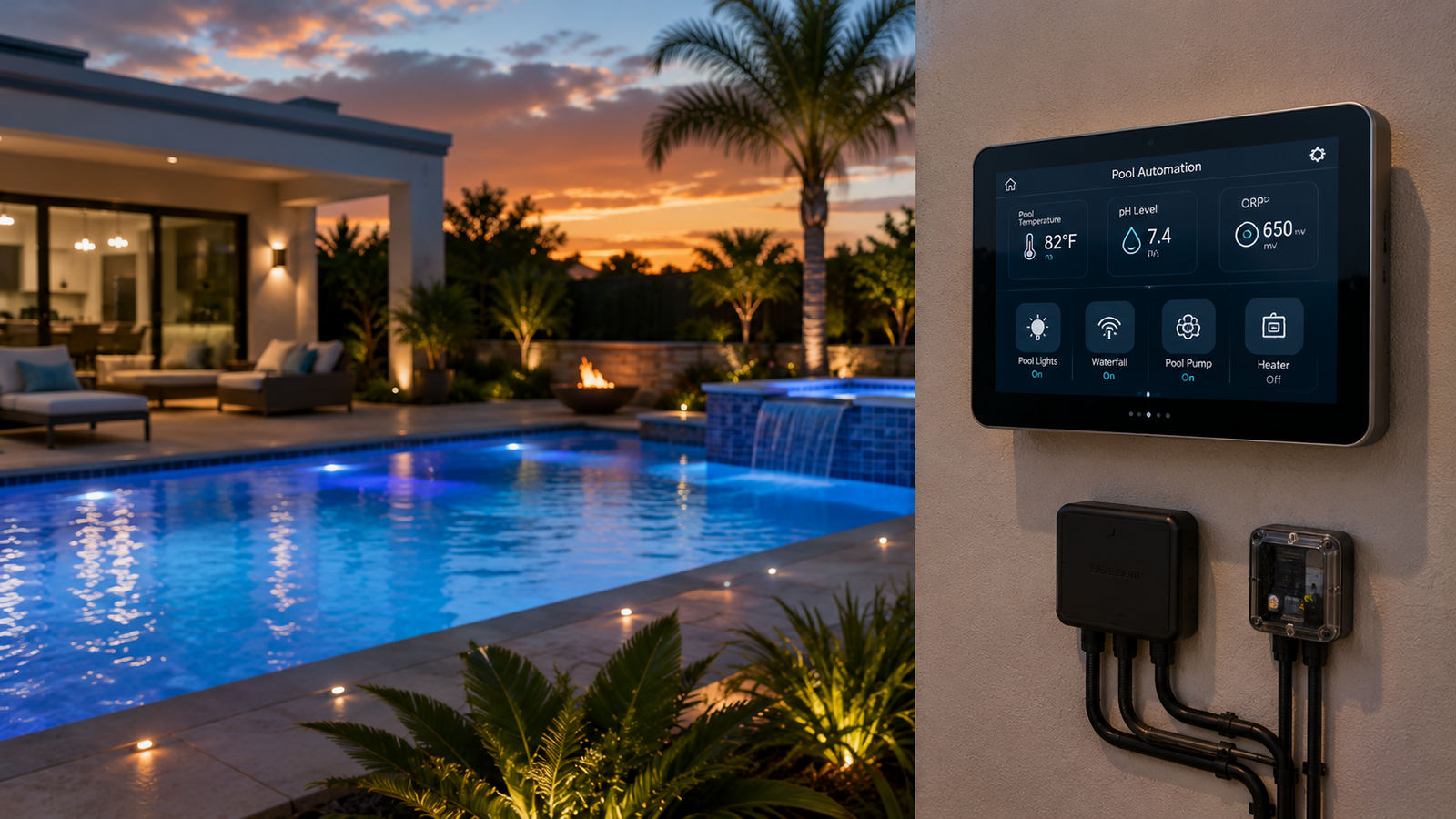
Three priorities to decide first
An expert comparison of the best pool automation systems, focused on performance, compatibility, operating costs, maintenance, installation and value.
Best for whole-pad integration
Verify pumps, heaters, lights, valves, cleaners and sanitizers individually.
View Available OptionsBest for app-first retrofits
Count relays, valve actuators and specialty interfaces now and for future upgrades.
View Available OptionsBest for expandable pool-and-spa systems
Compare app, local panel, handheld remote and voice or home integration.
View Available OptionsWhat matters most
List every load and function: filtration pump, booster pump, heater, spa mode, valves, lights, water features and sanitizer. Automation systems differ substantially in relay count and native device communication.
Compare these factors
Equipment compatibility
Verify pumps, heaters, lights, valves, cleaners and sanitizers individually.
Circuit capacity
Count relays, valve actuators and specialty interfaces now and for future upgrades.
Control options
Compare app, local panel, handheld remote and voice or home integration.
Service ecosystem
Installer familiarity, firmware support and replacement parts matter.
How to choose confidently
Define what must be controlled
List every load and function: filtration pump, booster pump, heater, spa mode, valves, lights, water features and sanitizer. Automation systems differ substantially in relay count and native device communication.
Choose retrofit or full control center
A compact controller may be enough for a single-body pool, while pool-and-spa combinations often need more circuits, actuators and temperature control. Full control centers also make expansion easier.
Understand brand communication
Same-brand equipment may expose more features through native communication, while mixed-brand systems may fall back to relay control. Confirm exact model compatibility rather than relying on broad brand claims.
Plan connectivity and local access
Cloud apps are convenient, but local controls remain important during network outages or service. Check Wi-Fi reach, account transfer, installer access and firmware support.
Use professional installation
Automation combines line-voltage loads, low-voltage communication and hydraulic control. Correct wiring, bonding and programming are safety-critical.
Plan beyond the purchase price
Confirm plumbing, electrical, bonding, control, flow and service-space requirements before ordering. Follow the specific installation manual and use qualified professionals for line-voltage, gas, chemical-feed or code-regulated work.
Common purchasing errors
Frequently asked questions
What can pool automation control?
Depending on the system, it can manage pumps, heaters, valves, lights, water features, cleaners and sanitizing equipment.
Can I automate an existing pool?
Often yes. Retrofit controllers and upgrade kits are available, but compatibility must be checked.
Do all brands work together?
Basic on/off control is often possible, but advanced speed, diagnostics and chemistry functions may require native compatibility.
How many relays do I need?
Count current loads and leave capacity for planned upgrades.
Can automation save energy?
Scheduling and variable-speed pump control can reduce unnecessary runtime when configured correctly.
What happens if Wi-Fi goes down?
Systems with local controls can usually continue schedules and allow on-site operation.
Can I install automation myself?
Because it involves electrical and control wiring, professional installation is generally appropriate.
Should I stay within one equipment brand?
A single ecosystem can simplify integration, but evaluate each component and service network rather than choosing solely by logo.
Related Pool Equipment Guide resources
Choose the system that fits the whole pool
The strongest choice is the one that matches actual pool volume, hydraulics, climate, equipment controls and maintenance preferences. Confirm the current manufacturer documentation and installer requirements before purchase.