Pool Automation Setup Guide
Plan circuits, communication, valve positions, sensors, schedules and app access before equipment is wired or configured.
What pool owners should know first
The key principles below help separate routine ownership tasks from model-specific or professional service work.
Inventory every load
Document model numbers, voltage, amperage, control method and desired behavior for each device.
Map controller capacity
Count relays, communication ports, valve outputs, sensor inputs and future expansion needs.
Separate planning from licensed work
Configuration can be documented by the owner, but line-voltage wiring and code-sensitive installation require qualified professionals.
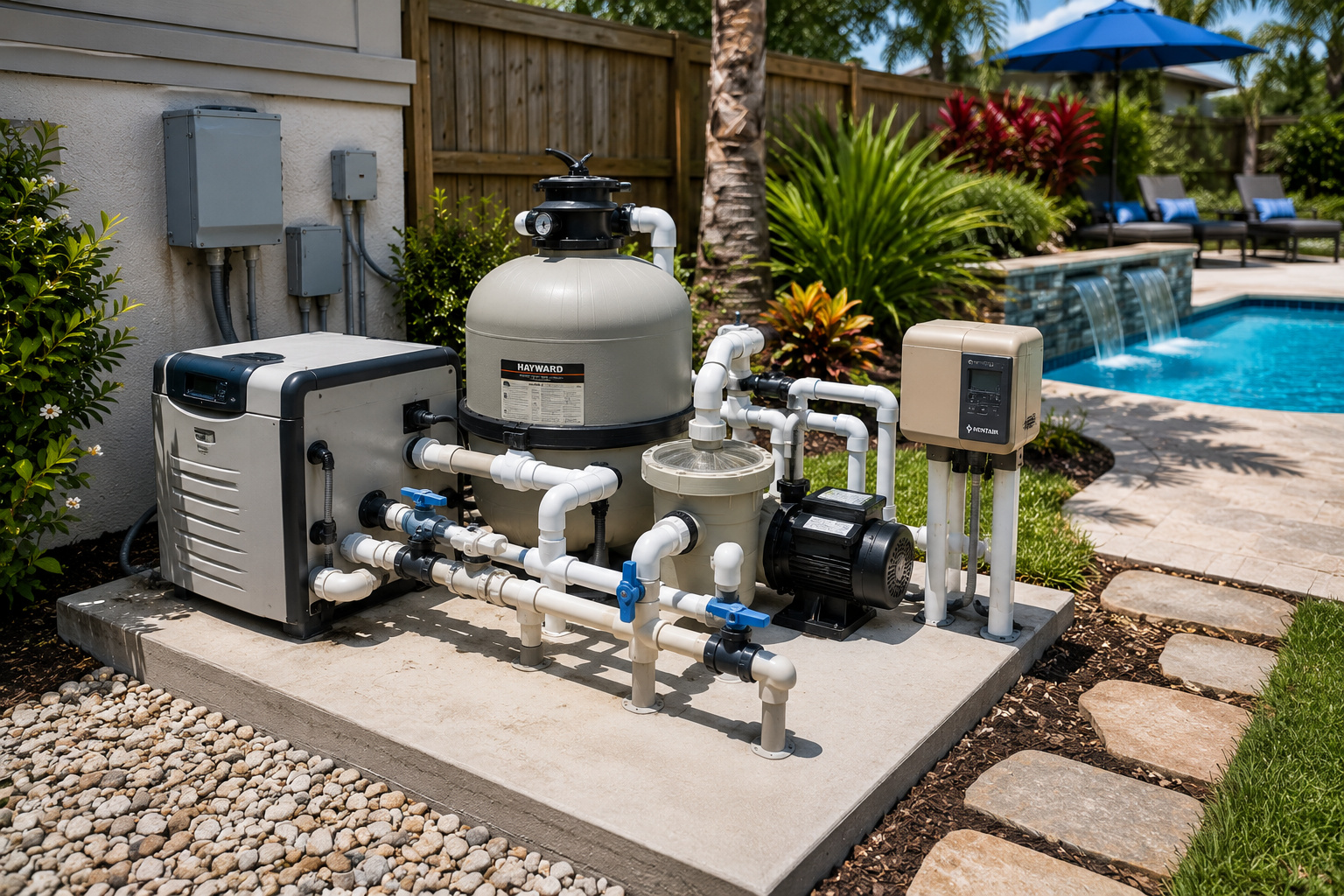
Step 1: Build an equipment map
Use these points as a practical decision and maintenance framework, then follow the exact manual for your equipment.
Pumps
Record whether each pump uses relay power, digital communication, speed programs or external control inputs.
Heaters
Identify the permitted remote-control connection and required pump/flow interlocks.
Lights and auxiliaries
List voltage, transformer arrangement, relay requirements and any color-control behavior.
Valves and chemistry
Mark actuator positions, normal flow paths, sensor locations and feeder interlocks.
Step 2: Match controller capacity
Use these points as a practical decision and maintenance framework, then follow the exact manual for your equipment.
Circuits and relays
Reserve appropriately rated outputs for loads that require switching and label each assignment.
Communication
Confirm protocol and manufacturer compatibility for variable-speed pumps, heaters and expansion modules.
Sensors
Plan water, air and optional solar or chemistry sensors in approved locations.
Expansion
Leave capacity for likely additions such as a spa, water feature, landscape lighting or additional pump.
Step 3: Configure and commission
Use these points as a practical decision and maintenance framework, then follow the exact manual for your equipment.
Name circuits clearly
Use names that match the physical equipment and electrical-panel schedule.
Set valve positions
Test pool, spa and feature modes while observing actual water flow.
Build safe schedules
Ensure dependent equipment starts in the right sequence and cannot run without required circulation.
Connect remote access
Update firmware if directed, secure the account, join the intended network and test local operation before relying on the app.
Common mistakes to avoid
Frequently asked questions
What information is needed before installing pool automation?
Collect equipment model numbers, electrical ratings, control interfaces, plumbing functions and desired schedules. Also document available panel capacity and network coverage.
How many relays do I need?
Count each load that requires relay switching, then add reasonable expansion capacity. Compatible pumps or heaters may use communication rather than a dedicated relay for every function.
Can pool automation control valve actuators?
Yes, when the controller has compatible valve outputs and the valves are suitable for actuation. The installer must set and verify both end positions.
Does a variable-speed pump need a relay?
Many compatible pumps receive constant power and use a low-voltage communication link for commands, but designs vary. Follow both pump and automation manuals.
Where should pool temperature sensors be installed?
Install them in the location and orientation specified by the controller manufacturer, with adequate water contact and away from misleading heat sources.
Can I install pool automation myself?
User configuration may be manageable, but installation often involves line voltage, bonding, service clearances and equipment interlocks. Use licensed or qualified professionals where required.
How should circuits be named?
Use short, unambiguous names that match the equipment pad and electrical-panel labels, such as Filter Pump, Spa Heat or Waterfall.
What should be tested during commissioning?
Test every relay, pump speed, heater call, valve position, sensor, schedule, freeze-protection response and local/remote control path under safe operating conditions.
Related Pool Equipment Guide resources
Use the manual, verify conditions and make measured changes
Plan circuits, communication, valve positions, sensors, schedules and app access before equipment is wired or configured. Match every procedure to the exact equipment model, pool configuration and local requirements. Stop and use qualified service whenever the task involves hazardous voltage, gas, combustion, refrigerant, structural work or an unsafe chemical condition.