
Saltwater Pool System Buying Guide
Learn how to choose a saltwater pool system by pool volume, chlorine output, cell life, controls, plumbing compatibility, salt level and upkeep.
Three priorities to decide first
A complete guide to choosing saltwater pool system buying guide, with practical advice on types, sizing, compatibility, efficiency, installation, maintenance and budget.
Size above actual pool volume
Capacity headroom supports peak demand.
View Available OptionsMatch controls to your automation
Confirm the target range and how accurately it is displayed.
View Available OptionsPlan for cell replacement from day one
Decide whether standalone output control is enough.
View Available OptionsWhat matters most
Calculate actual water volume, then account for climate, sunlight, cover use, swimmer load and circulation schedule. A generator with capacity headroom is usually easier to operate than one forced to run near maximum output.
Compare these factors
Pool-volume margin
Capacity headroom supports peak demand.
Salt operating range
Confirm the target range and how accurately it is displayed.
Control integration
Decide whether standalone output control is enough.
Lifecycle cost
Include cell, sensor and power-center replacement.
How to choose confidently
Start with pool volume and demand
Calculate actual water volume, then account for climate, sunlight, cover use, swimmer load and circulation schedule. A generator with capacity headroom is usually easier to operate than one forced to run near maximum output.
Understand the system components
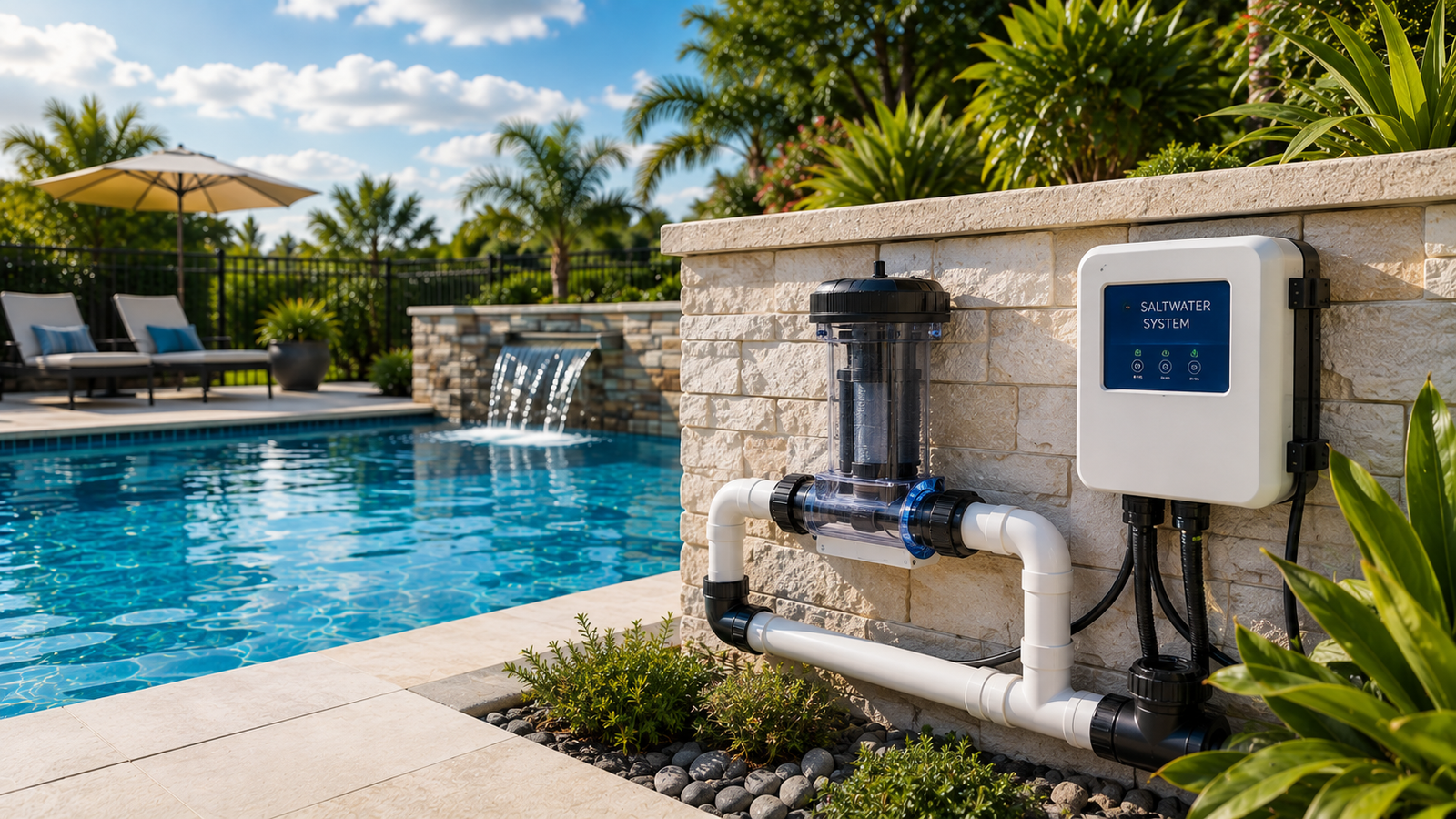
A complete setup may include a cell, power supply, flow switch or sensor, bonding and control connections. Some retrofit cells reuse an existing power center; others require a full kit.
Plan plumbing and electrical work
The cell must be installed in the correct orientation and location, generally after heating equipment and before the return. Confirm line voltage, bonding, local code and automation wiring before purchase.
Balance water for the equipment
Salt concentration is only one parameter. Maintain pH, alkalinity, calcium hardness, stabilizer and sanitizer according to the equipment maker and pool-surface needs.
Budget for ownership
Compare replacement-cell availability, warranty conditions, diagnostic quality and service support. The lowest initial price may not be the lowest lifecycle cost.
Plan beyond the purchase price
Confirm plumbing, electrical, bonding, control, flow and service-space requirements before ordering. Follow the specific installation manual and use qualified professionals for line-voltage, gas, chemical-feed or code-regulated work.
Common purchasing errors
Frequently asked questions
What size salt system should I buy?
Select a unit rated above actual pool volume and consider peak-season chlorine demand.
How much salt does a pool need?
The target varies by generator. Test existing salt before adding any and use the manufacturer range.
Where is the salt cell installed?
Usually in the return plumbing after the filter and heater, following the exact manual layout.
Can I install it myself?
Plumbing and line-voltage work may require a licensed professional and must comply with local code.
How quickly does a salt system make chlorine?
Production depends on cell rating, output percentage, water temperature and pump runtime.
What water chemistry matters most?
All core balance parameters matter, especially pH, alkalinity, calcium, stabilizer and salinity.
How long does a cell last?
Life depends on operating hours, output, scaling, water balance and cleaning practices.
Can salt damage pool equipment?
Poor water balance, corrosion-prone materials or improper installation can create problems; correct bonding and compatible materials are important.
Related Pool Equipment Guide resources
Choose the system that fits the whole pool
The strongest choice is the one that matches actual pool volume, hydraulics, climate, equipment controls and maintenance preferences. Confirm the current manufacturer documentation and installer requirements before purchase.