
All Saltwater Systems
Explore salt chlorine generators, replacement cells, controls, sizing, salt levels, installation and maintenance for residential saltwater pools.
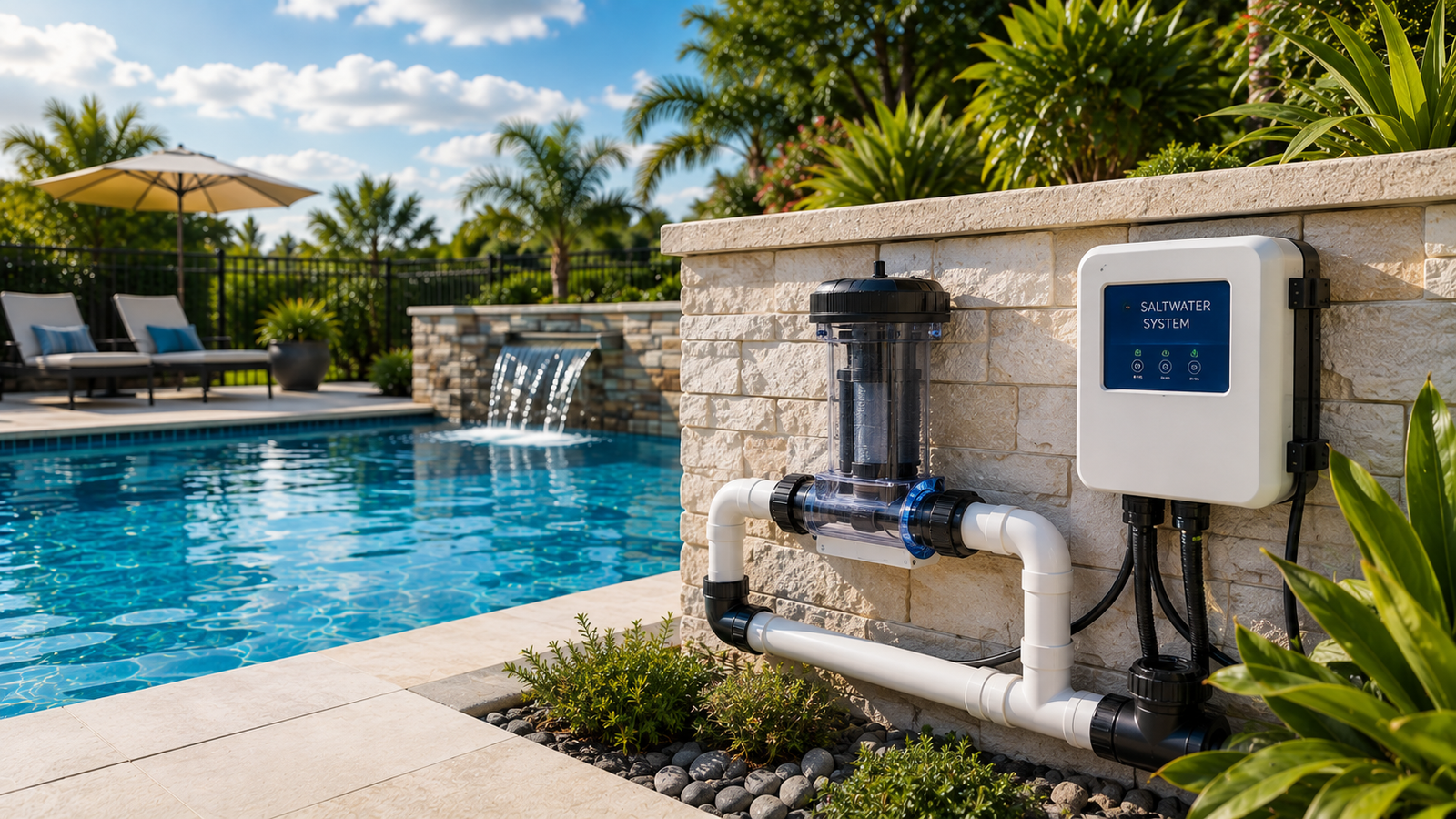
A practical route through saltwater systems
A saltwater pool still uses chlorine; a salt chlorine generator produces it from dissolved salt as water passes through the cell. Choose a system by pool volume, climate, operating demand, automation compatibility and cell-replacement cost.
Define compatibility
Record pool type, dimensions, surface, plumbing, electrical service and existing equipment before comparing features.
Compare maintenance
Consider cleaning, consumables, service access, replacement parts and the skills required for safe upkeep.
Plan equipment together
Confirm that flow, controls, connections and operating ranges work with the rest of the pool system.
What this category covers
Use these sections to narrow the equipment or information path that fits your pool.
Salt chlorine generators
Complete systems that include a cell, power supply and controls.
Replacement cells
Wear components sized for a specific control platform and pool capacity.
Power centers and controls
Provide power, output settings, diagnostics and automation communication.
Salt testing tools
Measure salinity independently instead of relying only on the controller display.
Cell cleaning supplies
Support scale removal when inspection shows mineral buildup.
Automation bundles
Combine sanitizing with pump, heater and app-based controls.
What to verify before buying
Size above bare minimum
A larger rated cell can run at a lower percentage and better handle peak demand.
Check required salt range
Follow the specific manufacturer target instead of assuming every system uses the same salinity.
Protect flow and bonding
Correct plumbing orientation, flow detection and bonding are essential.
Plan for cell replacement
Cells are consumable components; compare replacement availability and compatibility.
Compare the main decision areas
| Decision | What to check | Why it matters |
|---|---|---|
| Compatibility | Dimensions, voltage, connections, controls and operating range | Prevents mismatched equipment and unsupported features |
| Capacity | Pool volume, flow, load, climate and usage | Ensures the equipment can handle realistic peak demand |
| Maintenance | Cleaning steps, consumables, access and replacement parts | Shapes long-term cost and reliability |
| Installation | Plumbing, electrical, bonding, permits and qualified trades | Supports safe, code-compliant operation |
Use a system-first buying process
Begin with the pool and equipment-pad facts, then compare products that meet those constraints. Review manufacturer manuals before purchase because model families can differ in voltage, flow limits, installation clearances, communication protocols and maintenance procedures.
Common category-index mistakes
Frequently asked questions
Is a saltwater pool chlorine-free?
No. The generator converts chloride in dissolved salt into chlorine, which sanitizes the water.
How much salt does a saltwater pool need?
The target depends on the generator. Test the existing salinity and follow the manufacturer’s specified operating range before adding salt.
How should a salt chlorine generator be sized?
Use the pool volume and choose enough production capacity for warm weather, sunlight and heavy use. Avoid sizing only to the smallest advertised limit.
Why does a salt cell develop scale?
High calcium saturation and conditions inside the energized cell can promote deposits. Balanced water and periodic inspection help limit buildup.
Can a salt system connect to pool automation?
Many can, but compatibility varies by model and ecosystem. Confirm that the controller can adjust output and display status for the selected cell.
Does a salt pool still need water testing?
Yes. Free chlorine, pH, alkalinity, calcium hardness, cyanuric acid and salt still require regular testing.
When should a salt cell be cleaned?
Clean only when inspection or diagnostics indicate scale, and follow the manufacturer’s method. Unnecessary acid cleaning can shorten cell life.
Related Pool Equipment Guide resources
Build a compatible shortlist
Use the category map above to identify the right equipment type, then verify capacity, installation requirements and compatibility against current manufacturer documentation before purchasing.