
Best Saltwater Chlorine Generators
Compare salt chlorine generators by rated pool capacity, output control, cell life, diagnostics, plumbing compatibility and maintenance requirements.
Three priorities to decide first
An expert comparison of the best saltwater chlorine generators, focused on performance, compatibility, operating costs, maintenance, installation and value.
Best for integrated control
Choose a cell rated above actual pool volume so it can meet demand without living at maximum output.
View Available OptionsBest for straightforward retrofits
Look for usable percentage control, boost modes and automation compatibility.
View Available OptionsBest for serviceable long-term ownership
Salt, temperature, flow and cell-status indicators simplify troubleshooting.
View Available OptionsWhat matters most
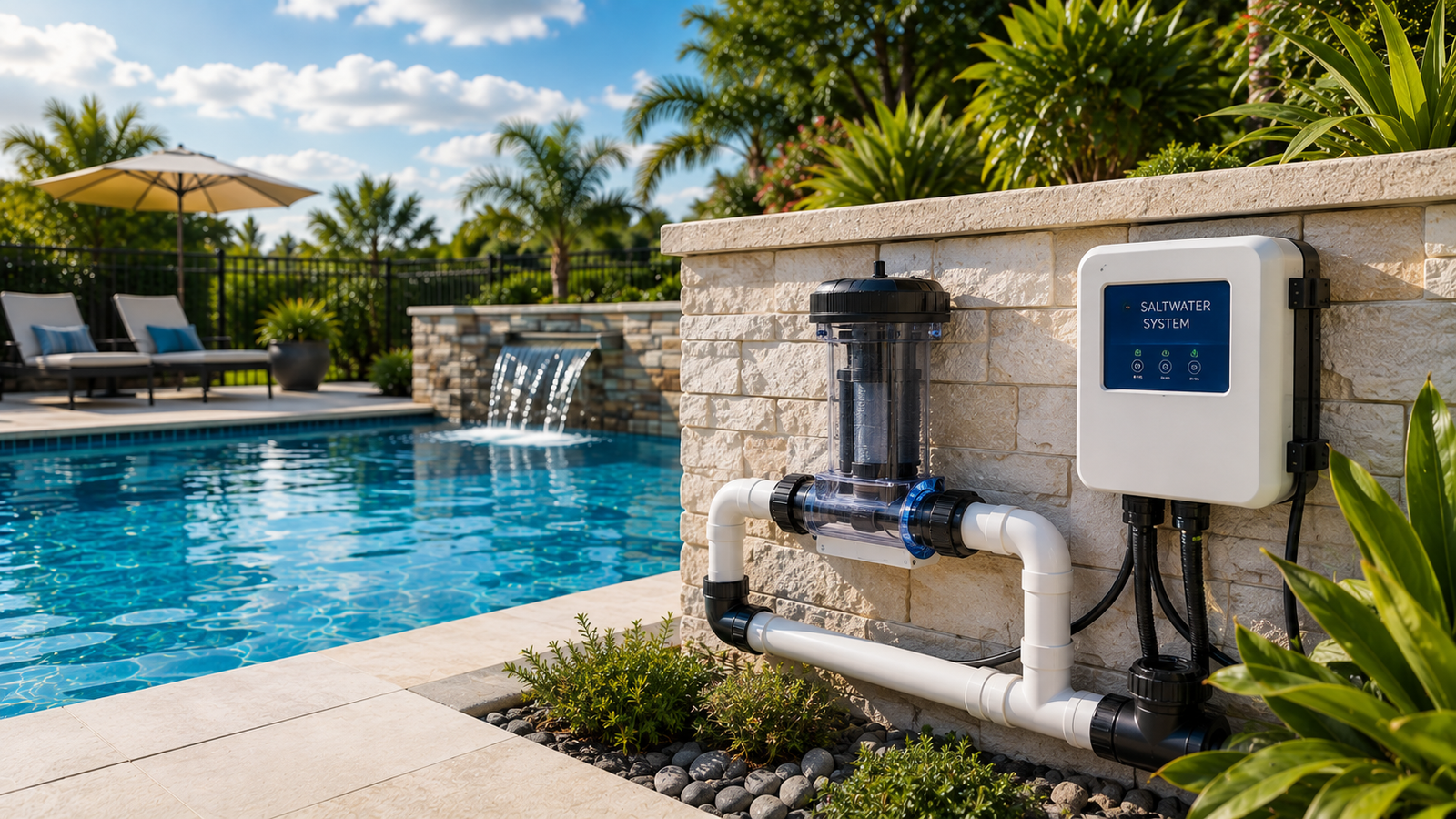
A salt chlorine generator uses electrolysis to convert dissolved chloride into chlorine in the return line. The pool still contains chlorine; the difference is that it is produced on site from salt rather than added manually. The system must be sized for pool volume, climate, swimmer load and desired pump runtime.
Compare these factors
Capacity headroom
Choose a cell rated above actual pool volume so it can meet demand without living at maximum output.
Output adjustment
Look for usable percentage control, boost modes and automation compatibility.
Diagnostics
Salt, temperature, flow and cell-status indicators simplify troubleshooting.
Serviceability
Replaceable cells, sensors and power components affect long-term cost.
How to choose confidently
How salt chlorine generation works
A salt chlorine generator uses electrolysis to convert dissolved chloride into chlorine in the return line. The pool still contains chlorine; the difference is that it is produced on site from salt rather than added manually. The system must be sized for pool volume, climate, swimmer load and desired pump runtime.
Sizing the cell correctly
Treat the manufacturer capacity as an upper limit, not an ideal operating target. Warm climates, long swim seasons, heavy sun and high bather load all increase chlorine demand. Extra capacity gives the controller room to meet demand at a lower output setting and can reduce the need for frequent boost operation.
Installation and compatibility
Confirm plumbing diameter, available straight-pipe length, required flow switch orientation, power-center needs and compatibility with existing automation. Installation involves line-voltage power and plumbing; use a qualified pool professional where local code or the manufacturer requires it.
Maintenance priorities
Maintain the recommended salt range, balanced water and proper flow. Inspect the cell for scale rather than cleaning on a fixed schedule, because unnecessary acid cleaning can shorten cell life. Winterization and low-temperature behavior vary by model.
Plan beyond the purchase price
Confirm plumbing, electrical, bonding, control, flow and service-space requirements before ordering. Follow the specific installation manual and use qualified professionals for line-voltage, gas, chemical-feed or code-regulated work.
Common purchasing errors
Frequently asked questions
Does a saltwater pool still use chlorine?
Yes. The generator makes chlorine from dissolved salt, so chlorine remains the primary sanitizer.
How large should the generator be?
Choose a rated capacity above actual pool volume, especially in hot or sunny climates or with long swim seasons.
Can I add a salt system to an existing pool?
Often yes, but plumbing space, electrical service, surface materials and equipment compatibility must be checked first.
How often should the salt cell be cleaned?
Inspect it periodically and clean only when scale is present, following the manufacturer procedure.
Will a salt system control pH?
No. Salt generation can influence pH behavior, but pH, alkalinity and calcium still require testing and adjustment.
Can salt systems work with automation?
Many can, but control depth varies. Verify that the generator and automation platform communicate rather than merely share power.
Do salt cells work in cold water?
Many systems reduce or stop production below a model-specific water temperature.
What determines cell life?
Operating hours, output level, scale, water balance, cleaning practices and power quality all matter.
Related Pool Equipment Guide resources
Choose the system that fits the whole pool
The strongest choice is the one that matches actual pool volume, hydraulics, climate, equipment controls and maintenance preferences. Confirm the current manufacturer documentation and installer requirements before purchase.