All Pool Test Kits
Compare pool test kits for chlorine, pH, alkalinity, calcium hardness, cyanuric acid and salt, including liquid, strip and digital options.
A practical route through pool test kits
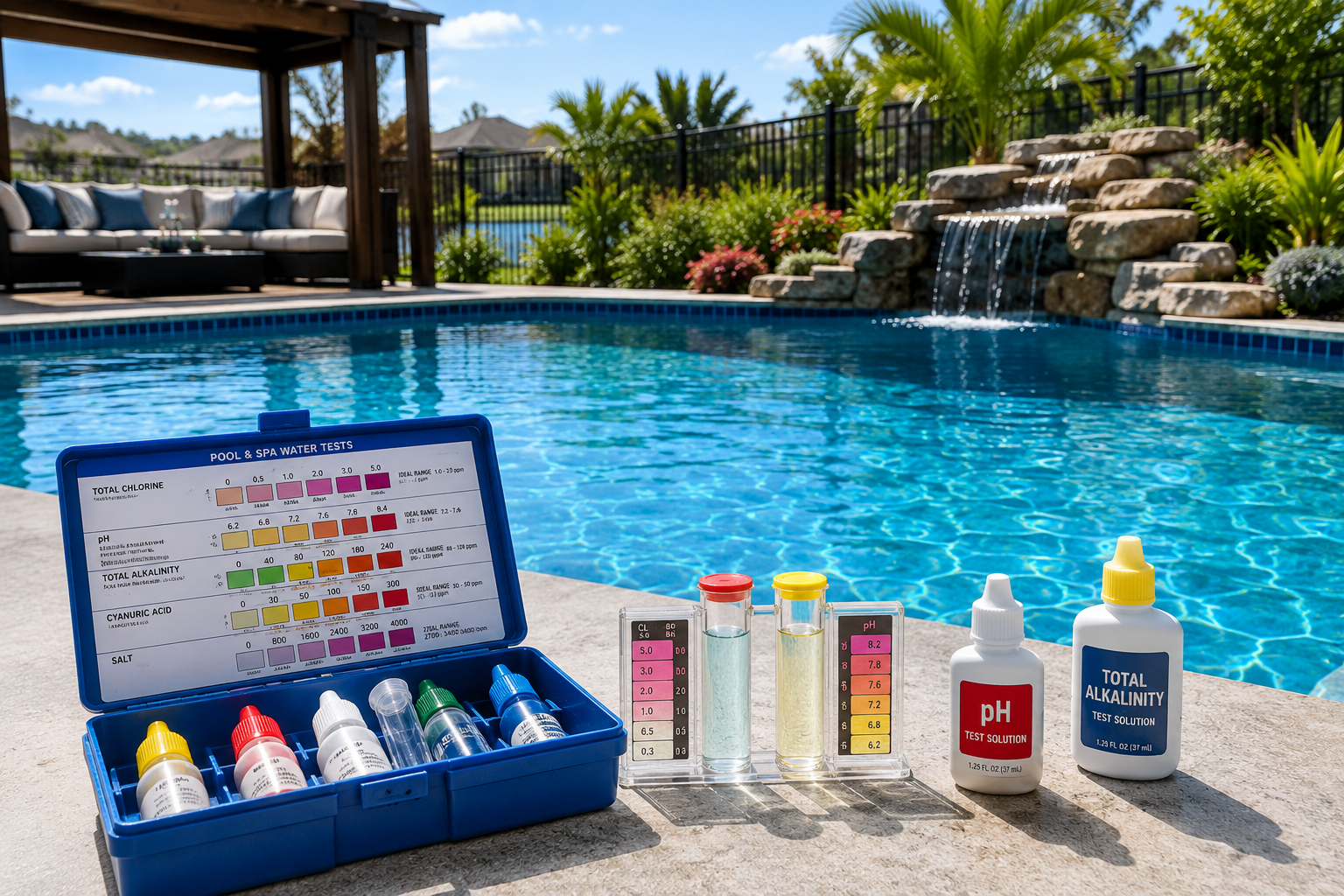
Reliable water testing is the foundation of chemical decisions. Liquid drop kits offer repeatable multi-parameter testing, strips emphasize speed, and digital instruments can simplify selected measurements when they are calibrated and maintained correctly.
Define compatibility
Record pool type, dimensions, surface, plumbing, electrical service and existing equipment before comparing features.
Compare maintenance
Consider cleaning, consumables, service access, replacement parts and the skills required for safe upkeep.
Plan equipment together
Confirm that flow, controls, connections and operating ranges work with the rest of the pool system.
What this category covers
Use these sections to narrow the equipment or information path that fits your pool.
Liquid reagent kits
Use color comparison or titration for sanitizer and balance measurements.
Test strips
Provide quick screening for several parameters with minimal setup.
Digital photometers
Read prepared samples electronically to reduce subjective color matching.
Electronic pH and salt meters
Measure specific parameters and require calibration, clean probes and proper storage.
Specialty tests
Measure cyanuric acid, calcium hardness, phosphates, metals or other targeted conditions.
Replacement reagents
Keep kits useful by replacing expired or contaminated chemicals and supplies.
What to verify before buying
Parameters included
Choose a kit that measures the chemistry actually used to manage the pool.
Readable test range
The scale must cover expected sanitizer, pH, hardness, alkalinity, stabilizer and salt levels.
Fresh reagents
Heat, sunlight, contamination and age can affect results.
Consistent sampling
Take water from a representative location and follow timing and volume instructions exactly.
Compare the main decision areas
| Decision | What to check | Why it matters |
|---|---|---|
| Compatibility | Dimensions, voltage, connections, controls and operating range | Prevents mismatched equipment and unsupported features |
| Capacity | Pool volume, flow, load, climate and usage | Ensures the equipment can handle realistic peak demand |
| Maintenance | Cleaning steps, consumables, access and replacement parts | Shapes long-term cost and reliability |
| Installation | Plumbing, electrical, bonding, permits and qualified trades | Supports safe, code-compliant operation |
Use a system-first buying process
Begin with the pool and equipment-pad facts, then compare products that meet those constraints. Review manufacturer manuals before purchase because model families can differ in voltage, flow limits, installation clearances, communication protocols and maintenance procedures.
Common category-index mistakes
Frequently asked questions
Are liquid pool test kits more accurate than strips?
Well-maintained liquid kits often provide finer resolution, but good technique matters. Strips can be useful for fast routine checks when stored and read correctly.
What should a home pool test kit measure?
At minimum, test the sanitizer and pH. Many owners also need total alkalinity, calcium hardness and cyanuric acid; salt pools need a salinity test.
How often should pool water be tested?
Testing frequency depends on use, weather and the treatment system. Test more often after heavy use, rain, chemical additions or unusual water conditions.
Do digital pool testers need calibration?
Many electronic meters do. Follow the instrument instructions for calibration, probe storage and cleaning.
Can pool test reagents expire?
Yes. Age, heat, freezing, sunlight and contamination can make reagents unreliable.
Where should the water sample be taken?
Collect from below the surface in a representative area away from return jets, skimmers and recently added chemicals.
Why do two pool tests give different results?
Differences can come from sampling location, timing, lighting, reagent condition, strip technique, calibration or interference from high sanitizer levels.
Related Pool Equipment Guide resources
Build a compatible shortlist
Use the category map above to identify the right equipment type, then verify capacity, installation requirements and compatibility against current manufacturer documentation before purchasing.