
Pool Chlorine Explained
Understand what pool chlorine measures actually mean, how chlorine changes after reacting with contaminants, and why pH and cyanuric acid affect sanitation.
What matters most
Understand what pool chlorine measures actually mean, how chlorine changes after reacting with contaminants, and why pH and cyanuric acid affect sanitation.
Free chlorine
The portion available to sanitize water and oxidize new contaminants.
Combined chlorine
Chlorine that has reacted with nitrogen-containing contaminants; it is commonly estimated by subtracting free chlorine from total chlorine.
Total chlorine
The sum of free chlorine and combined chlorine measured by a compatible test.
Pool Chlorine Explained
Learn how chlorine sanitizes pool water, how free and combined chlorine differ, how pH and CYA affect performance, and how to test safely.
How chlorine works in pool water
Chlorine-based sanitizers form active disinfecting species in water. Their effectiveness depends on concentration, pH, water temperature, sunlight exposure and the amount of contamination entering the pool. Chlorine does not work instantly against every organism, so consistent circulation, filtration and routine testing remain important.
Why pH changes chlorine performance
As pH rises, a smaller share of chlorine is present in its more active disinfecting form. Very low pH can also create corrosive water and swimmer discomfort. For home pools, follow the operating range specified by the equipment and chemical manufacturers rather than chasing a single number.
What cyanuric acid does
Cyanuric acid helps protect chlorine from rapid ultraviolet breakdown in outdoor pools. It also binds part of the free chlorine, which changes how quickly chlorine acts. Stabilized chlorine products can add CYA over time, so test it periodically instead of assuming it stays constant.
How to test chlorine correctly
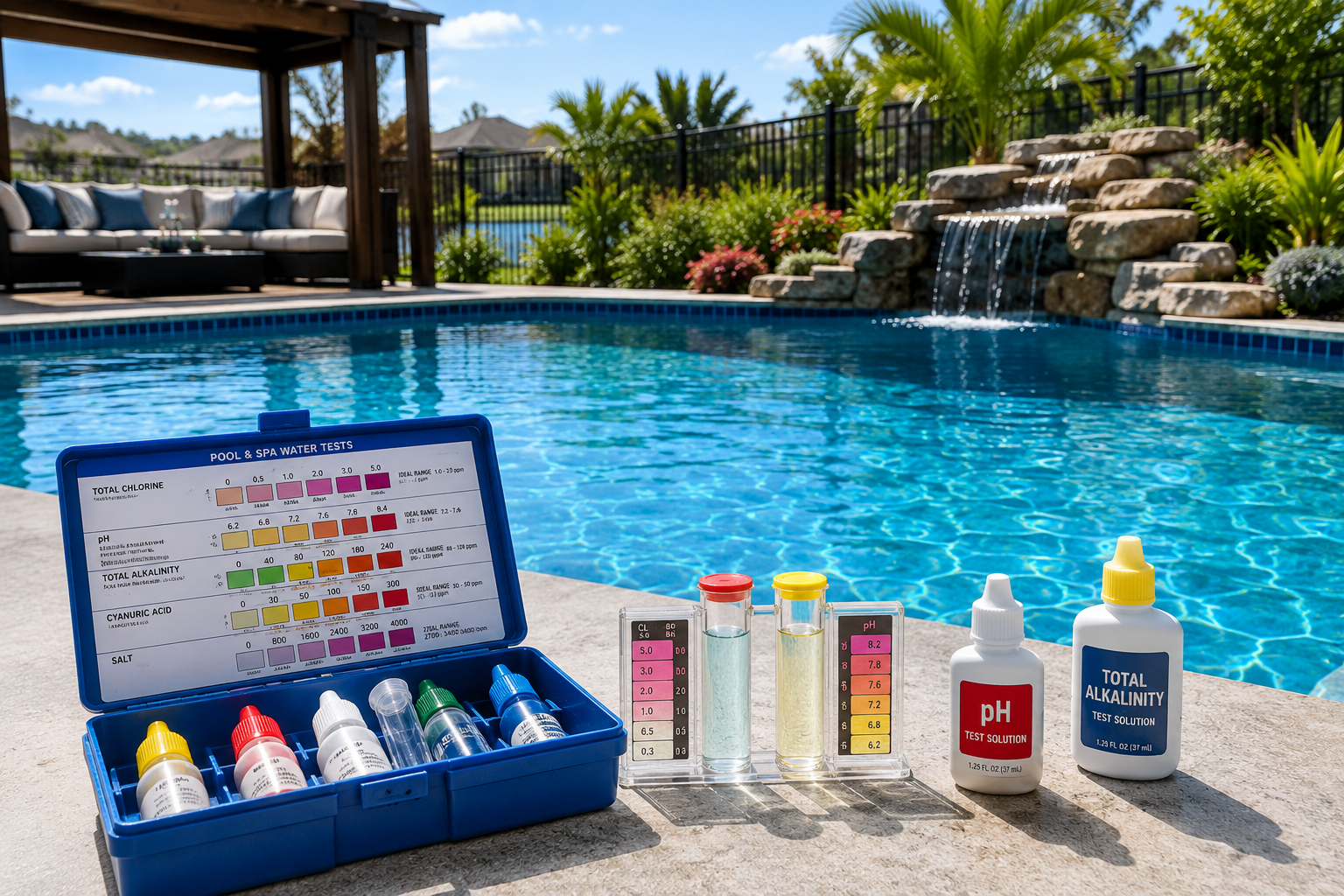
Use fresh reagents or unexpired strips, collect water away from returns, and follow the test instructions exactly. A DPD-based kit can distinguish free and total chlorine; combined chlorine is calculated from the difference. Retest after chemical additions only after the product label's required circulation period.
How chlorine works in pool water
Chlorine-based sanitizers form active disinfecting species in water. Their effectiveness depends on concentration, pH, water temperature, sunlight exposure and the amount of contamination entering the pool. Chlorine does not work instantly against every organism, so consistent circulation, filtration and routine testing remain important.
Why pH changes chlorine performance
As pH rises, a smaller share of chlorine is present in its more active disinfecting form. Very low pH can also create corrosive water and swimmer discomfort. For home pools, follow the operating range specified by the equipment and chemical manufacturers rather than chasing a single number.
What cyanuric acid does
Cyanuric acid helps protect chlorine from rapid ultraviolet breakdown in outdoor pools. It also binds part of the free chlorine, which changes how quickly chlorine acts. Stabilized chlorine products can add CYA over time, so test it periodically instead of assuming it stays constant.
How to test chlorine correctly
Use fresh reagents or unexpired strips, collect water away from returns, and follow the test instructions exactly. A DPD-based kit can distinguish free and total chlorine; combined chlorine is calculated from the difference. Retest after chemical additions only after the product label's required circulation period.
Common ownership mistakes
Compare current equipment and supplies
Use the guide above to identify the specifications, compatibility requirements and maintenance needs that apply to your pool before selecting equipment or treatment products.
Frequently asked questions
What is the difference between free and total chlorine?
Free chlorine is available to sanitize the water. Total chlorine is free chlorine plus combined chlorine, so the difference between total and free chlorine estimates the combined chlorine level.
What does combined chlorine indicate?
Combined chlorine indicates that chlorine has reacted with nitrogen-containing contaminants. A persistent reading may signal a need to investigate bather waste, circulation, filtration and the treatment steps specified for the pool.
Does a strong chlorine smell mean too much chlorine?
A sharp pool odor is often associated with chloramines rather than simply a high free-chlorine level. Testing free and total chlorine provides better information than smell alone.
How does pH affect chlorine?
pH changes the balance of chlorine species in the water. As pH rises, chlorine generally becomes less immediately active, while very low pH can increase corrosion and discomfort.
Why is cyanuric acid used in outdoor pools?
Cyanuric acid reduces the rate at which sunlight breaks down chlorine. Too much can slow disinfection, so it should be tested and managed rather than added automatically.
Can I mix different chlorine products?
Do not mix pool chemicals together or combine residues in the same container or feeder. Follow each product label and keep incompatible products separated.
How soon can I swim after adding chlorine?
Use the product label and confirm the water has returned to the recommended operating range before swimming. Required circulation time varies by product and dose.
How often should chlorine be tested?
Testing frequency depends on weather, bather load, sanitizer system and local conditions. Test more often during heavy use, hot weather, storms or when water quality changes.
Related pool guides
Use measured results and equipment requirements
Understand what pool chlorine measures actually mean, how chlorine changes after reacting with contaminants, and why pH and cyanuric acid affect sanitation. Confirm the pool's actual volume, current condition and connected-equipment requirements before making a major change.