All Pool Maintenance Equipment
Explore pool maintenance equipment, including brushes, nets, vacuums, test kits, hoses, poles and tools for routine cleaning and water care.
A practical route through pool maintenance equipment
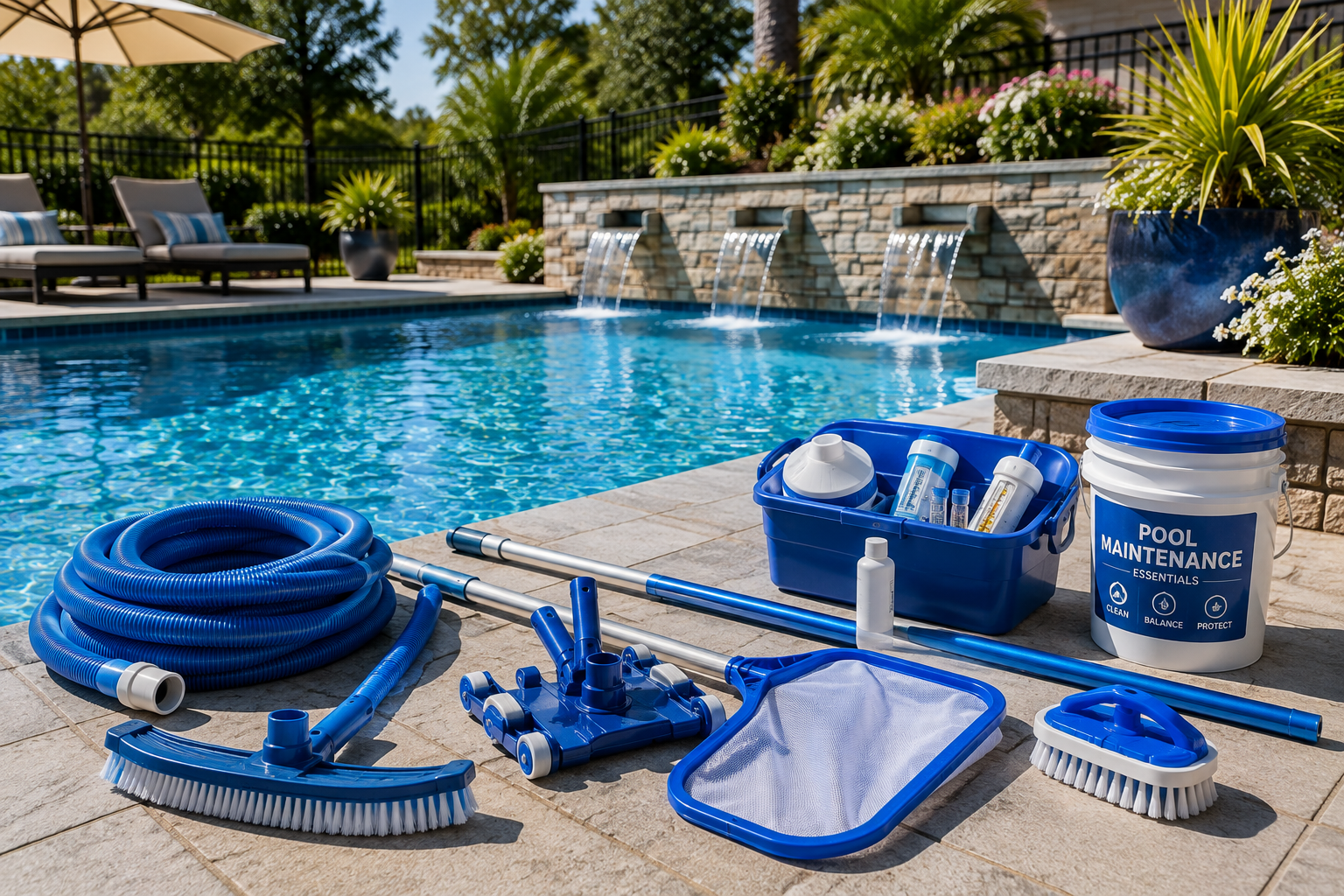
A practical maintenance kit should support debris removal, wall and floor brushing, vacuuming, water testing and minor equipment checks. Match every tool to the pool surface, dimensions and debris load.
Define compatibility
Record pool type, dimensions, surface, plumbing, electrical service and existing equipment before comparing features.
Compare maintenance
Consider cleaning, consumables, service access, replacement parts and the skills required for safe upkeep.
Plan equipment together
Confirm that flow, controls, connections and operating ranges work with the rest of the pool system.
What this category covers
Use these sections to narrow the equipment or information path that fits your pool.
Telescopic poles and attachments
Create a modular platform for nets, brushes and vacuum heads.
Skimmer nets and leaf rakes
Remove floating debris or collect heavier leaves from the floor.
Pool brushes
Agitate walls, steps and waterline buildup using bristles appropriate for the surface.
Manual and powered vacuums
Remove settled debris when circulation and automatic cleaners are not enough.
Test kits and meters
Measure sanitizer and balance before chemicals are adjusted.
Hoses and small service tools
Support vacuuming, priming, draining and routine equipment-pad tasks.
What to verify before buying
Pool surface
Vinyl, fiberglass, plaster and tile may require different brushes and vacuum heads.
Pool dimensions
Longer or deeper pools need adequate pole reach and manageable tool weight.
Debris type
Fine silt, leaves and acorns require different nets, filters and vacuum strategies.
Cleaning sequence
Skim, brush, vacuum and then clean baskets or filters so debris is removed efficiently.
Compare the main decision areas
| Decision | What to check | Why it matters |
|---|---|---|
| Compatibility | Dimensions, voltage, connections, controls and operating range | Prevents mismatched equipment and unsupported features |
| Capacity | Pool volume, flow, load, climate and usage | Ensures the equipment can handle realistic peak demand |
| Maintenance | Cleaning steps, consumables, access and replacement parts | Shapes long-term cost and reliability |
| Installation | Plumbing, electrical, bonding, permits and qualified trades | Supports safe, code-compliant operation |
Use a system-first buying process
Begin with the pool and equipment-pad facts, then compare products that meet those constraints. Review manufacturer manuals before purchase because model families can differ in voltage, flow limits, installation clearances, communication protocols and maintenance procedures.
Common category-index mistakes
Frequently asked questions
What pool maintenance equipment does every owner need?
Most owners need a pole, skimmer net, suitable brush, testing method and a way to vacuum settled debris.
Should I brush the pool if I use a robotic cleaner?
Usually yes. Steps, corners, tile lines and low-circulation areas may still need manual brushing.
What is the difference between a leaf rake and a flat skimmer net?
A flat net is quick for surface debris; a deep-bag leaf rake holds more material and can scoop debris from the bottom.
Can one brush be used on every pool surface?
No. Some stiff or metal-bristle brushes can damage vinyl or fiberglass. Match the brush to the surface manufacturer’s guidance.
How long should a telescopic pole be?
It should reach the deepest and farthest areas without forcing the user to overextend. A rigid locking mechanism is also important.
When should a vacuum hose be replaced?
Replace it when it leaks air, collapses under suction, develops splits or no longer seals at fittings.
How should maintenance tools be cleaned?
Rinse off chemicals and debris, allow tools to dry, and store them away from direct sun when possible.
Related Pool Equipment Guide resources
Build a compatible shortlist
Use the category map above to identify the right equipment type, then verify capacity, installation requirements and compatibility against current manufacturer documentation before purchasing.