All Pool Accessories
Explore pool accessories for cleaning, maintenance, safety, storage, comfort and everyday use, with practical buying and compatibility guidance.
A practical route through pool accessories
The most useful pool accessories solve a specific ownership problem: cleaning, safety, storage, comfort or organization. Prioritize durable items that fit the pool type and reduce recurring work instead of collecting one-purpose gadgets.
Define compatibility
Record pool type, dimensions, surface, plumbing, electrical service and existing equipment before comparing features.
Compare maintenance
Consider cleaning, consumables, service access, replacement parts and the skills required for safe upkeep.
Plan equipment together
Confirm that flow, controls, connections and operating ranges work with the rest of the pool system.
What this category covers
Use these sections to narrow the equipment or information path that fits your pool.
Cleaning accessories
Brushes, nets, poles, hoses and manual vacuum components.
Safety equipment
Alarms, rescue aids, barriers and visibility products that complement—not replace—supervision.
Storage and organization
Deck boxes, racks and weather-resistant storage for tools, toys and covers.
Comfort accessories
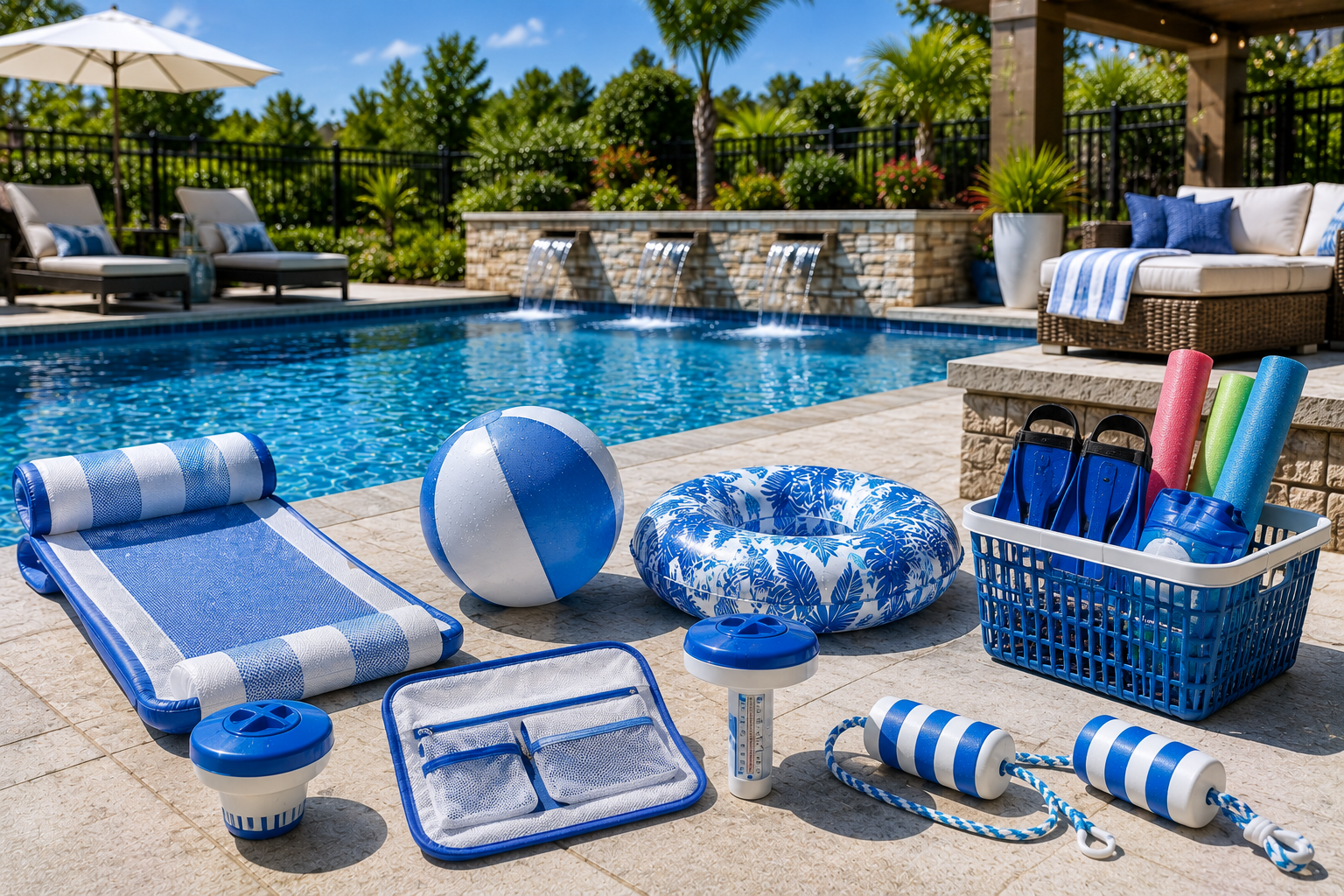
Floats, loungers, shade and poolside items selected for durability and safe use.
Water-feature accessories
Fountains, return attachments and decorative circulation products.
Care and protection
Thermometers, equipment covers, hose guards and small replacement components.
What to verify before buying
Fit and connection size
Verify pole diameters, hose sizes, return-thread standards and equipment compatibility.
Outdoor durability
Look for UV, chlorine and weather resistance appropriate to the item.
Safe storage
Keep chemicals separate from toys, tools and combustible materials.
Real maintenance value
Favor accessories that shorten routine work or improve consistency.
Compare the main decision areas
| Decision | What to check | Why it matters |
|---|---|---|
| Compatibility | Dimensions, voltage, connections, controls and operating range | Prevents mismatched equipment and unsupported features |
| Capacity | Pool volume, flow, load, climate and usage | Ensures the equipment can handle realistic peak demand |
| Maintenance | Cleaning steps, consumables, access and replacement parts | Shapes long-term cost and reliability |
| Installation | Plumbing, electrical, bonding, permits and qualified trades | Supports safe, code-compliant operation |
Use a system-first buying process
Begin with the pool and equipment-pad facts, then compare products that meet those constraints. Review manufacturer manuals before purchase because model families can differ in voltage, flow limits, installation clearances, communication protocols and maintenance procedures.
Common category-index mistakes
Frequently asked questions
Which pool accessories are essential for a new owner?
A skimmer net, brush, telescopic pole, water-testing method, thermometer and suitable vacuuming solution cover most routine needs.
Are universal pool accessories really universal?
Not always. Hose diameters, pole clips, return fittings and cleaner connections can vary.
How should pool accessories be stored?
Rinse and dry tools when practical, keep them shaded, and store chemicals separately in accordance with label directions.
Do pool alarms replace adult supervision?
No. Alarms are supplemental safety devices and do not replace barriers, active supervision or local code requirements.
What material is best for outdoor pool storage?
Weather-resistant resin, coated metal or suitable outdoor wood can work. Ventilation, drainage and separation from chemicals matter as much as material.
How often should nets and brushes be replaced?
Replace them when mesh tears, bristles deform, frames crack or connections no longer lock securely.
Can pool accessories damage a liner or finish?
Yes. Use brushes, vacuum heads and toys approved for the pool surface and avoid sharp or abrasive items.
Related Pool Equipment Guide resources
Build a compatible shortlist
Use the category map above to identify the right equipment type, then verify capacity, installation requirements and compatibility against current manufacturer documentation before purchasing.