
How to Balance Pool Water
Balanced water protects swimmers, surfaces and equipment. Test first, correct major water-volume or contamination issues, then make measured adjustments one at a time.
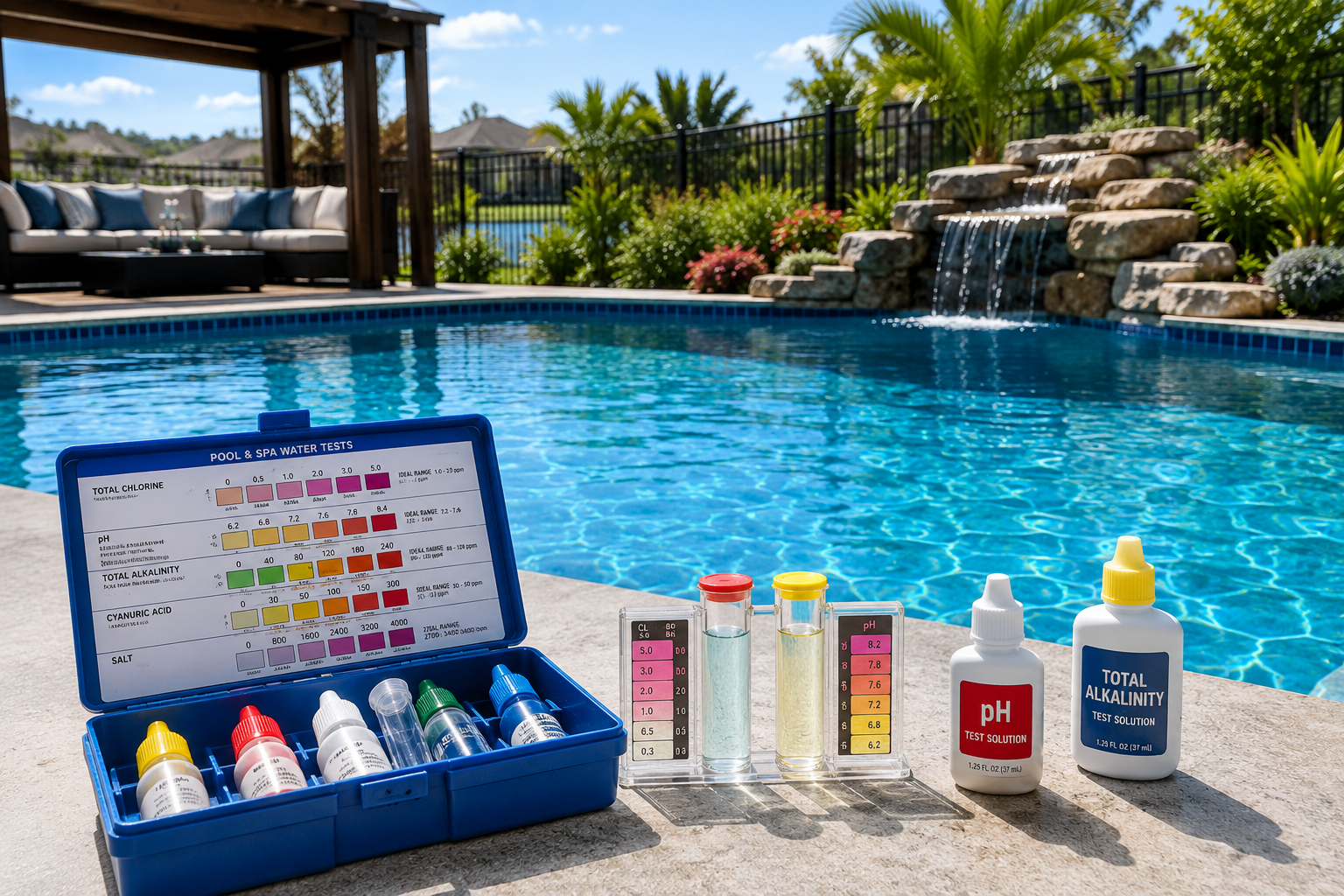
What matters most
Balanced water protects swimmers, surfaces and equipment. Test first, correct major water-volume or contamination issues, then make measured adjustments one at a time.
Sanitizer and pH
Keep sanitation effective while avoiding corrosive or scale-forming extremes.
Alkalinity and calcium
Manage buffering and hardness in relation to the pool surface and treatment system.
Cyanuric acid
Account for stabilizer when interpreting chlorine in outdoor pools.
How to Balance Pool Water
Balance pool water by testing and adjusting sanitizer, pH, total alkalinity, calcium hardness and cyanuric acid in the right sequence.
Start with accurate volume and testing
Chemical dosing depends on water volume, so verify dimensions and average depth. Use a dependable test method and record the starting values before changing anything.
Correct in a controlled sequence
Address urgent sanitation or safety issues first, then work through pH and supporting balance parameters using the product instructions. Large corrections are safer when divided into smaller additions with circulation and retesting.
Understand parameter interaction
Total alkalinity affects how readily pH moves. Calcium, pH, alkalinity, temperature and dissolved solids together influence scale or corrosion tendency. Changing one number can alter the overall balance.
Retest and observe the trend
Allow the specified circulation time, then retest from a representative location. A result that repeatedly drifts may point to fill-water chemistry, aeration, sanitizer type, leaks or equipment operation.
Start with accurate volume and testing
Chemical dosing depends on water volume, so verify dimensions and average depth. Use a dependable test method and record the starting values before changing anything.
Correct in a controlled sequence
Address urgent sanitation or safety issues first, then work through pH and supporting balance parameters using the product instructions. Large corrections are safer when divided into smaller additions with circulation and retesting.
Understand parameter interaction
Total alkalinity affects how readily pH moves. Calcium, pH, alkalinity, temperature and dissolved solids together influence scale or corrosion tendency. Changing one number can alter the overall balance.
Retest and observe the trend
Allow the specified circulation time, then retest from a representative location. A result that repeatedly drifts may point to fill-water chemistry, aeration, sanitizer type, leaks or equipment operation.
Common ownership mistakes
Compare current equipment and supplies
Use the guide above to identify the specifications, compatibility requirements and maintenance needs that apply to your pool before selecting equipment or treatment products.
Frequently asked questions
Which pool chemistry value should be adjusted first?
Urgent sanitation and safety issues take priority. Otherwise, follow a deliberate sequence based on the starting test results and the chemical manufacturer's instructions.
Why does my pH keep rising?
Aeration, spillovers, salt chlorine generation, high alkalinity and some fill water can contribute. Track the rate of change before repeatedly adding large acid doses.
What does total alkalinity do?
Total alkalinity provides buffering that resists rapid pH change. Too much buffering can make pH correction difficult, while too little can allow unstable swings.
Why is calcium hardness important?
Calcium affects scaling and the protection of plaster or other calcium-containing surfaces. The appropriate range depends on surface type, temperature and overall balance.
Can I add multiple pool chemicals on the same day?
Some products can be added sequentially when the label allows, but never mix concentrates. Allow required circulation and separation time between additions.
How long should I circulate before retesting?
Use the product-label direction because circulation time varies by chemical, dose and pool system. Sample away from the addition point.
Does rain always lower pool chemistry readings?
Rain can dilute some parameters, add contaminants and change water level, but the effect depends on rainfall amount and pool volume. Test rather than assuming.
When should water be partially replaced?
Replacement may be considered when a parameter that cannot be practically reduced by normal treatment becomes excessive. Confirm the reading and account for groundwater and local discharge restrictions.
Related pool guides
Use measured results and equipment requirements
Balanced water protects swimmers, surfaces and equipment. Test first, correct major water-volume or contamination issues, then make measured adjustments one at a time. Confirm the pool's actual volume, current condition and connected-equipment requirements before making a major change.