Pool Filter Buying Guides
Browse pool filter buying guides covering cartridge, sand and DE systems, sizing, flow capacity, water clarity, cleaning and maintenance.
A practical route through pool filter buying guides
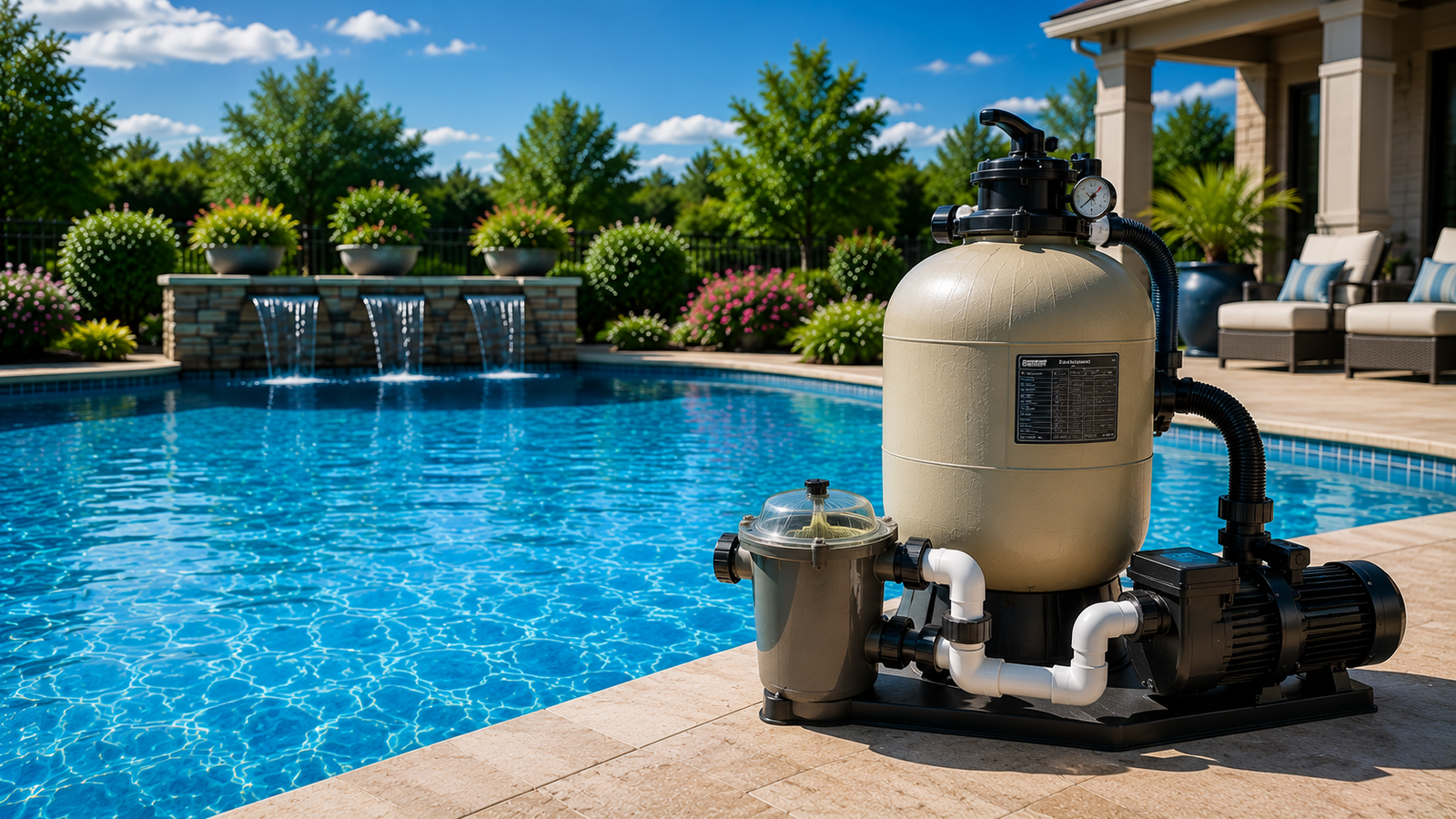
Pool filters are chosen by filtration method, required flow and maintenance preference. A generously sized filter generally operates at a lower loading rate and can extend the interval between cleanings when matched correctly to the pump.
Define compatibility
Record pool type, dimensions, surface, plumbing, electrical service and existing equipment before comparing features.
Compare maintenance
Consider cleaning, consumables, service access, replacement parts and the skills required for safe upkeep.
Plan equipment together
Confirm that flow, controls, connections and operating ranges work with the rest of the pool system.
What this category covers
Use these sections to narrow the equipment or information path that fits your pool.
Cartridge filters
Use pleated elements and avoid backwashing, with periodic element cleaning and replacement.
Sand filters
Use a media bed and multiport valve for backwashing and rinsing.
DE filters
Use diatomaceous earth or approved alternative media on grids for fine filtration.
Replacement cartridges and grids
Must match the exact tank model and element dimensions.
Valves and gauges
Control flow paths and help identify rising filter resistance.
Filter-cleaning supplies
Support safe cleaning without damaging fabric, grids or tank components.
What to verify before buying
Design flow rate
The filter must accommodate the programmed pump flow and connected equipment.
Filter area and capacity
More area can reduce cleaning frequency and pressure rise.
Water and disposal limits
Backwashing uses water and may be regulated locally; cartridge systems avoid routine backwash discharge.
Service access
Allow room to remove lids, cartridges, grids or sand during maintenance.
Compare the main decision areas
| Decision | What to check | Why it matters |
|---|---|---|
| Compatibility | Dimensions, voltage, connections, controls and operating range | Prevents mismatched equipment and unsupported features |
| Capacity | Pool volume, flow, load, climate and usage | Ensures the equipment can handle realistic peak demand |
| Maintenance | Cleaning steps, consumables, access and replacement parts | Shapes long-term cost and reliability |
| Installation | Plumbing, electrical, bonding, permits and qualified trades | Supports safe, code-compliant operation |
Use a system-first buying process
Begin with the pool and equipment-pad facts, then compare products that meet those constraints. Review manufacturer manuals before purchase because model families can differ in voltage, flow limits, installation clearances, communication protocols and maintenance procedures.
Common category-index mistakes
Frequently asked questions
Which pool filter type is best?
Cartridge, sand and DE filters each fit different maintenance, water-use and filtration priorities. There is no universal best type.
How large should a pool filter be?
Select enough flow capacity for the pump and pool, then consider additional filter area to reduce cleaning frequency and pressure rise.
What does the pressure gauge tell me?
It shows system pressure near the filter. Compare readings with the clean baseline for that system rather than using one universal number.
When should a pool filter be cleaned?
Clean according to the manufacturer’s pressure-rise guidance, flow loss or scheduled maintenance—not merely by calendar.
Do cartridge filters need backwashing?
No. The cartridges are removed and cleaned, which avoids routine backwash water discharge.
What is added after backwashing a DE filter?
DE filters generally require the specified amount of fresh filter media after backwashing. Follow the exact model manual.
Can a filter be too small for a variable-speed pump?
Yes. High-speed programs may exceed the filter’s rated flow or cause rapid pressure rise even if low-speed filtration seems acceptable.
Related Pool Equipment Guide resources
Build a compatible shortlist
Use the category map above to identify the right equipment type, then verify capacity, installation requirements and compatibility against current manufacturer documentation before purchasing.