
All Pool Cleaners
Explore robotic, suction-side, pressure-side and cordless pool cleaners by pool type, debris, surface, coverage, maintenance and operating cost.
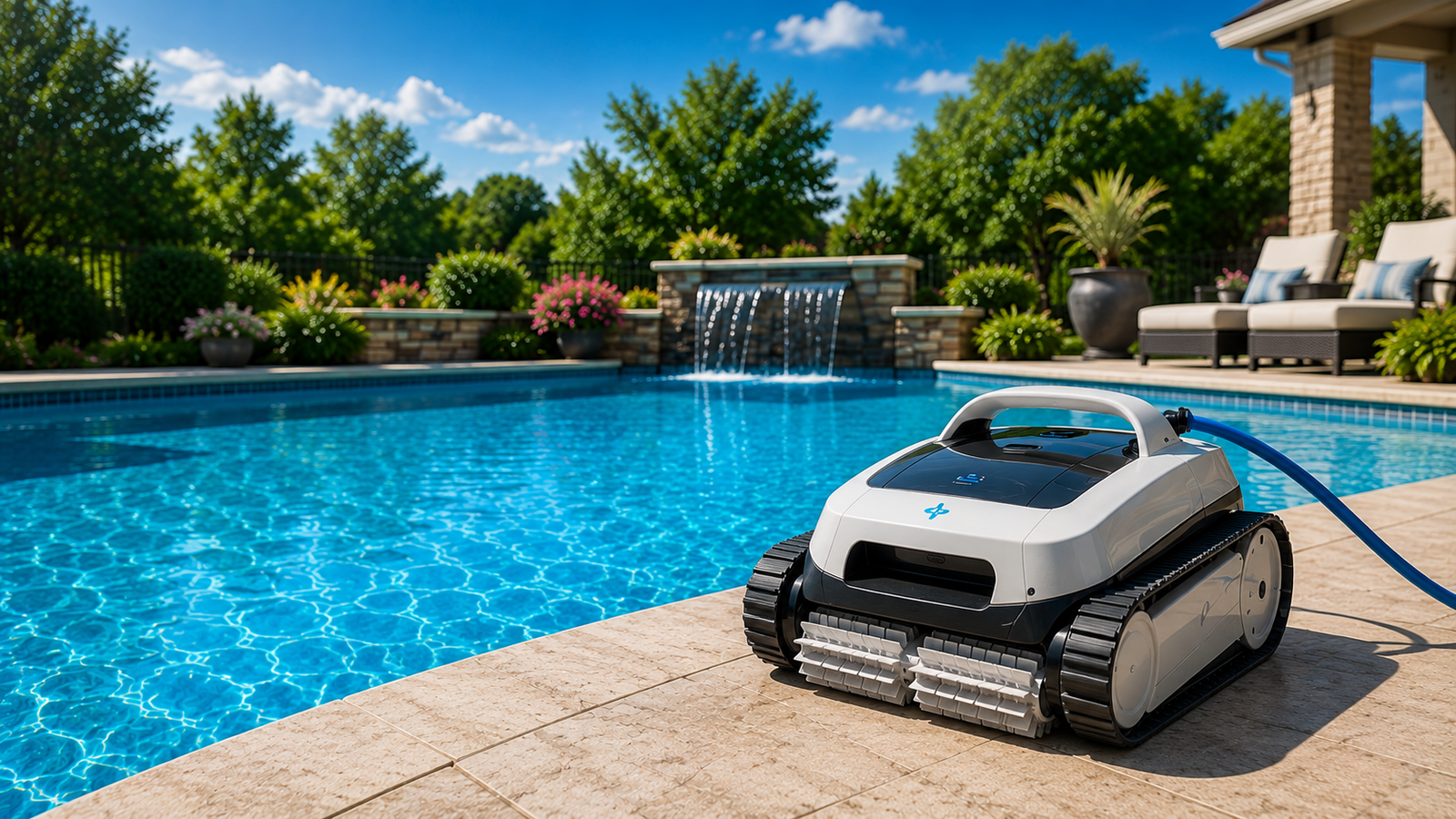
Choose by debris and pool geometry
Robotic, suction-side, pressure-side, and manual cleaners place different demands on plumbing and ownership routines. Match the cleaner to surface, steps, slopes, debris size, pool length, and desired wall or waterline coverage.
Define the decision
Identify the pool, system, safety, maintenance, and budget constraints that can change the answer.
Check primary documentation
Use current manufacturer instructions and official guidance before purchase, installation, or service.
Use the linked guides
Move from overview information to the most relevant sizing, comparison, or maintenance page.
Choose the right path
Robotic, suction-side, pressure-side, and manual cleaners place different demands on plumbing and ownership routines. Match the cleaner to surface, steps, slopes, debris size, pool length, and desired wall or waterline coverage.
Best Automatic Pool Cleaners
Compare robotic, suction, and pressure-side choices.
Robotic Pool Cleaners
Independent filtration and programmable cycles.
Cordless Robotic Cleaners
Cable-free handling with battery limits.
Robotic vs Suction
Compare plumbing demand, filtration, and cost.
Cleaner Buying Guide
Match coverage, debris, and pool geometry.
Cleaner Maintenance
Care for filters, hoses, tracks, brushes, and cables.
What to verify before buying
System compatibility
Confirm pool type, surface, plumbing, electrical service, control system, equipment-pad space, and manufacturer limits.
Correct sizing
Use measured pool and system information rather than choosing by a single headline specification.
Ownership work
Compare cleaning, winterization, storage, replacement parts, service access, and routine inspection.
Safety and codes
Follow current manuals and local requirements for installation, barriers, electrical, gas, bonding, and operation.
Frequently asked questions
Which pool cleaner type is easiest to operate?
Robotic cleaners are independent of the pool circulation system and often have simple filter access, but they still require lifting, cleaning, and storage. The easiest choice depends on pool shape and owner routine.
Do robotic cleaners replace filtration?
No. They provide supplemental debris removal and localized filtration but do not replace the pool’s circulation, sanitation, or main filter system.
What cleaner works best for leaves?
Prioritize a large debris chamber, suitable intake, and navigation that reaches leaf-collection zones. Pressure-side and some robotic cleaners are often considered for heavier debris.
Can one cleaner handle floors, walls, and waterline?
Some models are designed for all three, while others clean floors only or provide limited wall coverage. Confirm the manufacturer’s rated coverage for the exact model.
Are cordless robotic cleaners better?
They remove cable management but introduce battery runtime, charging, retrieval, and battery-aging considerations. Corded units may suit longer or repeated cycles.
Can a cleaner damage a vinyl liner?
Use a model explicitly compatible with vinyl surfaces and inspect brushes, wheels, and exposed parts. Stop use if the cleaner catches, abrades, or stresses the liner.
How often should a pool cleaner run?
Frequency depends on debris, season, pool use, sanitation, and the cleaner’s cycle. Empty filters and inspect the unit often enough to prevent restricted performance.
Use the guide that matches your pool
Verify current specifications, compatibility, installation requirements, and seller terms before making a decision.