
Robotic vs Suction Pool Cleaners
Compare robotic and suction pool cleaners by cleaning power, operating cost, filtration impact, setup, maintenance and the pools each type suits best.
Quick decision guide
The deciding factors are system dependence, debris type, pool coverage and day-to-day handling.
Low-voltage power supply or onboard battery
Pool pump suction
View Available OptionsCleaner filter basket or cartridge
Pool filter and pump basket
View Available OptionsIndependent of circulation flow
Requires adequate pump flow
View Available OptionsWhat matters most
Compare the key differences
| Factor or option | Best fit / first choice | What to know |
|---|---|---|
| Power source | Low-voltage power supply or onboard battery | Pool pump suction |
| Debris destination | Cleaner filter basket or cartridge | Pool filter and pump basket |
| Pump dependence | Independent of circulation flow | Requires adequate pump flow |
| Typical strength | Fine debris, programmed coverage, some wall cleaning | Simple floor cleaning and small debris |
| Ownership trade-off | Higher purchase cost; electronics and drive parts | Lower equipment complexity; adds load to filtration system |
How to make the right choice
How robotic cleaners work
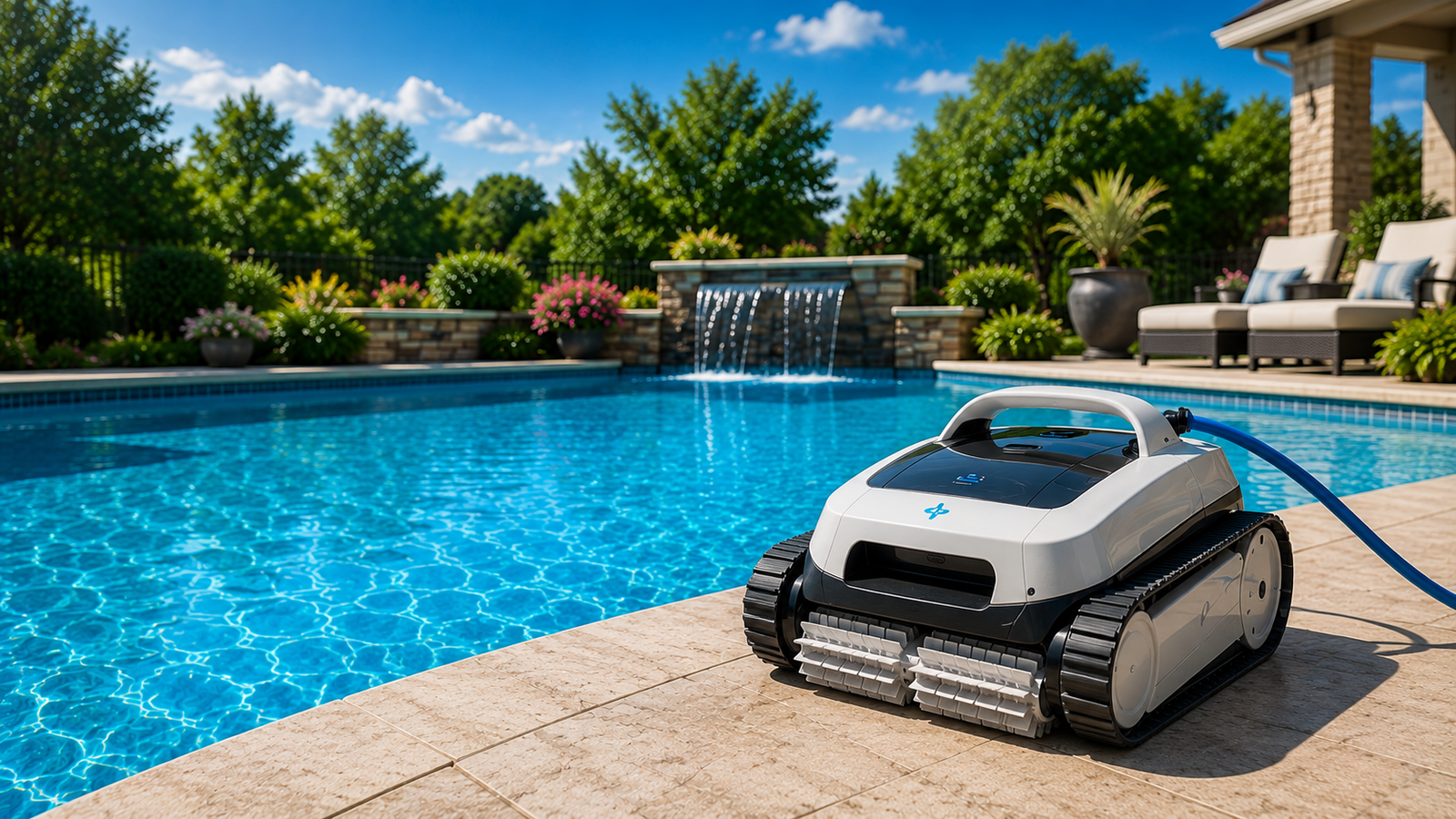
Robotic cleaners use their own drive motors and onboard filtration. Corded units receive low-voltage power from a transformer kept away from the water; cordless units use rechargeable batteries. Because debris stays in the cleaner, the main pool filter usually receives less additional dirt during a cleaning cycle.
How suction-side cleaners work
A suction-side cleaner connects to a skimmer or dedicated suction line. Water flow through the cleaner creates movement and carries debris into the pump basket and pool filter. Performance therefore changes with pump speed, filter condition, hose setup and the amount of suction available.
Cleaning and filtration differences
Robotic units generally give more predictable fine-particle filtration because their filter media is designed specifically for the cleaner. Suction cleaners can be effective on routine dirt, but fine debris ultimately loads the pool filter and may increase filter-cleaning frequency.
Energy and operating considerations
A robotic cleaner uses its own motor during a cycle. A suction cleaner uses the circulation pump, so its real operating cost depends on the pump speed required to move the cleaner effectively. A variable-speed pump may need a higher setting while the suction cleaner runs.
Best use cases
Robotic cleaners suit owners who prioritize independent cleaning and broad feature options. Suction cleaners suit simpler pools, moderate debris and owners comfortable tuning valves and pump speed.
Related Pool Equipment Guide pages
Frequently asked questions
Can a suction cleaner work with a variable-speed pump?
Yes, but the pump must run fast enough to provide the cleaner’s required flow. Use the cleaner flow gauge or manufacturer setup procedure rather than guessing.
Do robotic cleaners improve pool circulation?
They move water locally while cleaning, but they do not replace the pool circulation pump, return placement or filtration schedule.
Which type is better for fine dust?
A robot with an appropriate fine or ultra-fine filter is usually easier to match to silt and dust because the particles stay in the cleaner rather than loading the pool filter.
Will a suction cleaner reduce skimming?
It can if connected through the only skimmer and no valve arrangement preserves surface skimming. A dedicated suction line or carefully balanced valve setup can reduce that trade-off.
Which type handles leaves better?
It depends on intake size and basket capacity. Larger-leaf conditions often favor a robot with a large basket or a pressure-side cleaner with a debris bag.
Are robotic cleaners safe for every pool surface?
No. Verify the model’s approved surface list and brush type, especially for vinyl, fiberglass, tile and delicate finishes.
Which type is easier to maintain?
Suction cleaners have fewer electronics, but they rely on hoses, diaphragms or turbines and load the pool filtration system. Robots require filter cleaning and may eventually need tracks, brushes, cables or battery service.
Can either cleaner be left in the pool?
Follow the manual. Most manufacturers recommend removing and rinsing cleaners after use and keeping power supplies, batteries and cables stored as directed.
Choose by system fit, not marketing labels
Choose a robotic cleaner when you want independent filtration, stronger fine-debris capture and cleaning that does not consume pool-pump suction. Choose a suction-side cleaner when lower upfront complexity matters and your circulation system can provide stable flow without starving the skimmer. Confirm the final model against manufacturer documentation and use qualified installation where electrical or plumbing work is required.