
All Pool Covers
Explore safety, solar, winter and automatic pool covers by protection, heat retention, evaporation control, fit, operation and maintenance.
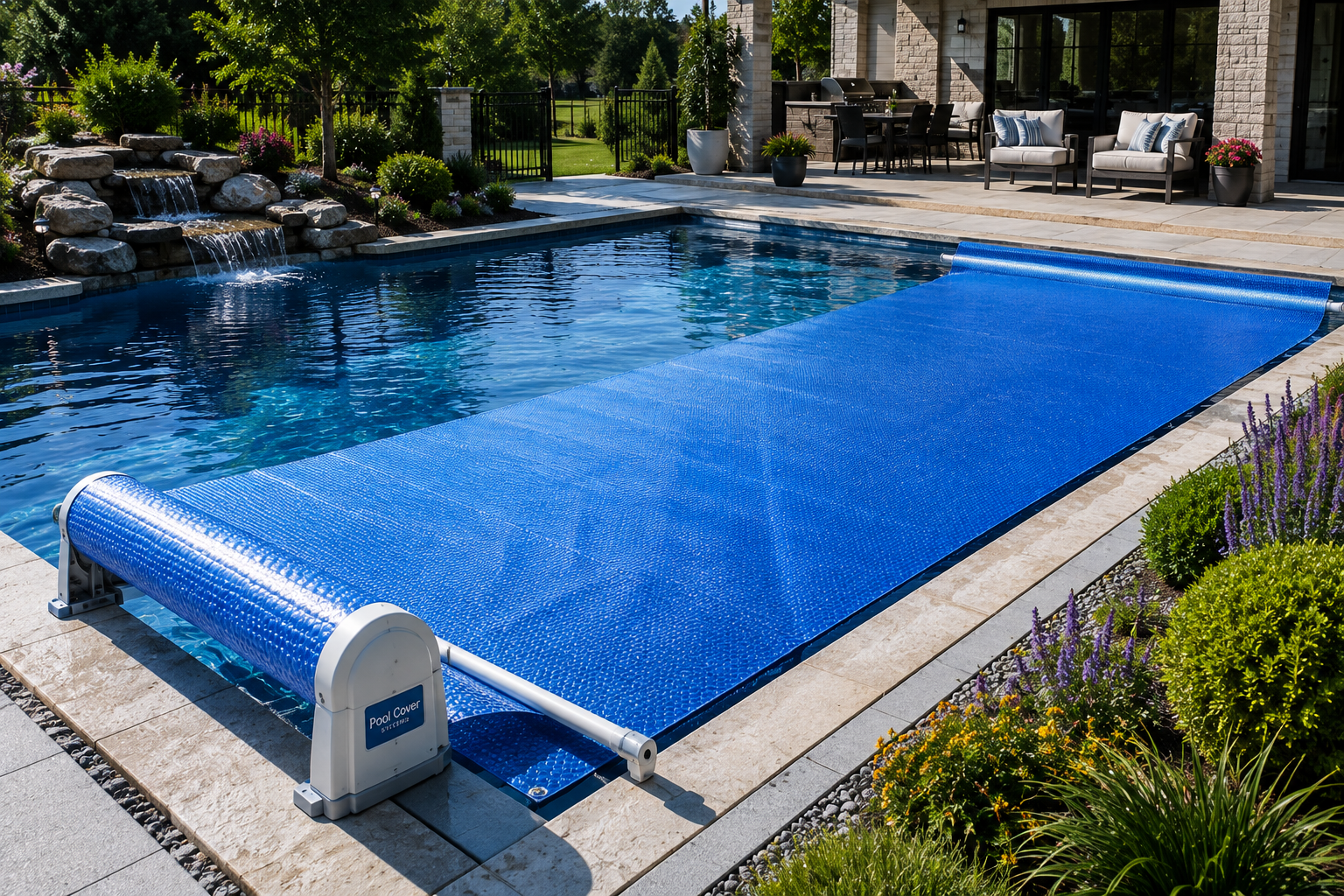
Different covers solve different problems
Safety, automatic, winter, and solar covers are not interchangeable. Choose by the primary goal—access protection, debris control, evaporation reduction, heat retention, or seasonal closure—and follow the manufacturer’s installation and inspection requirements.
Define the decision
Identify the pool, system, safety, maintenance, and budget constraints that can change the answer.
Check primary documentation
Use current manufacturer instructions and official guidance before purchase, installation, or service.
Use the linked guides
Move from overview information to the most relevant sizing, comparison, or maintenance page.
Choose the right path
Safety, automatic, winter, and solar covers are not interchangeable. Choose by the primary goal—access protection, debris control, evaporation reduction, heat retention, or seasonal closure—and follow the manufacturer’s installation and inspection requirements.
Pool Cover Buying Guides
Start with purpose, fit, operation, and maintenance.
Best Pool Equipment
See how covers fit into the full equipment system.
Pool Owner Resources
Find seasonal checklists and ownership planning.
Pool Equipment
Navigate pumps, filters, heaters, cleaners, and controls.
What to verify before buying
System compatibility
Confirm pool type, surface, plumbing, electrical service, control system, equipment-pad space, and manufacturer limits.
Correct sizing
Use measured pool and system information rather than choosing by a single headline specification.
Ownership work
Compare cleaning, winterization, storage, replacement parts, service access, and routine inspection.
Safety and codes
Follow current manuals and local requirements for installation, barriers, electrical, gas, bonding, and operation.
Frequently asked questions
Is a solar cover a safety cover?
No. A floating solar cover is designed mainly to reduce evaporation and heat loss and must not be treated as a child-safety barrier.
What makes a pool cover a safety cover?
A safety cover is designed and installed for protective performance under an applicable standard and manufacturer instructions. Fit, anchoring, condition, and correct use are critical.
Do pool covers stop evaporation?
Covers can substantially reduce evaporation while in place, but performance varies by fit, material, wind, and usage.
Can an automatic cover replace a fence?
Local rules differ, and a cover should be part of layered protection rather than a reason to reduce supervision. Follow local code and recognized pool-safety guidance.
How should a pool cover be sized?
Use exact pool dimensions, shape, obstructions, deck layout, and the manufacturer’s overlap or track requirements. Custom safety and automatic covers require especially accurate measurement.
How often should a cover be inspected?
Inspect before use and throughout the season for tears, failed anchors, track problems, standing water, gaps, and other damage. Service any safety-related defect promptly.
What is the difference between winter and safety covers?
A winter cover primarily protects the closed pool from debris and weather. Some winter covers are also rated as safety covers, but not every winter cover provides that protection.
Use the guide that matches your pool
Verify current specifications, compatibility, installation requirements, and seller terms before making a decision.