
Robotic Pool Cleaners Explained
Understand how self-contained pool robots move, scrub, filter debris and navigate without relying on the pool’s main pump and filter.
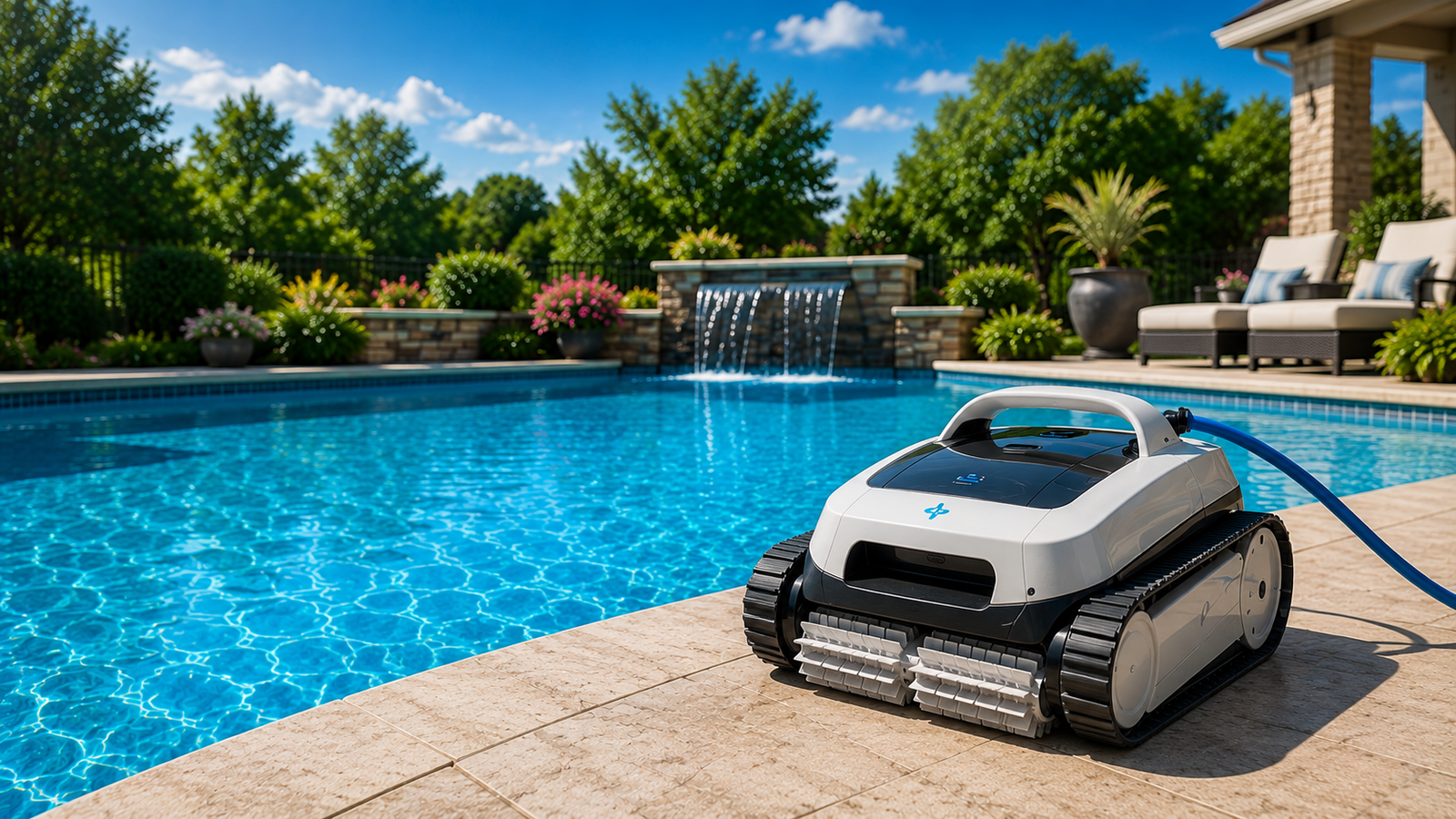
What pool owners should know first
The key principles below help separate routine ownership tasks from model-specific or professional service work.
Independent circulation
A robotic cleaner has its own pump and filter, so its cleaning cycle does not depend on the pool circulation pump.
Coverage varies
Some models clean only floors; others climb walls or scrub the waterline. Pool shape and surface still affect performance.
Maintenance is simple but essential
Empty and rinse the filter after use, inspect brushes and tracks, and store the cleaner according to its manual.
How a robotic pool cleaner works
Use these points as a practical decision and maintenance framework, then follow the exact manual for your equipment.
Low-voltage power
Corded robots use a dedicated power supply that converts household electricity to low-voltage power. Cordless units use rechargeable batteries.
Onboard suction and filtration
An internal pump draws water and debris through a basket or filter panels, then returns filtered water to the pool.
Drive and scrubbing
Motors turn wheels, tracks or rollers while brushes loosen dirt from the surface. Traction and brush design determine climbing ability.
Navigation
Depending on the model, navigation may rely on timed patterns, sensors, gyroscopes, algorithms or app-defined cycles.
What determines cleaning coverage
Use these points as a practical decision and maintenance framework, then follow the exact manual for your equipment.
Pool surface and slope
Vinyl, fiberglass, tile and plaster provide different traction. Sharp transitions, benches and complex steps may limit access.
Debris type
Coarse baskets suit leaves and larger material; fine filters help capture sand and silt. Some systems support interchangeable filtration.
Cable or battery limits
A cord must reach the entire pool without unsafe extension arrangements. A battery must provide enough runtime for the intended cycle.
Ownership considerations
Use these points as a practical decision and maintenance framework, then follow the exact manual for your equipment.
Lift and retrieval
Water drains as the robot is lifted, but larger units can still be heavy. Use the handle rather than pulling on the cable.
Filter care
Rinse the filter after each cycle or as directed. A loaded filter reduces flow and pickup performance.
Storage
Keep the cleaner, cable and power supply protected from prolonged sun, rain and freezing conditions.
Common mistakes to avoid
Frequently asked questions
Do robotic pool cleaners use the pool pump?
No. A robotic cleaner is generally self-contained with its own drive, pump and filtration system. The main pool pump can usually operate on its normal schedule independently.
Can a robotic pool cleaner climb walls?
Only models designed and rated for wall climbing should be expected to do so. Surface material, algae, worn brushes and unusual wall transitions can affect traction.
Do pool robots clean steps?
Many may contact wide steps or benches, but complete step coverage is not guaranteed. Check model guidance and expect some manual brushing in complex areas.
Are corded robotic cleaners safe in water?
They are designed for pool use with a dedicated low-voltage power supply and required electrical protections. Follow all placement, outlet and swimmer-removal instructions in the manual.
How often should the filter be cleaned?
Many manufacturers recommend rinsing the basket or panels after each cycle. Heavy debris may require cleaning during a cycle to restore flow.
Can I leave a robotic cleaner in the pool all week?
Follow the model’s manual. Extended chemical exposure, sun and unnecessary immersion can age components, and the unit should be removed before swimmers enter when directed.
What is the difference between fine and coarse filters?
Coarse filtration holds leaves and larger debris with less restriction, while fine media captures smaller particles. The best choice depends on the debris in your pool.
How long does a cleaning cycle take?
Cycle length varies by model and selected mode. Use the manufacturer’s stated programs and choose a cycle that matches the pool size and debris load.
Related Pool Equipment Guide resources
Use the manual, verify conditions and make measured changes
Understand how self-contained pool robots move, scrub, filter debris and navigate without relying on the pool’s main pump and filter. Match every procedure to the exact equipment model, pool configuration and local requirements. Stop and use qualified service whenever the task involves hazardous voltage, gas, combustion, refrigerant, structural work or an unsafe chemical condition.