
Best Pool Cleaners for Inground Pools
Compare inground pool cleaners for floor, wall and waterline coverage, debris handling, pool shape, surface compatibility and maintenance needs.
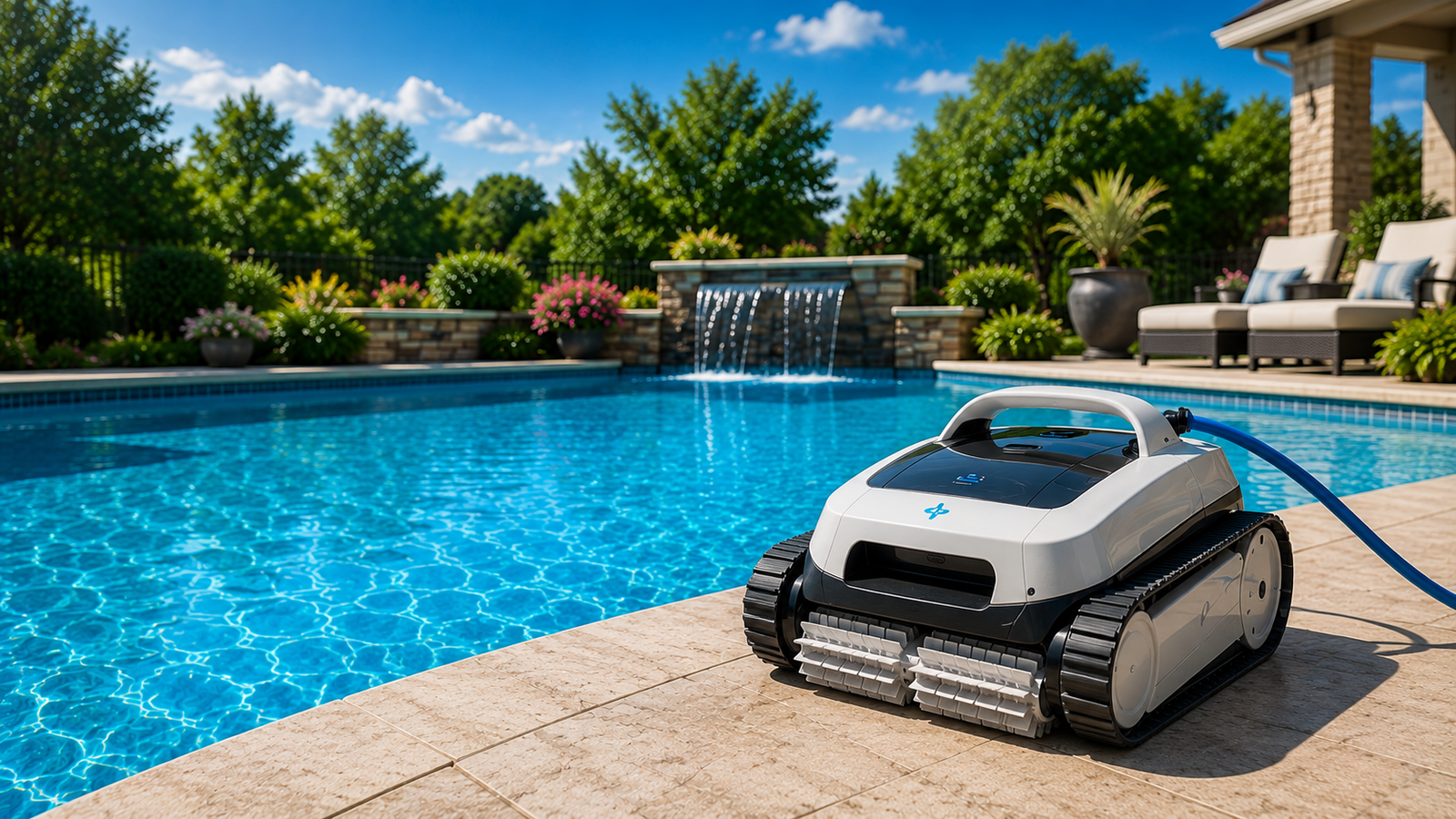
Start with the right equipment path
Use these options as a shortlist, then verify pool dimensions, surface, plumbing and debris conditions against current manufacturer documentation.
Dolphin S200
Best full-surface robotic option
View Available OptionsPentair Racer
Best pressure-side option for larger debris
View Available OptionsHayward AquaNaut 400
Best suction-side choice for large or deep pools
View Available OptionsCompare the leading cleaner types
| Model | Best for | Power format | Coverage focus | Options |
|---|---|---|---|---|
| Dolphin S200 | Best full-surface robotic option | Corded robotic | Inground pools needing consistent floor-to-waterline cleaning. | View |
| Pentair Racer | Best pressure-side option for larger debris | Pool-powered | Leaf-heavy inground pools with compatible pressure-side plumbing. | View |
| Hayward AquaNaut 400 | Best suction-side choice for large or deep pools | Pool-powered | Owners who prefer suction-side cleaning and have suitable pump flow. | View |
Cleaner options worth comparing
PRODUCT FAMILY
Dolphin S200
Best full-surface robotic option
The S200 is designed for floor, wall and waterline cleaning and uses a self-contained filtration system, keeping collected debris out of the pool filter.
Pros
- Full-surface coverage
- Independent filtration
- Two-hour cleaning cycle
Cons
- Cord management required
- Steps may still need manual attention
PRODUCT FAMILY
Pentair Racer
Best pressure-side option for larger debris
Pentair’s Racer is a pressure-side inground cleaner with an onboard debris path and adjustable flow. It is relevant where leaves and larger debris are common and the pool has suitable plumbing.
Pros
- Handles larger debris
- Adjustable flow control
- Onboard collection
Cons
- May require dedicated pressure plumbing
- More moving parts than a simple suction cleaner
PRODUCT FAMILY
Hayward AquaNaut 400
Best suction-side choice for large or deep pools
Hayward describes the four-wheel AquaNaut models as suitable for larger pools and deep ends, with flexible vanes designed to pass larger debris.
Pros
- Works with variable-speed pump flow
- Four-wheel stability
- Interchangeable throats
Cons
- Loads debris into pool filtration
- Performance depends on hydraulic setup
How to choose for this use case
Pool shape
Deep ends, slopes, coves and freeform walls affect navigation.
Plumbing
Suction and pressure cleaners depend on suitable lines and balanced flow.
Surface
Confirm brush, tire and track compatibility with plaster, tile, fiberglass or vinyl.
Debris
Match basket, bag or filter media to leaves, sand or mixed debris.
Maintenance that protects performance
After every cycle
Empty and rinse the basket or bag, then remove hair from brushes, tracks and intake openings.
Weekly inspection
Check cords, swivel, hoses, tires, tracks and connectors for wear or obstruction.
Water balance
Maintain chemistry within equipment specifications because extreme conditions can damage surfaces and components.
Storage
Store the cleaner and power supply or charger out of direct weather according to the manufacturer instructions.
Frequently asked questions
What cleaner type is usually best for inground pool cleaners?
The best type depends on pool plumbing, surface, debris and desired coverage. Robotic cleaners are independent, suction cleaners use the pool filter, and pressure cleaners often collect debris in a separate bag.
How do I verify pool-surface compatibility?
Check the current manufacturer manual and product specification for approved surfaces. Also inspect the pool for damaged liners, loose tile or sharp edges before use.
Does pool size affect cleaner selection?
Yes. Compare maximum pool length, cable reach, battery runtime or rated coverage, and consider deep ends and irregular shapes.
How often should the cleaner run?
Start with the manufacturer’s normal cycle several times per week and adjust for weather, swimmer load and debris. Water chemistry and circulation must still be maintained separately.
What maintenance does an automatic cleaner need?
Empty and rinse the basket or bag, inspect brushes and tracks, remove wrapped hair, check hoses or cables, and store the unit as directed.
Can an automatic cleaner handle stairs and ledges?
Coverage is inconsistent because many cleaners need adequate depth and a broad surface for traction. Manual brushing or spot vacuuming is usually still necessary.
Should the main pool pump run during robotic cleaning?
Robotic cleaners generally do not require it for propulsion or debris collection. Normal circulation may still be scheduled separately for filtration, heating and sanitation.
What should I check before the first cleaning cycle?
Remove large objects, balance water chemistry, confirm the cleaner is assembled correctly, and follow the manual for cable layout, hose length or charging.
Related Pool Equipment Guide resources
Choose by compatibility, not feature count
Choose Dolphin S200 when its documented pool-size, surface and coverage limits match your pool. The other options make more sense when their power format or debris-handling approach better fits the installation.