
Best Automatic Pool Cleaners
Compare robotic, suction-side and pressure-side pool cleaners for debris pickup, coverage, maintenance, pool compatibility and overall value.
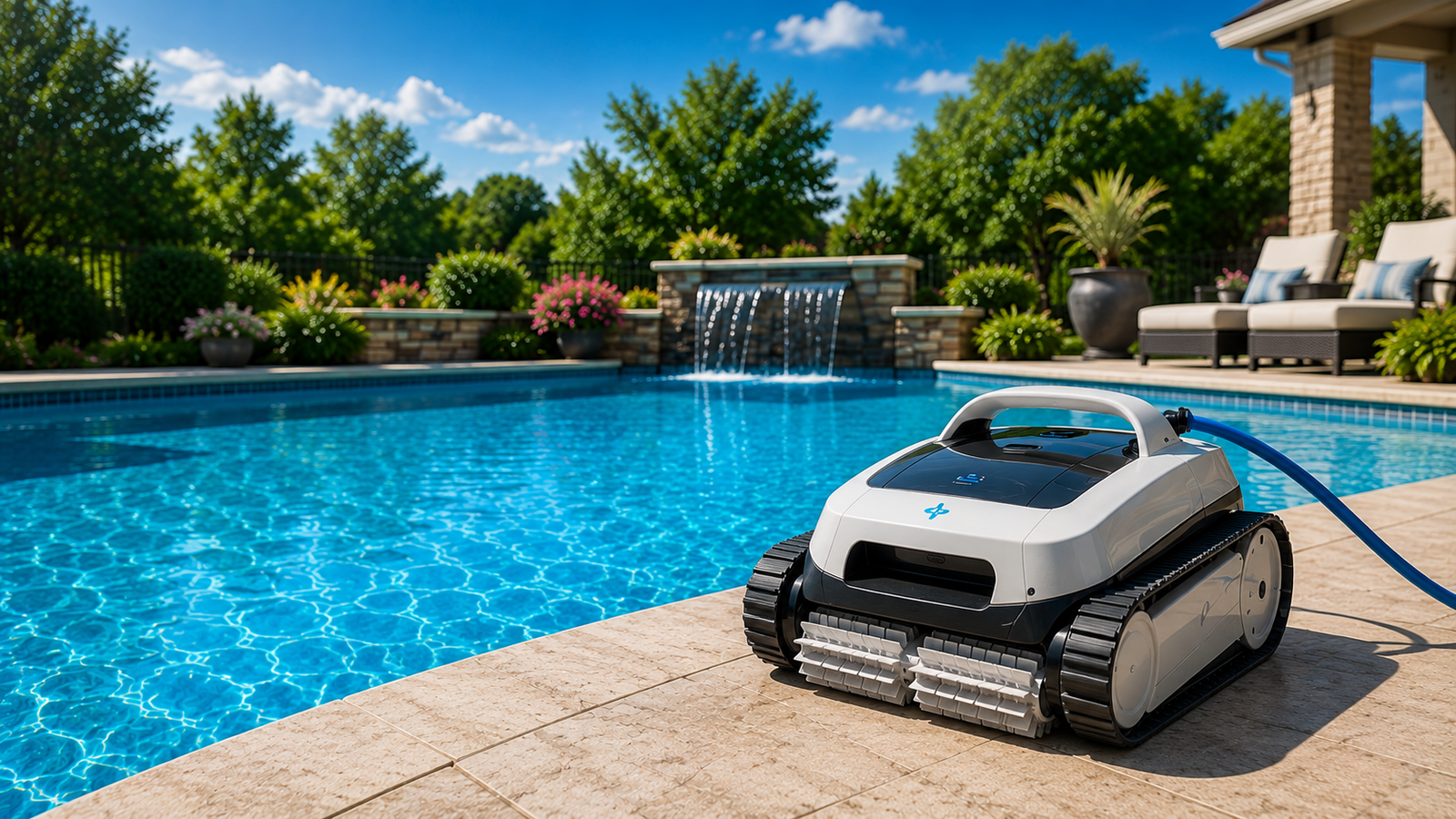
Start with the right equipment path
Use these options as a shortlist, then verify pool dimensions, surface, plumbing and debris conditions against current manufacturer documentation.
Robotic cleaners
Self-contained electric units scrub and filter independently of the pool pump. They are usually the easiest route to floor-and-wall coverage.
Suction-side cleaners
Connect to the skimmer or suction line and send debris toward the pool filtration system. They can be simple and economical when pump flow is suitable.
Pressure-side cleaners
Use return-side water pressure and commonly collect debris in an onboard bag. Some installations need a dedicated line or booster pump.
Choose equipment as one connected system
The right automatic cleaner depends first on where debris should go: into the robot’s own basket, through the pool filter, or into a pressure-side debris bag.
Robotic cleaners
Self-contained electric units scrub and filter independently of the pool pump. They are usually the easiest route to floor-and-wall coverage.
Suction-side cleaners
Connect to the skimmer or suction line and send debris toward the pool filtration system. They can be simple and economical when pump flow is suitable.
Pressure-side cleaners
Use return-side water pressure and commonly collect debris in an onboard bag. Some installations need a dedicated line or booster pump.
Manual vacuums
Remain useful for spot cleaning, stairs and areas an automatic cleaner misses.
Where to begin
Reduce manual cleaning
Compare automatic cleaner types and decide whether debris should stay in a self-contained basket or pass through pool filtration.
Lower circulation cost
Review variable-speed pumps and use only the flow needed for filtration, heating and water features.
Improve water clarity
Select filter type and size based on flow, debris and maintenance preferences.
Extend swim season
Compare heater technologies by climate, fuel availability, heat-up speed and cover use.
Frequently asked questions
What are the main types of automatic pool cleaners?
The three main categories are robotic, suction-side and pressure-side cleaners. They differ in power source, debris collection, installation needs and how much they depend on the pool circulation system.
Which automatic cleaner uses the pool filter?
Suction-side cleaners normally route debris through the skimmer basket, pump basket and pool filter. This can increase filter loading, especially where fine debris is common.
Do robotic cleaners need the pool pump running?
Most residential robotic cleaners operate independently using a low-voltage power supply or an onboard battery. Follow the cleaner manual and maintain normal circulation for water quality separately.
Are pressure-side cleaners good for leaves?
They can be effective where larger debris is common because many use an onboard debris bag. Confirm whether the pool has the required return-side connection and whether a booster pump is needed.
Will an automatic cleaner handle steps and benches?
Coverage varies, and many cleaners do not consistently clean steps, benches or shallow ledges. Plan to brush or vacuum those areas manually.
How do I match a cleaner to my pool surface?
Check the manufacturer’s approved surfaces and traction components. Vinyl, fiberglass, tile and textured finishes can require different brushes, tires or settings.
How often should I empty the cleaner?
Empty the basket or bag after each cycle when debris is heavy, and before storage. A full debris container reduces flow and can impair cleaning.
Can I leave an automatic cleaner in the pool all the time?
Follow the manufacturer’s instructions. Removing the unit after use can reduce exposure to chemicals and sunlight and makes it easier to inspect the cord, tracks, brushes and filter.
Related Pool Equipment Guide resources
Choose by compatibility, not feature count
Build the system around compatibility and maintenance access rather than buying the largest or most feature-heavy component in every category.