
All Pool Filters
Explore cartridge, sand and DE pool filters with guidance on sizing, flow capacity, water clarity, cleaning, maintenance and system compatibility.
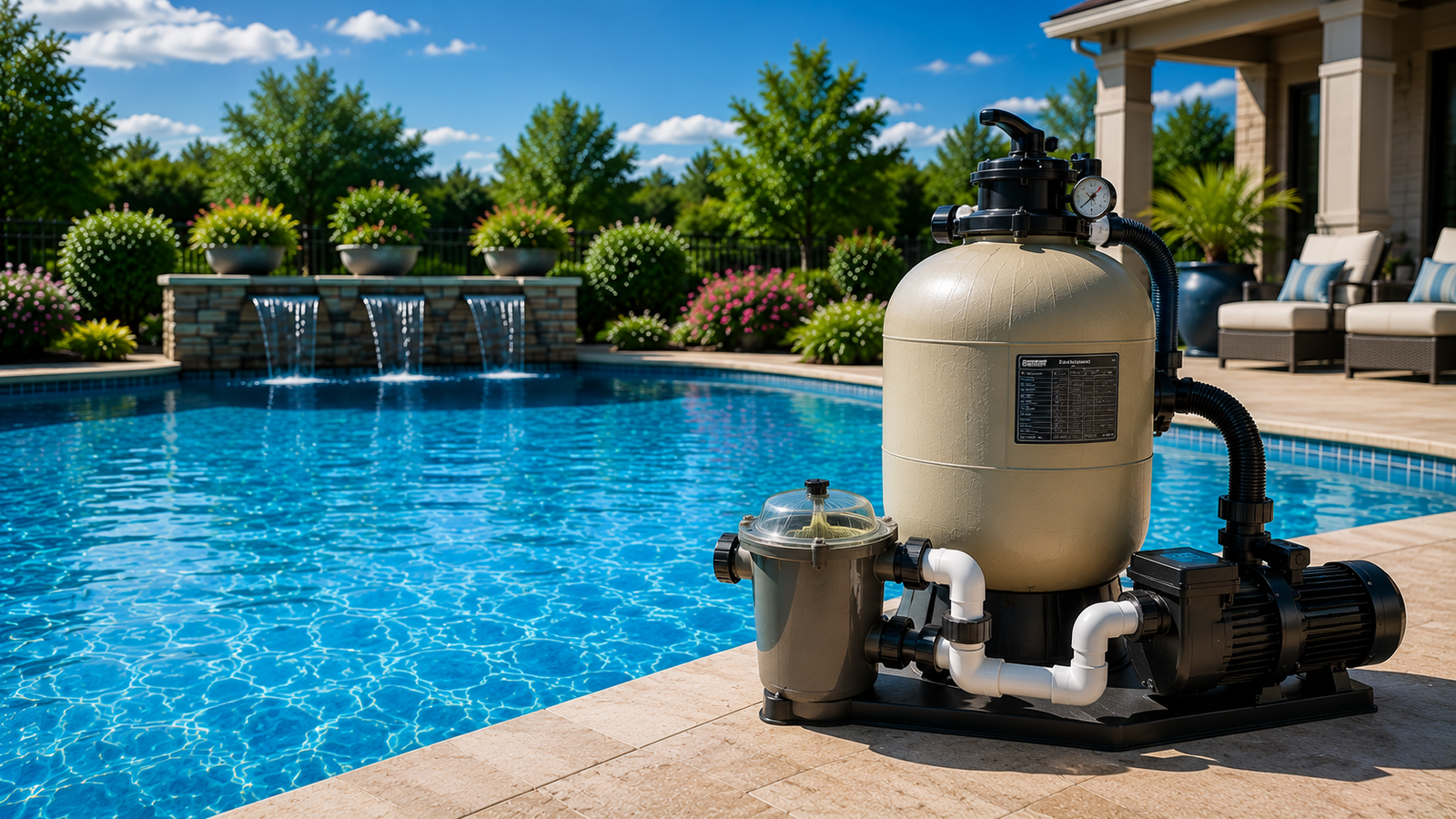
Filter choice is a system decision
Cartridge, sand, and diatomaceous-earth filters differ in filtration fineness, cleaning method, water use, footprint, and service effort. Correct sizing and compatible flow matter as much as filter type.
Define the decision
Identify the pool, system, safety, maintenance, and budget constraints that can change the answer.
Check primary documentation
Use current manufacturer instructions and official guidance before purchase, installation, or service.
Use the linked guides
Move from overview information to the most relevant sizing, comparison, or maintenance page.
Choose the right path
Cartridge, sand, and diatomaceous-earth filters differ in filtration fineness, cleaning method, water use, footprint, and service effort. Correct sizing and compatible flow matter as much as filter type.
Best Pool Filters
Compare filtration systems and ownership tradeoffs.
Cartridge Filters
Low-water cleaning and compact equipment pads.
Sand Filters
Simple operation with periodic backwashing.
DE Filters
Fine filtration with more involved service.
Filter Sizing Guide
Match effective area and flow capacity.
Filter Maintenance
Use pressure rise and manufacturer guidance to plan cleaning.
What to verify before buying
System compatibility
Confirm pool type, surface, plumbing, electrical service, control system, equipment-pad space, and manufacturer limits.
Correct sizing
Use measured pool and system information rather than choosing by a single headline specification.
Ownership work
Compare cleaning, winterization, storage, replacement parts, service access, and routine inspection.
Safety and codes
Follow current manuals and local requirements for installation, barriers, electrical, gas, bonding, and operation.
Frequently asked questions
Which pool filter type removes the finest particles?
DE filters generally provide finer filtration than typical sand or cartridge systems, but they also require specific maintenance and handling. Actual performance depends on the model, media condition, flow, and operation.
How do I size a pool filter?
Use the manufacturer’s effective filtration area and maximum flow rating, then choose enough capacity for the pump and desired cleaning interval. Oversizing the filter can reduce cleaning frequency and pressure rise.
When should a filter be cleaned?
Use the clean starting pressure and the manufacturer’s recommended pressure-rise threshold rather than a fixed calendar alone. Flow decline and water conditions also matter.
Do cartridge filters waste less water?
Cartridge filters are typically removed and rinsed rather than backwashed, so routine cleaning can use less water than backwashing. Local water restrictions and cleaning practices still matter.
Can I switch filter types without changing plumbing?
A conversion may require different valves, waste lines, pad space, plumbing elevations, and flow settings. Check all equipment limits before changing types.
Why does filter pressure rise quickly?
Heavy debris, algae, undersizing, clogged media, restricted return flow, or a dirty filter can cause rapid pressure rise.
Does clear water mean filtration is correct?
Not always. Water can appear clear while chemistry, circulation, or sanitation is inadequate. Filtration works with disinfection and balanced operation, not as a substitute for them.
Use the guide that matches your pool
Verify current specifications, compatibility, installation requirements, and seller terms before making a decision.