
Best Sand Pool Filters
Compare sand pool filters by tank size, flow rate, backwashing, valve design, maintenance needs and suitability for inground and above-ground pools.
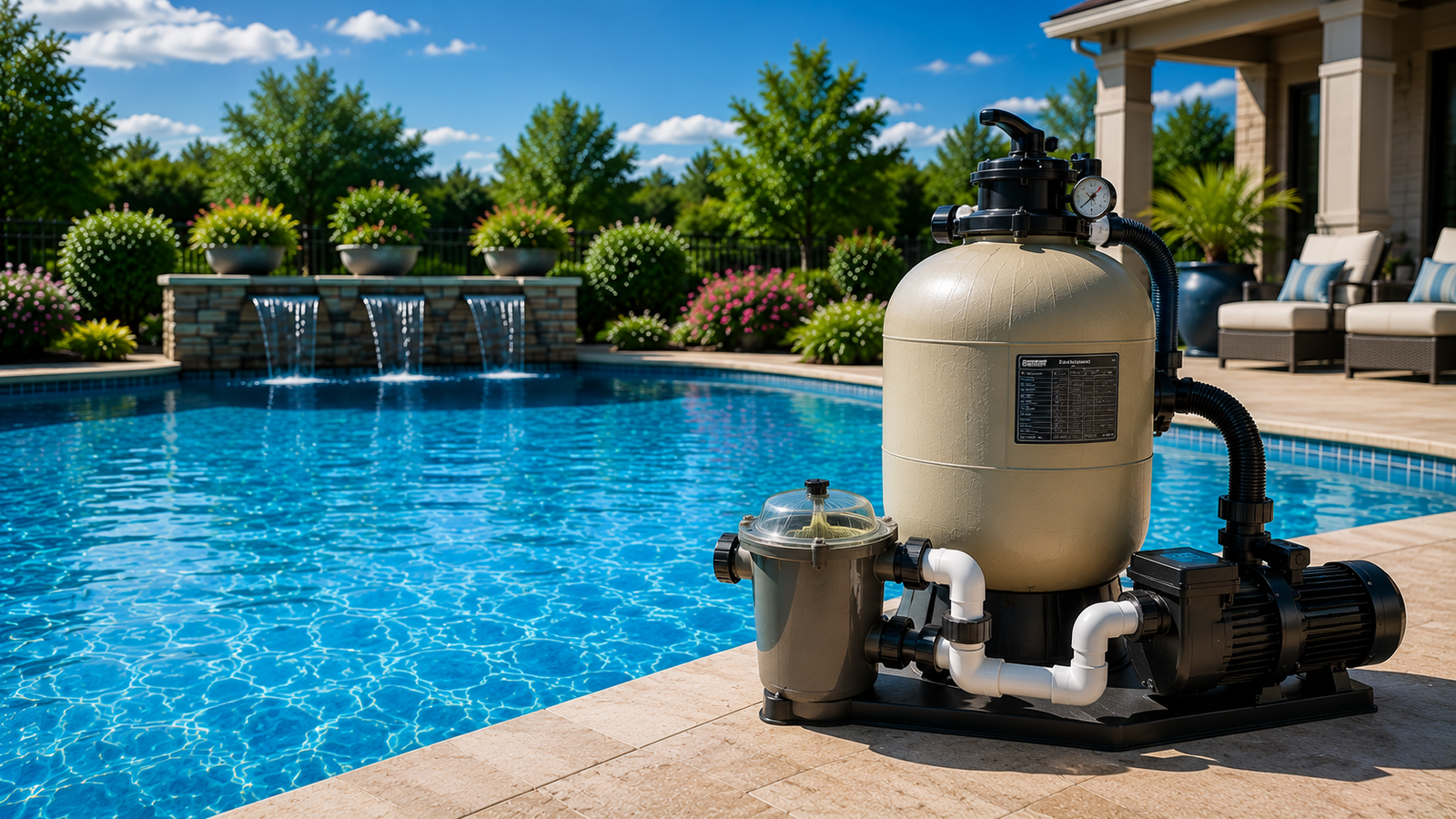
Start with the right decision factors
Use these priorities before comparing secondary features or brand claims.
Compact installation
Valve removal can complicate media service
View Available OptionsConvenient tank access
Uses more equipment-pad space
View Available OptionsLarger tanks support more media and flow
Must match pump and pad
View Available OptionsWhat should you choose?
Compare the important factors
| Factor | Best fit or first choice | What to know |
|---|---|---|
| Top-mount valve | Compact installation | Valve removal can complicate media service |
| Side-mount valve | Convenient tank access | Uses more equipment-pad space |
| Tank diameter | Larger tanks support more media and flow | Must match pump and pad |
| Backwash setup | Needs a legal, practical waste route | Consumes treated pool water |
| Media | Use only manufacturer-specified type and amount | Incorrect media can damage performance |
How to make the right choice
Size the tank correctly
Tank diameter and sand weight determine filtration capacity. Pair the filter with the real system flow, not only pool gallons.
Plan backwash discharge
Confirm where backwash water may legally and safely go. Local restrictions can affect whether sand is the best choice.
Use the correct media
Follow the manual for media grade and weight. Protect laterals during filling and add water first when directed.
Watch pressure trends
Backwash based on pressure rise and flow reduction. Repeated short cycles can indicate channeling, incorrect flow or water-quality problems.
Maintain the valve and laterals
Inspect the multiport gasket, pressure gauge, air relief and internal laterals when symptoms suggest bypass or media return.
Common buying mistakes
Related Pool Equipment Guide pages
Frequently asked questions
How do I know whether a sand pool filter is compatible with my pool?
Check the manufacturer specifications for pool volume, plumbing size, design flow, surface type and equipment-pad limits. Match those requirements to the existing system before ordering.
Can a sand pool filter be oversized?
Yes. Oversizing can create unnecessary cost, excessive flow or awkward maintenance. Selection should be based on required flow and system resistance rather than the largest advertised capacity.
Does a sand pool filter require professional installation?
Electrical, plumbing or pressure-vessel work should be handled by a qualified pool professional where required. Simple cartridge cleaning and routine inspections can usually be handled by an owner following the manual.
How often should a sand pool filter be maintained?
Use pressure rise, flow reduction and the manufacturer schedule rather than a fixed calendar alone. Debris load, swim season and landscaping can change the maintenance interval substantially.
Will a sand pool filter lower operating costs?
It may when it reduces restriction, avoids unnecessary pump speed or extends cleaning intervals. Actual savings depend on pump settings, run time, local electricity and water costs, and system condition.
What measurements should I collect before buying a sand pool filter?
Record pool volume, pipe size, equipment location, current model information and normal operating pressure. For pumps, estimate total dynamic head; for filters, confirm design flow and available pad space.
Can I replace only one part of the system with a sand pool filter?
Often yes, but the replacement must remain compatible with the pump, filter, heater, sanitizer and automation. A change in one component can alter system flow or pressure.
Choose by hydraulic fit and maintenance needs
Choose a sand filter with adequate tank diameter and design flow for the pump, a serviceable multiport valve and enough media capacity for the debris load. Sand filters are attractive for straightforward backwashing, but they use pool water during cleaning and do not filter as finely as DE. Confirm the final selection with current manufacturer documentation and use qualified installation for electrical, plumbing or pressure-vessel work.