
Pool Filter Comparisons
Compare cartridge, sand and diatomaceous-earth filters by filtration fineness, flow resistance, cleaning process, water use and maintenance effort.
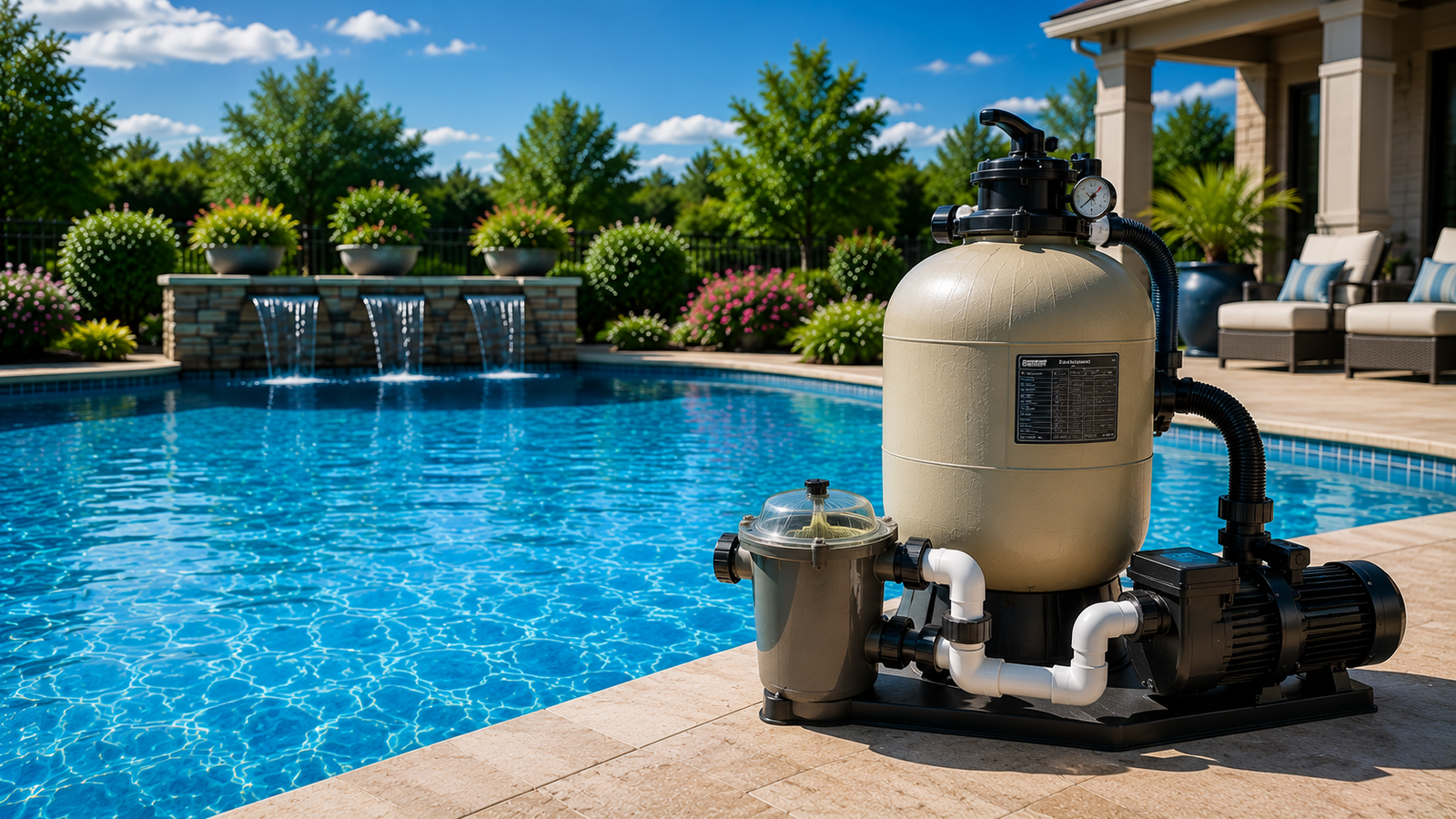
What to compare first
Compare cartridge, sand and DE pool filters by particle capture, water clarity, flow, cleaning frequency, water use and ownership cost.
Cartridge
No backwash valve is normally needed; elements are removed and rinsed.
Sand
Simple media bed and backwashing; performance depends on correct flow and maintenance.
DE
Fine filtration with powder or grid maintenance and specific handling requirements.
Start with the guide that matches your decision
Use this index to move from a broad overview to the specific sizing, compatibility or comparison question you need to solve. Each linked page is part of the approved Pool Equipment Guide content map.
Understand the main options
| Option | What distinguishes it | Focus | Current selection |
|---|---|---|---|
| Cartridge filter | Pleated elements capture debris and are cleaned by removal and rinsing. | Key distinction | View Options |
| Sand filter | Water passes through a media bed; backwashing reverses flow to remove debris. | Key distinction | View Options |
| DE filter | Uses diatomaceous-earth media on internal grids or elements for fine filtration. | Key distinction | View Options |
Choose by compatibility before features
Define the job
Write down the pool type, size, climate, debris or heating load, and the result the equipment must deliver.
Verify the system
Check plumbing, flow, electrical service, control compatibility, physical space and manufacturer requirements.
Compare daily operation
Consider schedules, cleaning steps, noise, water use, energy demand and how often you will interact with the equipment.
Plan for service
Look at access, consumables, replacement parts, winterization and the availability of qualified service where needed.
Compare more than the purchase price
Installation, operating energy, water use, cleaning frequency, consumables and repair access can change the practical value of pool equipment. Use Cartridge vs Sand Filters for the broad decision, then narrow the choice with Sand vs DE Filters and Pool Filter Sizing Guide.
Common comparison errors
Frequently asked questions
Which pool filter requires the least water for cleaning?
Cartridge filters typically avoid routine backwashing, so they can use less water during cleaning. The elements still require thorough rinsing and periodic deeper service.
Which filter captures the finest particles?
DE filters are generally associated with the finest nominal filtration among the three common types. Actual water clarity also depends on sizing, flow and chemistry.
How do I know when to clean a filter?
Record the clean starting pressure and follow the manufacturer’s threshold. Many manuals call for cleaning after pressure rises roughly 8–10 psi or flow drops significantly.
Is a larger filter better?
More filtration area can reduce cleaning frequency and flow resistance, but the filter must still match pump flow, plumbing and available space.
Do sand filters need new sand every year?
Usually not. Media replacement should be based on condition, performance and manufacturer guidance rather than an automatic annual schedule.
Can I switch filter types without changing plumbing?
Sometimes, but port locations, valve requirements, flow ratings and equipment-pad space may require plumbing changes.
Why does filter pressure rise quickly after cleaning?
Possible causes include heavy debris, algae, undersized filtration, restricted return flow or incomplete cleaning. Diagnose the water and system rather than repeatedly backwashing.
Should I size the pump or filter first?
Treat them as a system. The filter’s design flow must accommodate the pump’s operating flow, and the pump should be selected for the pool’s hydraulic needs.
Use the specific guide for your pool
Begin with compatibility and the actual job the equipment must perform. Then compare operating demands and ownership cost before selecting a product category.