
Water Chemistry Academy
Learn how testing, sanitizer, pH, alkalinity, stabilizer and calcium work together.
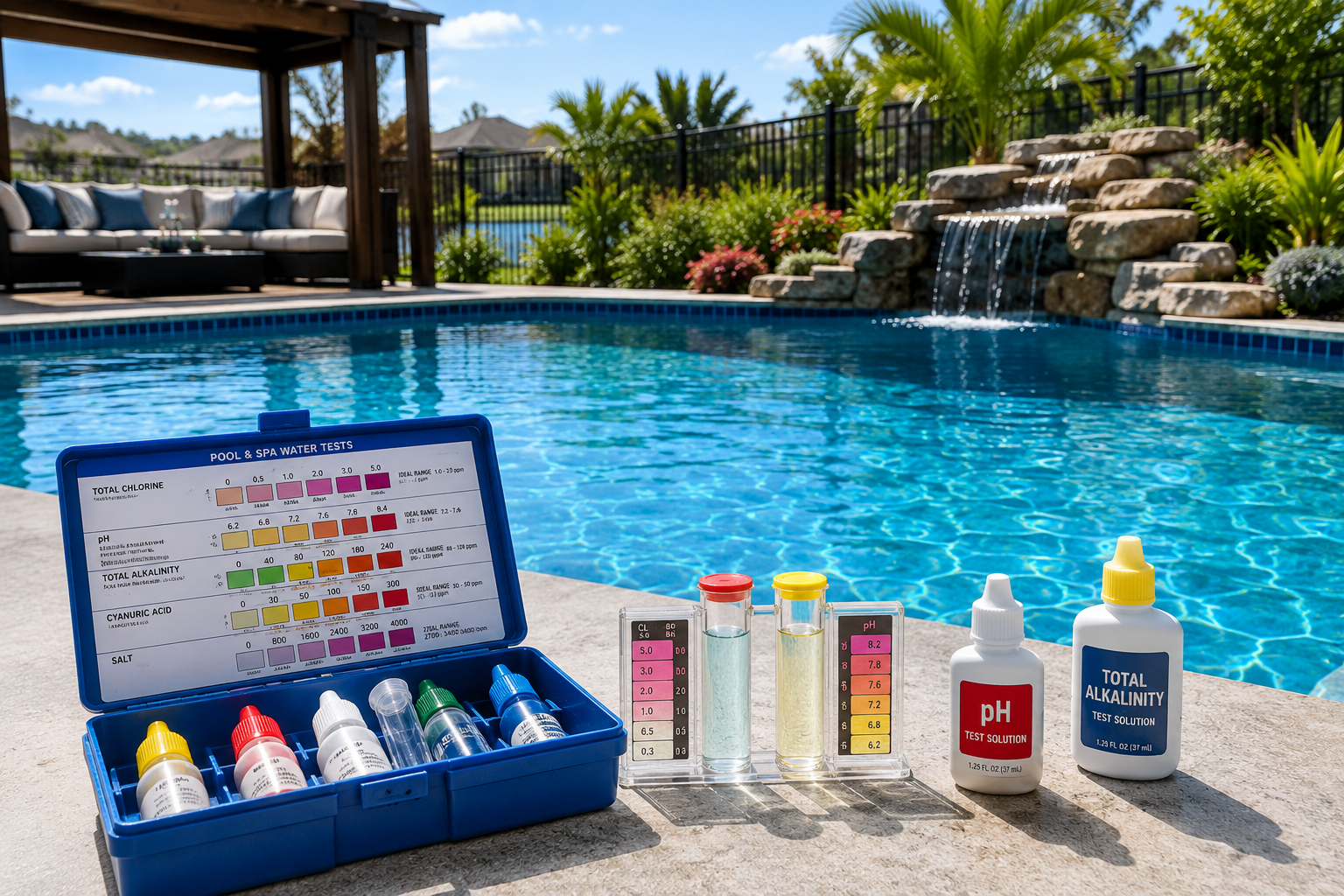
Use the right path for your pool
Start with measured conditions, system compatibility and the ownership task you want to improve.
Maintain an effective residual
Chlorine or bromine works with circulation and filtration.
View Available OptionsControl pH and supporting factors
Alkalinity, calcium and stabilizer affect comfort and equipment.
View Available OptionsUse reliable tests
Good decisions depend on current results and consistent technique.
View Available OptionsWhere should you begin?
Choose the right path
| Area | What it covers | Key decision |
|---|---|---|
| Free chlorine | Primary disinfectant residual | Maintain for pool type and stabilizer use |
| pH | Effectiveness and comfort | CDC home-pool guidance is 7.0–7.8 |
| Total alkalinity | Buffering of pH | Adjust from complete balance |
| Cyanuric acid | Sunlight protection | Excess complicates chlorine management |
| Calcium hardness | Surface and scale considerations | Target depends on surface |
| Salt | Feedstock for salt generators | Use the exact operating range |
How to use this resource
Sample and test correctly
Sample and test correctly matters because it affects compatibility, operating conditions, maintenance effort and long-term system performance. Use exact-model documentation before making a final decision.
Prioritize sanitizer and pH
Prioritize sanitizer and pH matters because it affects compatibility, operating conditions, maintenance effort and long-term system performance. Use exact-model documentation before making a final decision.
Understand chlorine forms
Understand chlorine forms matters because it affects compatibility, operating conditions, maintenance effort and long-term system performance. Use exact-model documentation before making a final decision.
Use stabilizer thoughtfully
Use stabilizer thoughtfully matters because it affects compatibility, operating conditions, maintenance effort and long-term system performance. Use exact-model documentation before making a final decision.
Prevent scale and corrosion
Prevent scale and corrosion matters because it affects compatibility, operating conditions, maintenance effort and long-term system performance. Use exact-model documentation before making a final decision.
Handle chemicals safely
Handle chemicals safely matters because it affects compatibility, operating conditions, maintenance effort and long-term system performance. Use exact-model documentation before making a final decision.
Common owner and buying errors
Related Pool Equipment Guide resources
Frequently asked questions
What pH should a home pool have?
CDC guidance for home pools recommends pH from 7.0 to 7.8. Follow the sanitizer label and local requirements for the full operating range.
How much chlorine should a pool have?
CDC recommends at least 1 ppm free chlorine in pools, or at least 2 ppm when cyanuric acid or stabilized chlorine is used. Product labels and local rules may add limits.
What is the difference between free and total chlorine?
Start with the pool’s measured conditions and the exact equipment documentation. Compatibility, operating conditions, maintenance and installation requirements matter more than a single headline feature.
Why does pool pH keep rising?
Start with the pool’s measured conditions and the exact equipment documentation. Compatibility, operating conditions, maintenance and installation requirements matter more than a single headline feature.
What does cyanuric acid do?
Start with the pool’s measured conditions and the exact equipment documentation. Compatibility, operating conditions, maintenance and installation requirements matter more than a single headline feature.
Can I mix pool chemicals together?
No. Never mix different pool chemicals or combine them in a container. Add each product separately according to its label and allow proper circulation.
How often should pool water be tested?
Start with the pool’s measured conditions and the exact equipment documentation. Compatibility, operating conditions, maintenance and installation requirements matter more than a single headline feature.
Does a salt pool still need chlorine testing?
Start with the pool’s measured conditions and the exact equipment documentation. Compatibility, operating conditions, maintenance and installation requirements matter more than a single headline feature.
Move from research to a verified plan
Learn how testing, sanitizer, pH, alkalinity, stabilizer and calcium work together. Confirm final decisions against current manufacturer documentation and local requirements.