Best Professional Pool Equipment
Professional equipment must fit code, duty cycle, documentation, service workflow and facility risk—not simply offer more residential capacity.
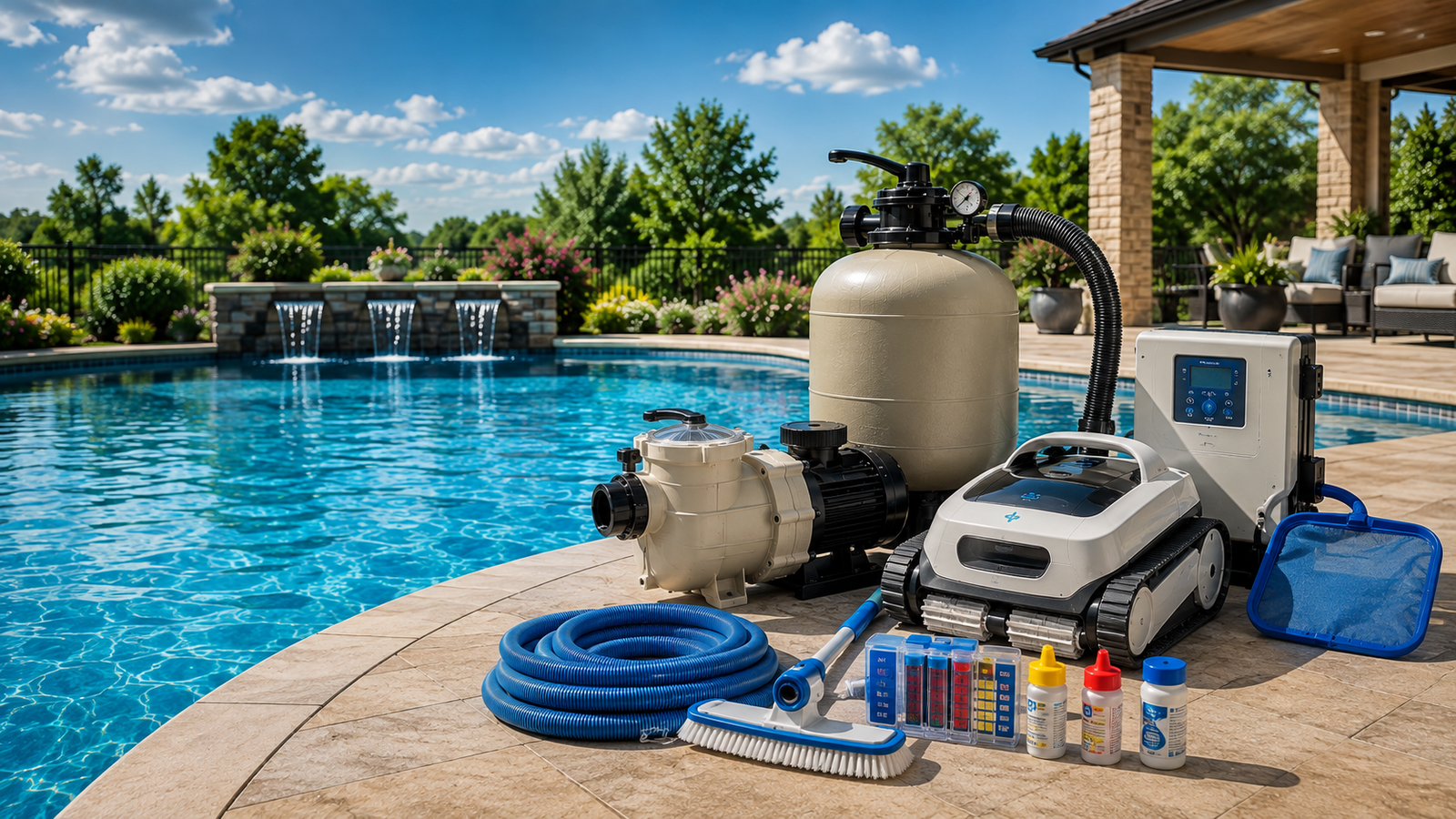
Top equipment priorities
Professional equipment must fit code, duty cycle, documentation, service workflow and facility risk—not simply offer more residential capacity.
Commercial-duty circulation
Select pumps and motors for required flow, redundancy, operating hours and applicable standards.
High-capacity filtration
Use engineered filter area, flow and backwash or cleaning procedures appropriate to the facility.
Commercial heating
ASME, venting, combustion-air and jurisdictional requirements may apply.
Compare the leading equipment categories
| Category | Why it matters | Current options |
|---|---|---|
| Commercial-duty circulation | Select pumps and motors for required flow, redundancy, operating hours and applicable standards. | View Options |
| High-capacity filtration | Use engineered filter area, flow and backwash or cleaning procedures appropriate to the facility. | View Options |
| Commercial heating | ASME, venting, combustion-air and jurisdictional requirements may apply. | View Options |
| Service-grade water testing | Repeatable photometric or titration testing, calibration and recordkeeping support professional decisions. | View Options |
| Portable cleaning and inspection tools | Durable vacuums, poles, cameras, meters and leak-detection tools should survive frequent transport and use. | View Options |
Best equipment categories to consider
1. Commercial-duty circulation
Best when this category matches the pool's actual requirements.
Select pumps and motors for required flow, redundancy, operating hours and applicable standards.
2. High-capacity filtration
Best when this category matches the pool's actual requirements.
Use engineered filter area, flow and backwash or cleaning procedures appropriate to the facility.
3. Commercial heating
Best when this category matches the pool's actual requirements.
ASME, venting, combustion-air and jurisdictional requirements may apply.
4. Service-grade water testing
Best when this category matches the pool's actual requirements.
Repeatable photometric or titration testing, calibration and recordkeeping support professional decisions.
5. Portable cleaning and inspection tools
Best when this category matches the pool's actual requirements.
Durable vacuums, poles, cameras, meters and leak-detection tools should survive frequent transport and use.
How to choose correctly
Start with code and design documents
Commercial pools may have mandated turnover, redundancy, accessibility and water-quality requirements.
Value documentation
Manuals, parts diagrams, certifications and service training are essential.
Plan downtime and redundancy
A facility may need backup capacity or rapid-replacement parts.
Use qualified professionals
Commercial electrical, gas, chemical-feed and hydraulic systems require trained personnel.
Common buying mistakes
Frequently asked questions
How is commercial pool equipment different from residential equipment?
Commercial systems are selected for higher duty cycles, code requirements, documentation, service access and facility risk.
Do commercial pools need redundant pumps?
Some designs or jurisdictions require redundancy, while others use operational redundancy as a risk-control measure. Consult the governing code and engineer.
What testing equipment do pool service professionals use?
Common tools include high-quality liquid kits, photometers, salinity meters, flow instruments and calibrated probes.
Can residential equipment be used commercially?
Only when it is specifically rated and accepted for the application. Commercial codes and warranties may prohibit or limit residential products.
Why are ASME heaters used in some facilities?
ASME construction or certification may be required by code, specification or insurer for certain commercial installations.
What matters most for a service company?
Durability, repeatability, parts availability, transport, calibration and fast diagnostics are key.
How should professional chemical feeders be selected?
Selection should be based on flow, chemical type, control method, containment, ventilation and local safety requirements.
Who should design commercial pool systems?
A qualified aquatic designer, engineer and licensed trades should handle regulated hydraulic, electrical, gas and chemical systems.
Related pool equipment guides
Match equipment to the complete pool system
Professional equipment must fit code, duty cycle, documentation, service workflow and facility risk—not simply offer more residential capacity. Use manufacturer sizing data and qualified installation where required.