Best Pool Equipment for Cleaning, Circulation & Heating
Compare essential pool cleaners, pumps, filters and heaters, with practical guidance on performance, sizing, efficiency and long-term ownership.
Start with the right equipment path
Use these options as a shortlist, then verify pool dimensions, surface, plumbing and debris conditions against current manufacturer documentation.
Cleaning equipment
Robotic, suction-side and pressure-side cleaners reduce manual vacuuming, but they differ in filtration impact and setup.
Circulation
A correctly sized variable-speed pump moves water efficiently while giving filters, heaters and sanitizers the flow they need.
Filtration
Cartridge, sand and diatomaceous-earth filters trade off particle capture, maintenance and water use.
Choose equipment as one connected system
Build a reliable pool system by matching the cleaner, pump, filter, heater and sanitizer to the same pool—not by choosing each component in isolation.
Cleaning equipment
Robotic, suction-side and pressure-side cleaners reduce manual vacuuming, but they differ in filtration impact and setup.
Circulation
A correctly sized variable-speed pump moves water efficiently while giving filters, heaters and sanitizers the flow they need.
Filtration
Cartridge, sand and diatomaceous-earth filters trade off particle capture, maintenance and water use.
Heating
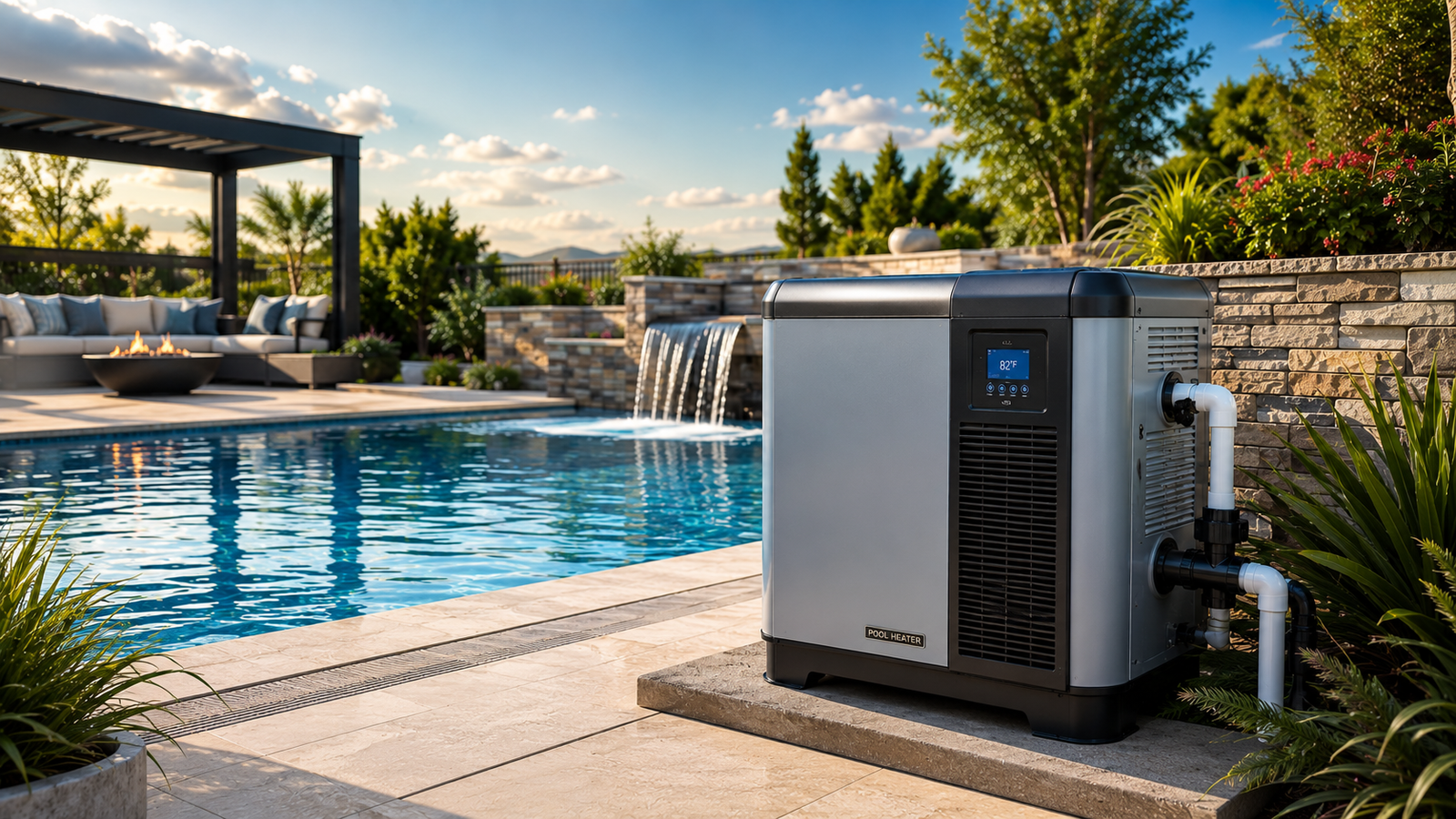
Heat pumps, gas heaters and solar systems suit different climates, warm-up expectations and utility costs.
Sanitation
Salt chlorine generators and supplemental oxidation systems support water quality but do not replace testing and balance.
Automation
Controllers can coordinate pumps, heaters, valves, lights and sanitizing equipment when components are compatible.
Where to begin
Reduce manual cleaning
Compare automatic cleaner types and decide whether debris should stay in a self-contained basket or pass through pool filtration.
Lower circulation cost
Review variable-speed pumps and use only the flow needed for filtration, heating and water features.
Improve water clarity
Select filter type and size based on flow, debris and maintenance preferences.
Extend swim season
Compare heater technologies by climate, fuel availability, heat-up speed and cover use.
Frequently asked questions
What pool equipment is essential for most residential pools?
Most pools need a circulation pump, a filter, a sanitizing method, skimming and brushing tools, and a way to test water. A heater, automation system or robotic cleaner is optional but can improve comfort or reduce routine labor.
Should I choose the pump or filter first?
Treat them as a matched circulation system. The pump must provide adequate flow without exceeding the filter’s design limits, while plumbing size and resistance also affect the final operating point.
Is a variable-speed pump worth considering?
Variable-speed pumps allow lower-speed circulation for long daily run times and higher speeds only when equipment requires them. Actual savings depend on the existing pump, plumbing and operating schedule.
Which pool filter type requires the least water for cleaning?
Cartridge filters are typically cleaned by removing and rinsing the cartridges rather than backwashing. Sand and DE filters commonly use backwash water, although maintenance procedures vary by model.
Do I need both a pool cleaner and manual cleaning tools?
Yes. Automatic cleaners do not reliably handle every step, bench, corner or waterline condition, so a brush, net and spot-vacuum option remain useful.
How should I size a pool heater?
Heater sizing depends on pool surface area, desired temperature rise, climate, wind exposure, cover use and how quickly you want the water warmed. A qualified installer can account for gas supply, electrical service and hydraulic requirements.
Can different brands of pool equipment work together?
Many pumps, filters and heaters can be combined when their hydraulic and electrical requirements match. Automation and proprietary communication features may be more brand-dependent, so verify compatibility before purchase.
How often should pool equipment be inspected?
Check baskets, filter pressure, leaks, unusual noise and water chemistry during routine maintenance. Follow each manufacturer’s service schedule and have electrical, gas or major plumbing work performed by qualified professionals.
Related Pool Equipment Guide resources
Choose by compatibility, not feature count
Build the system around compatibility and maintenance access rather than buying the largest or most feature-heavy component in every category.