
Energy-Efficient Pool Heating Guide
Efficient heating starts by reducing heat loss, then choosing a heater that fits the climate, desired warm-up speed, season length and available utilities.
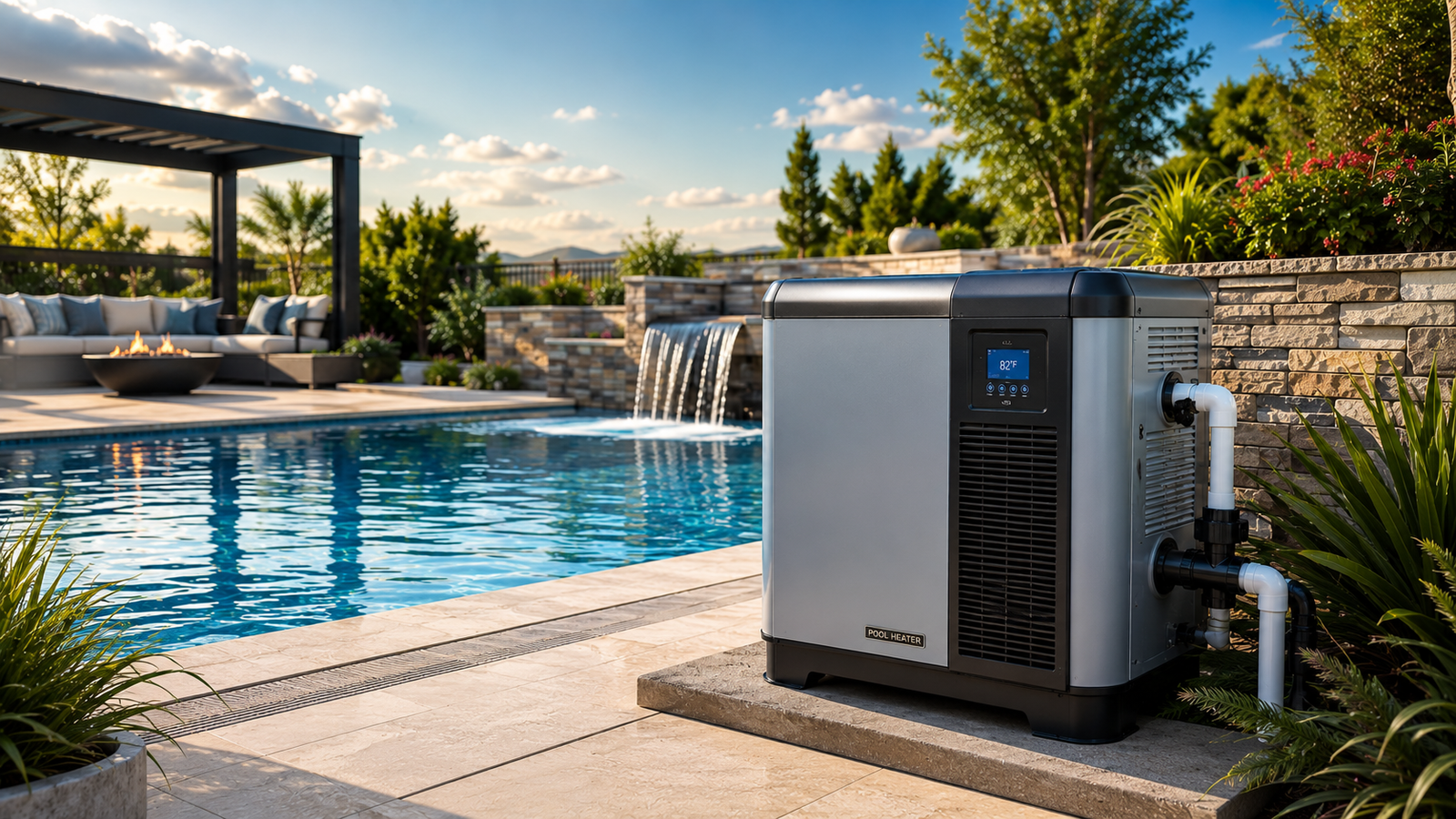
What matters most
Efficient heating starts by reducing heat loss, then choosing a heater that fits the climate, desired warm-up speed, season length and available utilities.
Heat pump
Efficient in suitable air temperatures when gradual heating is acceptable.
Solar thermal
Uses roof or rack-mounted collectors and depends strongly on climate and collector area.
Pool cover
Reduces evaporation and helps any heating system retain the heat it produces.
Energy-Efficient Pool Heating Guide
Compare efficient pool-heating strategies using heat pumps, solar systems, pool covers, lower temperature targets and automation.
Choose the heating strategy by use case
A heat pump often suits steady temperature maintenance in moderate or warm air. Gas heating can provide faster temperature rise for intermittent use, while solar is most attractive when adequate sun and collector area are available.
Reduce the heating load first
Cover the pool when practical, control wind exposure and choose a realistic temperature target. Every degree of additional temperature increases heat demand, especially during cool, dry or windy weather.
Size for climate and recovery time
Pool surface area, desired temperature rise, air temperature, wind, humidity and whether the pool is covered all affect required capacity. Use a manufacturer or qualified installer for final sizing.
Use controls without defeating efficiency
Automation can coordinate pump flow, heater operation and schedules. Avoid repeatedly heating an uncovered pool when it will not be used, and verify minimum flow through the heater.
Choose the heating strategy by use case
A heat pump often suits steady temperature maintenance in moderate or warm air. Gas heating can provide faster temperature rise for intermittent use, while solar is most attractive when adequate sun and collector area are available.
Reduce the heating load first
Cover the pool when practical, control wind exposure and choose a realistic temperature target. Every degree of additional temperature increases heat demand, especially during cool, dry or windy weather.
Size for climate and recovery time
Pool surface area, desired temperature rise, air temperature, wind, humidity and whether the pool is covered all affect required capacity. Use a manufacturer or qualified installer for final sizing.
Use controls without defeating efficiency
Automation can coordinate pump flow, heater operation and schedules. Avoid repeatedly heating an uncovered pool when it will not be used, and verify minimum flow through the heater.
Common ownership mistakes
Compare current equipment and supplies
Use the guide above to identify the specifications, compatibility requirements and maintenance needs that apply to your pool before selecting equipment or treatment products.
Frequently asked questions
Which pool heater is most energy-efficient?
Efficiency depends on climate, fuel prices, usage pattern and system design. Heat pumps and solar can be efficient in suitable conditions, while covers improve every heating method.
Do pool covers really reduce heating demand?
Yes. A well-fitted cover reduces evaporation and other heat losses while the pool is not in use.
How does outdoor temperature affect a heat pump?
Heat pumps extract heat from outdoor air, so capacity and efficiency generally change with air temperature and humidity. Check performance data for the expected conditions.
Is solar pool heating practical in every climate?
No. Solar resource, roof orientation, shade, collector area, season and desired temperature rise determine whether it is practical.
Should I keep a pool heated continuously?
Continuous maintenance may suit frequent use, while setback or on-demand strategies may suit occasional use. Consider recovery time and heat loss.
Can automation reduce heating cost?
It can prevent unnecessary operation and coordinate pump and heater schedules. Savings depend on how the previous system was operated.
What flow rate does a pool heater need?
The required range is model-specific. Set the pump speed and valves so the heater operates within its manual's flow limits.
When should a heating system be professionally sized?
Professional sizing is recommended before purchase or major plumbing and electrical work, especially for gas, high-voltage or roof-mounted systems.
Related pool guides
Use measured results and equipment requirements
Efficient heating starts by reducing heat loss, then choosing a heater that fits the climate, desired warm-up speed, season length and available utilities. Confirm the pool's actual volume, current condition and connected-equipment requirements before making a major change.