Best Pool Equipment for Beginners
Start with equipment that keeps water circulating, filtered, sanitized, tested and physically clean. Add convenience features only after the core system is dependable.
What matters most
Start with equipment that keeps water circulating, filtered, sanitized, tested and physically clean. Add convenience features only after the core system is dependable.
Core system
A correctly sized pump and filter provide circulation and particle removal.
Testing and sanitation
A reliable test kit and compatible sanitizer keep water safe and controllable.
Cleaning and safety
A brush, net, vacuum method and appropriate safety equipment cover routine ownership needs.
Best Pool Equipment for Beginners
Build a practical starter setup with the essential cleaner, pump, filter, testing tools, maintenance gear and safety accessories new pool owners need.
1. Pump and circulation equipment
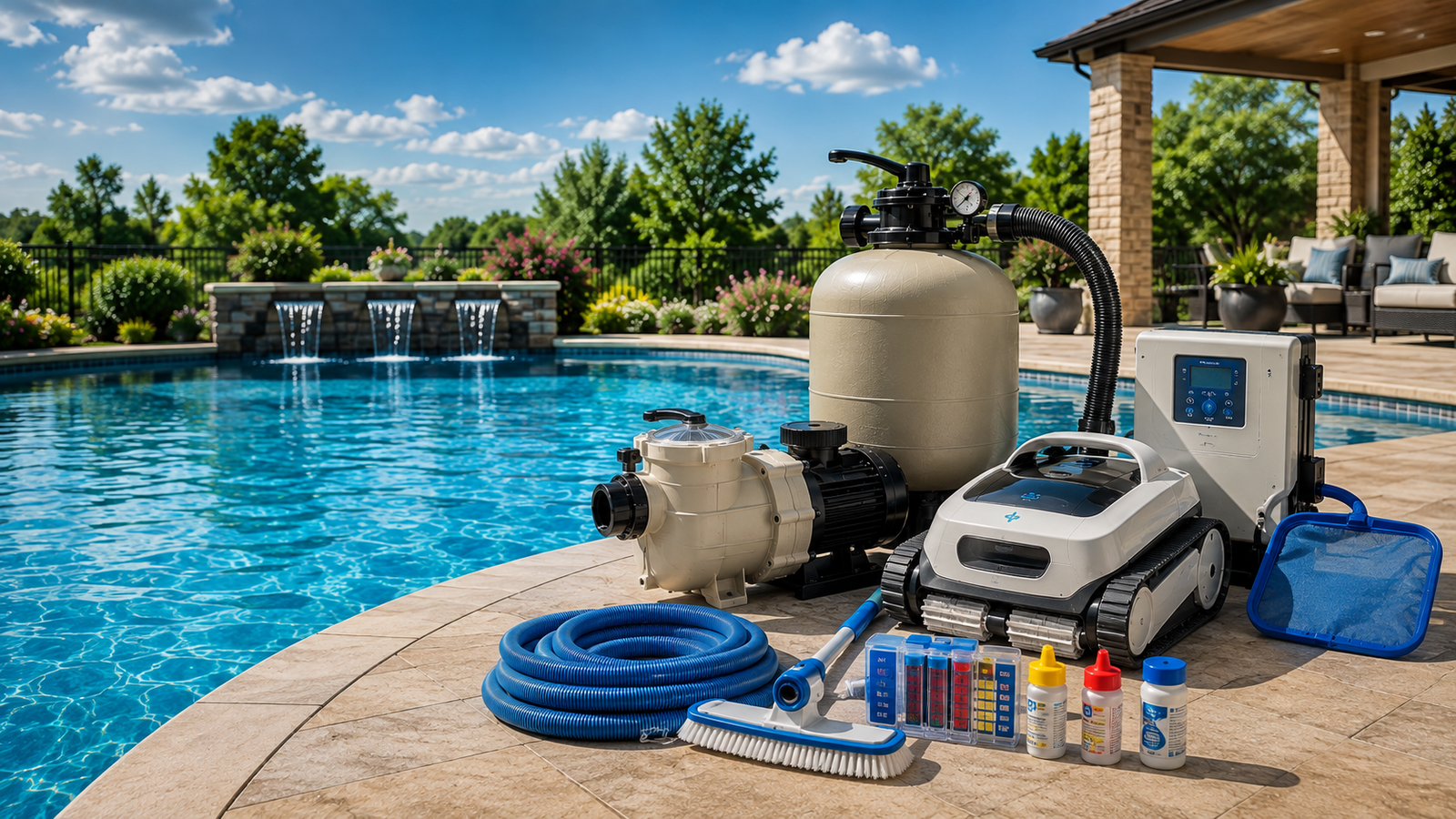
The existing pool design determines pump type, plumbing size and required flow. A variable-speed model provides scheduling flexibility, but final selection must account for filter, heater, cleaner, water features and electrical requirements.
2. Filter and pressure monitoring
Sand, cartridge and D.E. filters use different maintenance methods. Learn the clean starting pressure, inspect the pressure gauge and service the filter when the rise reaches the manufacturer's guidance.
3. Water testing and treatment
Choose a test method you can use consistently for sanitizer and pH, plus the supporting parameters required for the pool surface and sanitizer system. Store chemicals dry, separated and in their original containers.
4. Manual cleaning tools
A telescopic pole, leaf net, wall brush and compatible vacuum method solve common debris problems even when an automatic cleaner is installed.
5. Safety and operating records
Use code-compliant barriers, drain covers and other required safety measures. Keep manuals, equipment model numbers, test logs and service records in one accessible place.
1. Pump and circulation equipment
The existing pool design determines pump type, plumbing size and required flow. A variable-speed model provides scheduling flexibility, but final selection must account for filter, heater, cleaner, water features and electrical requirements.
2. Filter and pressure monitoring
Sand, cartridge and D.E. filters use different maintenance methods. Learn the clean starting pressure, inspect the pressure gauge and service the filter when the rise reaches the manufacturer's guidance.
3. Water testing and treatment
Choose a test method you can use consistently for sanitizer and pH, plus the supporting parameters required for the pool surface and sanitizer system. Store chemicals dry, separated and in their original containers.
4. Manual cleaning tools
A telescopic pole, leaf net, wall brush and compatible vacuum method solve common debris problems even when an automatic cleaner is installed.
5. Safety and operating records
Use code-compliant barriers, drain covers and other required safety measures. Keep manuals, equipment model numbers, test logs and service records in one accessible place.
Common ownership mistakes
Compare current equipment and supplies
Use the guide above to identify the specifications, compatibility requirements and maintenance needs that apply to your pool before selecting equipment or treatment products.
Frequently asked questions
What pool equipment does a beginner need first?
Prioritize a functioning pump and filter, a dependable water test kit, compatible sanitizer, a net, brush, vacuum method and required safety equipment.
Should a beginner buy a variable-speed pump?
It can provide efficient, programmable operation, but it must be correctly sized and installed for the pool's plumbing and connected equipment.
Which pool filter type is easiest to maintain?
Maintenance preference varies. Cartridge filters avoid backwashing, sand filters use backwashing, and D.E. filters require careful media handling and service procedures.
Do I still need manual tools with a robotic cleaner?
Yes. A net and brush handle spot cleaning, steps, corners, storms and situations when the automatic cleaner is unavailable.
What should be included in a pool test kit?
At minimum, select reliable sanitizer and pH testing. Add alkalinity, stabilizer and calcium testing as appropriate for the pool and treatment system.
How should pool chemicals be stored?
Keep them in original labeled containers, dry, ventilated and separated according to label instructions. Never store incompatible products where spills can mix.
What equipment should be professionally installed?
Electrical, gas, bonding, automation and major plumbing work generally require qualified professionals and local-code compliance.
How can a new owner avoid unnecessary purchases?
Inventory the existing system, read each manual, identify recurring maintenance tasks and buy equipment that solves a verified need.
Related pool guides
Use measured results and equipment requirements
Start with equipment that keeps water circulating, filtered, sanitized, tested and physically clean. Add convenience features only after the core system is dependable. Confirm the pool's actual volume, current condition and connected-equipment requirements before making a major change.