
Pool Water Testing Guide
Reliable pool care starts with repeatable sampling, fresh testing supplies and a written record of results before chemical adjustments are made.
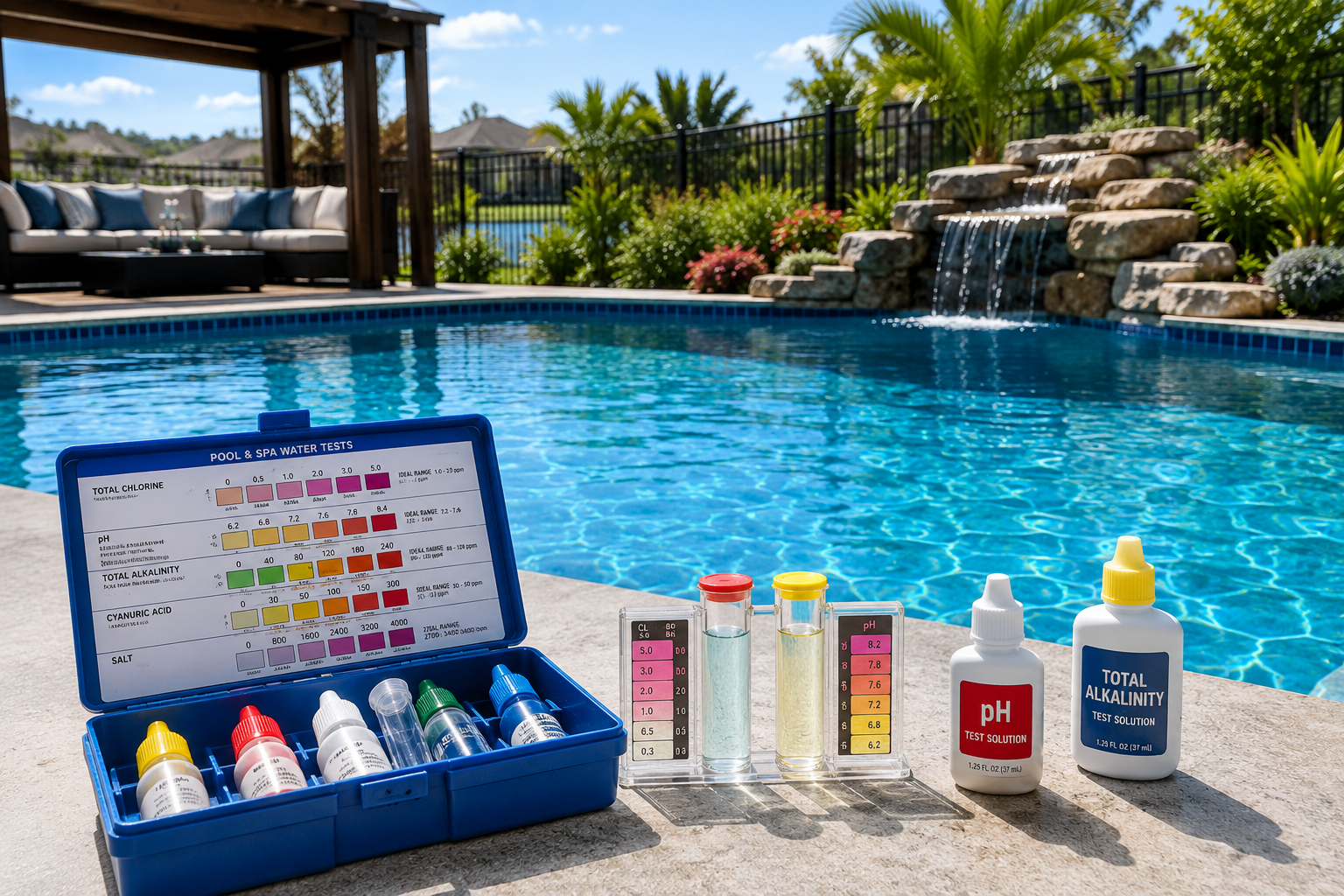
What matters most
Reliable pool care starts with repeatable sampling, fresh testing supplies and a written record of results before chemical adjustments are made.
Test strips
Fast for routine screening, but reading depends on timing, lighting and color matching.
Liquid kits
Useful for more controlled drop-count or color-comparison testing when procedures are followed carefully.
Digital tools
Convenient for selected parameters, but probes and photometers require calibration, clean cells and proper storage.
Pool Water Testing Guide
Learn how and when to test pool water, compare strips, liquid kits and digital testers, and interpret core chemistry readings accurately.
How to collect a useful water sample
Collect from elbow depth, away from returns, skimmers and recently added chemicals. Use a clean container when the test requires one, and test promptly so temperature and disinfectant levels do not change.
Core measurements to track
Typical residential testing includes sanitizer and pH, with total alkalinity, cyanuric acid and calcium hardness checked as needed for the pool surface and treatment method. Salt systems also require salinity verification with a method independent of the controller when readings are questionable.
Avoid common testing errors
Expired reagents, wet reagent caps, contaminated sample cells, incorrect drop sizes and reading colors under poor lighting can distort results. Follow the kit's exact fill lines, mixing method and timing.
Keep a simple test log
Record date, results, chemical additions, weather and unusual events. Trends often reveal a leak, rising stabilizer, changing chlorine demand or equipment issue before a single isolated test does.
How to collect a useful water sample
Collect from elbow depth, away from returns, skimmers and recently added chemicals. Use a clean container when the test requires one, and test promptly so temperature and disinfectant levels do not change.
Core measurements to track
Typical residential testing includes sanitizer and pH, with total alkalinity, cyanuric acid and calcium hardness checked as needed for the pool surface and treatment method. Salt systems also require salinity verification with a method independent of the controller when readings are questionable.
Avoid common testing errors
Expired reagents, wet reagent caps, contaminated sample cells, incorrect drop sizes and reading colors under poor lighting can distort results. Follow the kit's exact fill lines, mixing method and timing.
Keep a simple test log
Record date, results, chemical additions, weather and unusual events. Trends often reveal a leak, rising stabilizer, changing chlorine demand or equipment issue before a single isolated test does.
Common ownership mistakes
Compare current equipment and supplies
Use the guide above to identify the specifications, compatibility requirements and maintenance needs that apply to your pool before selecting equipment or treatment products.
Frequently asked questions
Where should I take a pool water sample?
Collect below the surface and away from returns, skimmers and chemical feeders. Avoid sampling immediately after adding chemicals.
Are pool test strips accurate enough?
They are useful for routine screening when stored and read correctly. A quality liquid or photometric test can provide better resolution for troubleshooting and dosing decisions.
How often should I test pool water?
Sanitizer and pH should be checked frequently enough to remain within the pool's operating range. Test more often during heat, storms, heavy use or equipment changes.
Why do two test methods give different results?
Differences can come from sample location, timing, reagent age, calibration, lighting or the measurement range. Repeat both methods carefully with the same fresh sample.
Should I trust the salt reading on the generator?
Use the controller as an operating indicator, but verify with an independent salinity test before adding salt when the reading is unexpected.
How should test reagents be stored?
Keep them tightly closed, upright and protected from heat, freezing, sunlight and contamination. Follow the kit manufacturer's storage and replacement instructions.
What should I test before adding chlorine?
At minimum, know the pool volume, current free chlorine and pH. Cyanuric acid is also important for interpreting chlorine needs in outdoor stabilized pools.
When should a pool store or laboratory confirm results?
Confirmation can help when readings conflict, water remains unstable, metals or phosphates are suspected, or the home kit cannot measure the needed parameter.
Related pool guides
Use measured results and equipment requirements
Reliable pool care starts with repeatable sampling, fresh testing supplies and a written record of results before chemical adjustments are made. Confirm the pool's actual volume, current condition and connected-equipment requirements before making a major change.