
How to Prevent Pool Algae
Algae prevention is a system: maintain an effective sanitizer residual, keep water moving and filtered, remove debris, and brush areas where circulation is weak.
What matters most
Algae prevention is a system: maintain an effective sanitizer residual, keep water moving and filtered, remove debris, and brush areas where circulation is weak.
Sanitation
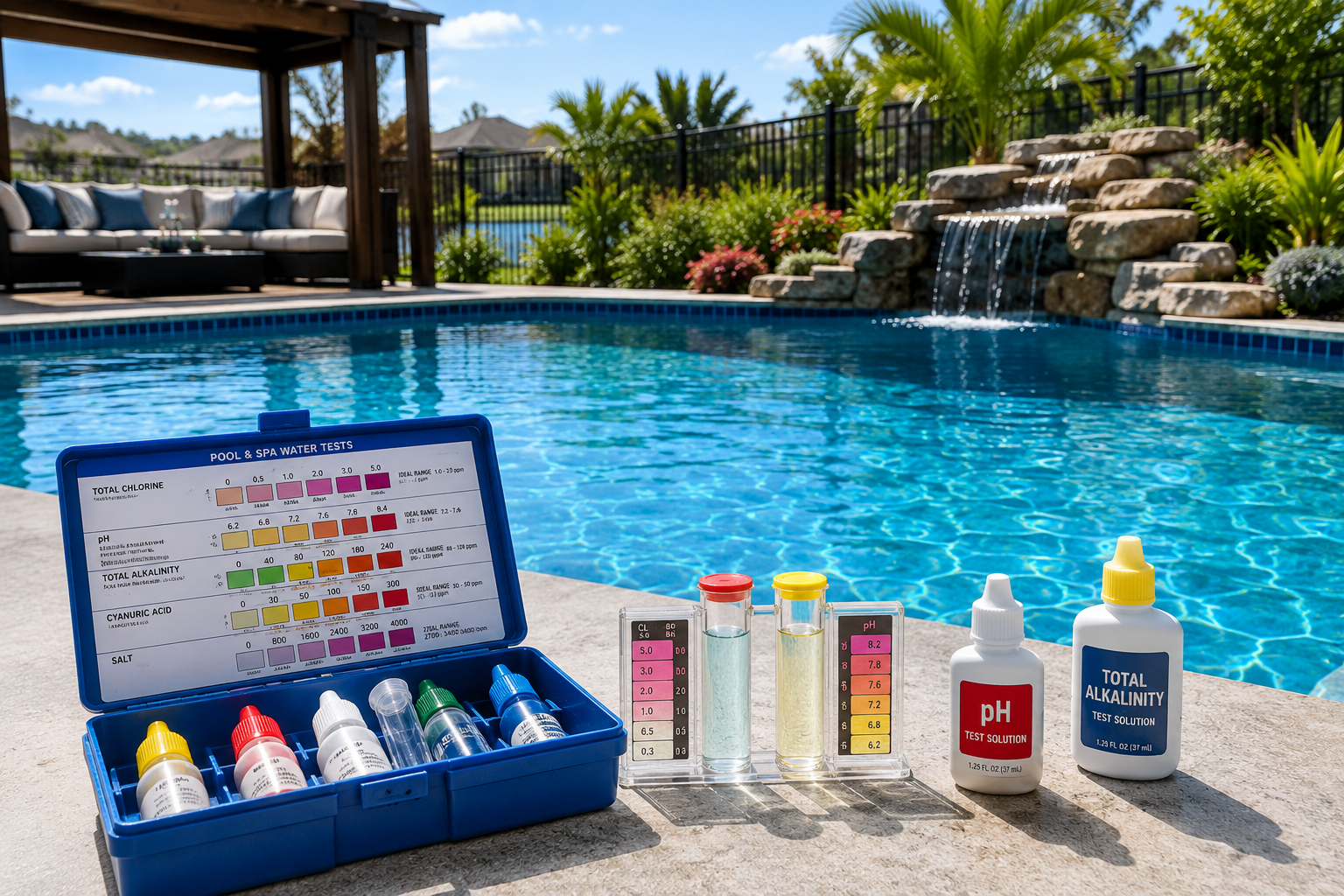
Maintain the sanitizer and pH ranges appropriate for the pool and treatment method.
Circulation
Run the pump long enough to distribute sanitizer and move water through the filter.
Physical cleaning
Brush steps, corners, ladders and shaded areas before growth becomes visible.
How to Prevent Pool Algae
Prevent pool algae by maintaining sanitizer and pH, improving circulation and filtration, brushing surfaces, removing debris and correcting problem areas.
Keep sanitizer and pH consistent
Algae gains an advantage when sanitizer falls below the pool's needs. Test after heavy swimming, storms, high temperatures or long sunny periods, and adjust according to the chemical label and the pool's stabilizer level.
Fix circulation dead zones
Return direction, pump speed, run schedule and water level all affect circulation. Areas behind ladders, on steps and in corners may need extra brushing even when the main pool looks clear.
Use filtration and cleaning together
The filter removes suspended material, but it cannot scrub attached growth from surfaces. Empty baskets, maintain the filter at its clean-pressure baseline and vacuum debris so chlorine demand stays manageable.
Use algaecide as a supplement
A compatible algaecide can be useful in specific preventive or treatment situations, but it does not replace adequate chlorine, brushing and filtration. Select a product compatible with the pool surface, sanitizer and current treatment plan.
Keep sanitizer and pH consistent
Algae gains an advantage when sanitizer falls below the pool's needs. Test after heavy swimming, storms, high temperatures or long sunny periods, and adjust according to the chemical label and the pool's stabilizer level.
Fix circulation dead zones
Return direction, pump speed, run schedule and water level all affect circulation. Areas behind ladders, on steps and in corners may need extra brushing even when the main pool looks clear.
Use filtration and cleaning together
The filter removes suspended material, but it cannot scrub attached growth from surfaces. Empty baskets, maintain the filter at its clean-pressure baseline and vacuum debris so chlorine demand stays manageable.
Use algaecide as a supplement
A compatible algaecide can be useful in specific preventive or treatment situations, but it does not replace adequate chlorine, brushing and filtration. Select a product compatible with the pool surface, sanitizer and current treatment plan.
Common ownership mistakes
Compare current equipment and supplies
Use the guide above to identify the specifications, compatibility requirements and maintenance needs that apply to your pool before selecting equipment or treatment products.
Frequently asked questions
What causes algae in a swimming pool?
Algae commonly develops when sanitation, circulation, filtration or cleaning is inadequate for current conditions. Warm weather, sunlight, debris and heavy use can increase demand.
Can algae grow even when chlorine is present?
Yes. The measured level may be insufficient for the stabilizer level or current contamination, or circulation may be poor in specific areas.
Does brushing really prevent algae?
Brushing disrupts growth attached to surfaces and exposes it to sanitizer and filtration. It is especially useful on steps, corners, behind ladders and shaded walls.
Should I use algaecide every week?
Routine use depends on the product, pool type and maintenance plan. Algaecide is supplemental; it should not compensate for inadequate sanitation or circulation.
Why does algae return in the same spot?
Recurring spots often indicate weak circulation, surface roughness, trapped debris or an area that is not brushed thoroughly. Inspect nearby returns and fittings.
Can a dirty filter cause algae?
A dirty or improperly operating filter can reduce flow and removal of suspended material. Track clean pressure and service the filter according to its manual.
Does a pool cover prevent algae?
A cover reduces debris and sunlight but can also trap warm water and hide developing problems. Continue testing and circulation as required while covered.
How should severe algae be treated?
Confirm water balance, follow the sanitizer product label, brush all surfaces, maintain filtration and clean the filter as it loads. Complex or persistent cases may require professional diagnosis.
Related pool guides
Use measured results and equipment requirements
Algae prevention is a system: maintain an effective sanitizer residual, keep water moving and filtered, remove debris, and brush areas where circulation is weak. Confirm the pool's actual volume, current condition and connected-equipment requirements before making a major change.