
Saltwater Pools Explained
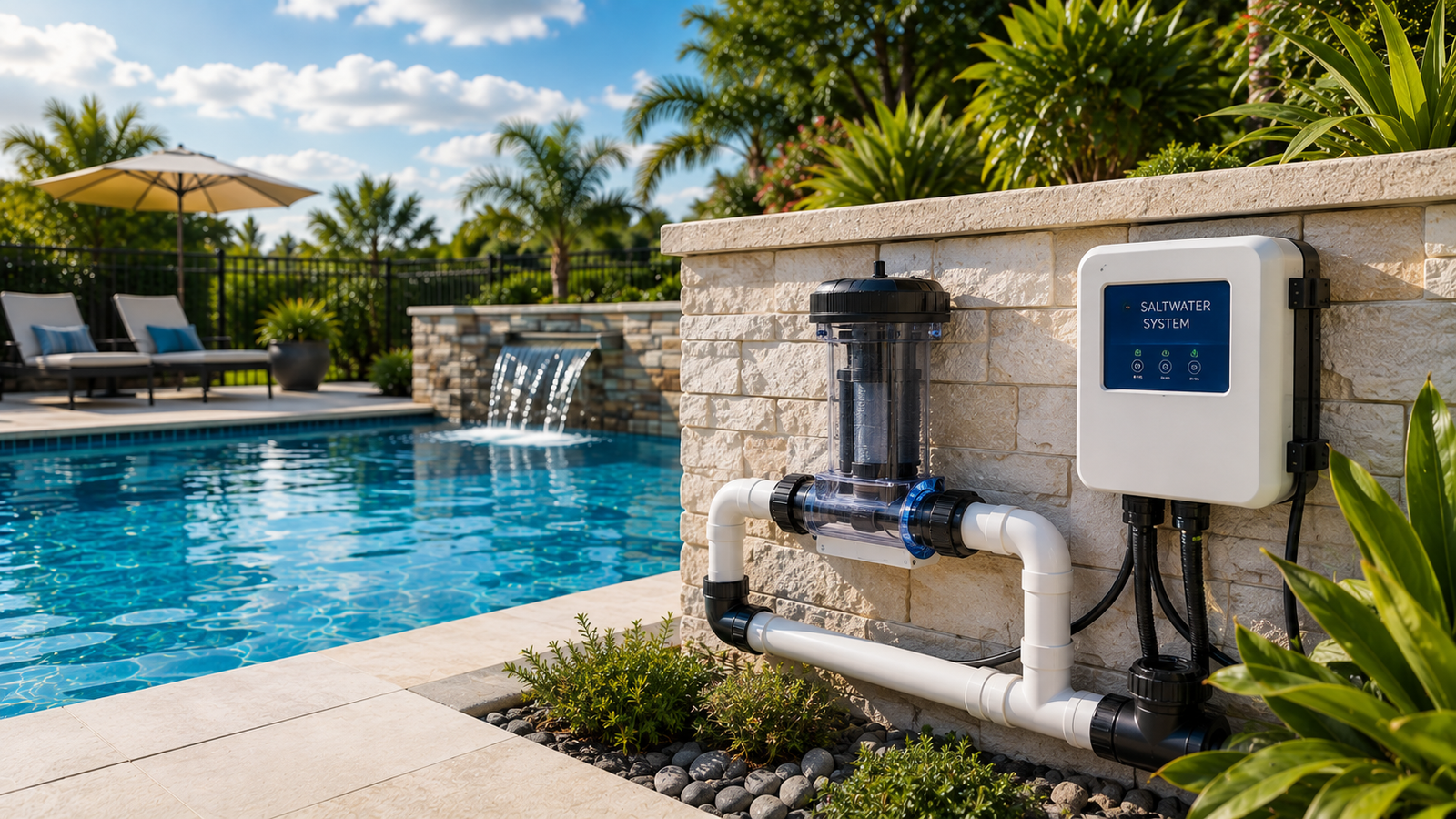
A saltwater pool is still a chlorine pool: the system uses dissolved salt and an electrolytic cell to generate chlorine as water circulates.
What matters most
A saltwater pool is still a chlorine pool: the system uses dissolved salt and an electrolytic cell to generate chlorine as water circulates.
Salt cell
The electrolytic component that converts chloride in the water into chlorine.
Control system
Regulates output and reports flow, salt or cell-status conditions.
Water balance
pH, calcium, alkalinity and stabilizer still require routine testing and correction.
Saltwater Pools Explained
Learn how saltwater pools generate chlorine, how salt cells and control systems work, and what owners should know about salinity, scaling and maintenance.
How a salt chlorine generator works
Pool water containing the manufacturer-specified salt concentration passes through an energized cell. Electrolysis produces chlorine that sanitizes the pool, after which chloride remains available to repeat the cycle. The system reduces manual chlorine handling but does not eliminate testing or maintenance.
Why cell sizing matters
A cell should be sized for the pool volume and expected chlorine demand, with reserve capacity for hot weather and heavier use. An undersized cell may need to run near maximum output for long periods, while a properly sized system has more operating flexibility.
Scaling, inspection and cleaning
Calcium scale can accumulate on cell plates, especially when water balance is unfavorable. Inspect at the interval in the manual and clean only when needed using the manufacturer-approved method. Unnecessary acid cleaning can shorten cell life.
Cold water and low-flow limits
Many generators reduce output or stop in cold water, and all require adequate flow. A dirty filter, closed valve, blocked line or low pump speed can trigger a flow warning even when the salt level is correct.
How a salt chlorine generator works
Pool water containing the manufacturer-specified salt concentration passes through an energized cell. Electrolysis produces chlorine that sanitizes the pool, after which chloride remains available to repeat the cycle. The system reduces manual chlorine handling but does not eliminate testing or maintenance.
Why cell sizing matters
A cell should be sized for the pool volume and expected chlorine demand, with reserve capacity for hot weather and heavier use. An undersized cell may need to run near maximum output for long periods, while a properly sized system has more operating flexibility.
Scaling, inspection and cleaning
Calcium scale can accumulate on cell plates, especially when water balance is unfavorable. Inspect at the interval in the manual and clean only when needed using the manufacturer-approved method. Unnecessary acid cleaning can shorten cell life.
Cold water and low-flow limits
Many generators reduce output or stop in cold water, and all require adequate flow. A dirty filter, closed valve, blocked line or low pump speed can trigger a flow warning even when the salt level is correct.
Common ownership mistakes
Compare current equipment and supplies
Use the guide above to identify the specifications, compatibility requirements and maintenance needs that apply to your pool before selecting equipment or treatment products.
Frequently asked questions
Is a saltwater pool chlorine-free?
No. A salt chlorine generator produces chlorine from chloride dissolved in the water. The sanitation method is still chlorine-based.
How salty does a saltwater pool taste?
Residential systems usually operate at a salt concentration well below seawater. The exact target is set by the generator manufacturer, so use that specification rather than a generic target.
Does salt evaporate with pool water?
Salt does not leave with evaporation. Concentration may rise as water evaporates and then fall after rain, splash-out, backwashing or draining changes the water volume.
Why does a salt cell show low flow?
Common causes include low pump speed, a dirty filter, closed or mispositioned valves, air in the system, blockage or a faulty flow sensor. Diagnose circulation before adding salt.
How often should a salt cell be cleaned?
Inspect it according to the manual and clean only when scale is present. Excessive acid cleaning can damage the coating on the cell plates.
Can a salt system run in cold water?
Many systems reduce output or shut down below a specified water temperature. The exact behavior varies, so check the controller manual.
Do saltwater pools still need shock treatment?
They may need supplemental oxidation or a temporary output increase after heavy contamination, storms or unusual demand. Follow test results and the system and chemical labels.
Can salt damage pool equipment?
Poor water balance, leaks and splash-out can contribute to corrosion around susceptible materials. Proper bonding, compatible materials, leak control and routine rinsing help reduce risk.
Related pool guides
Use measured results and equipment requirements
A saltwater pool is still a chlorine pool: the system uses dissolved salt and an electrolytic cell to generate chlorine as water circulates. Confirm the pool's actual volume, current condition and connected-equipment requirements before making a major change.