
Pool Chemistry Basics
Learn what free chlorine, pH, total alkalinity, cyanuric acid and calcium hardness mean—and why balanced decisions require more than one number.
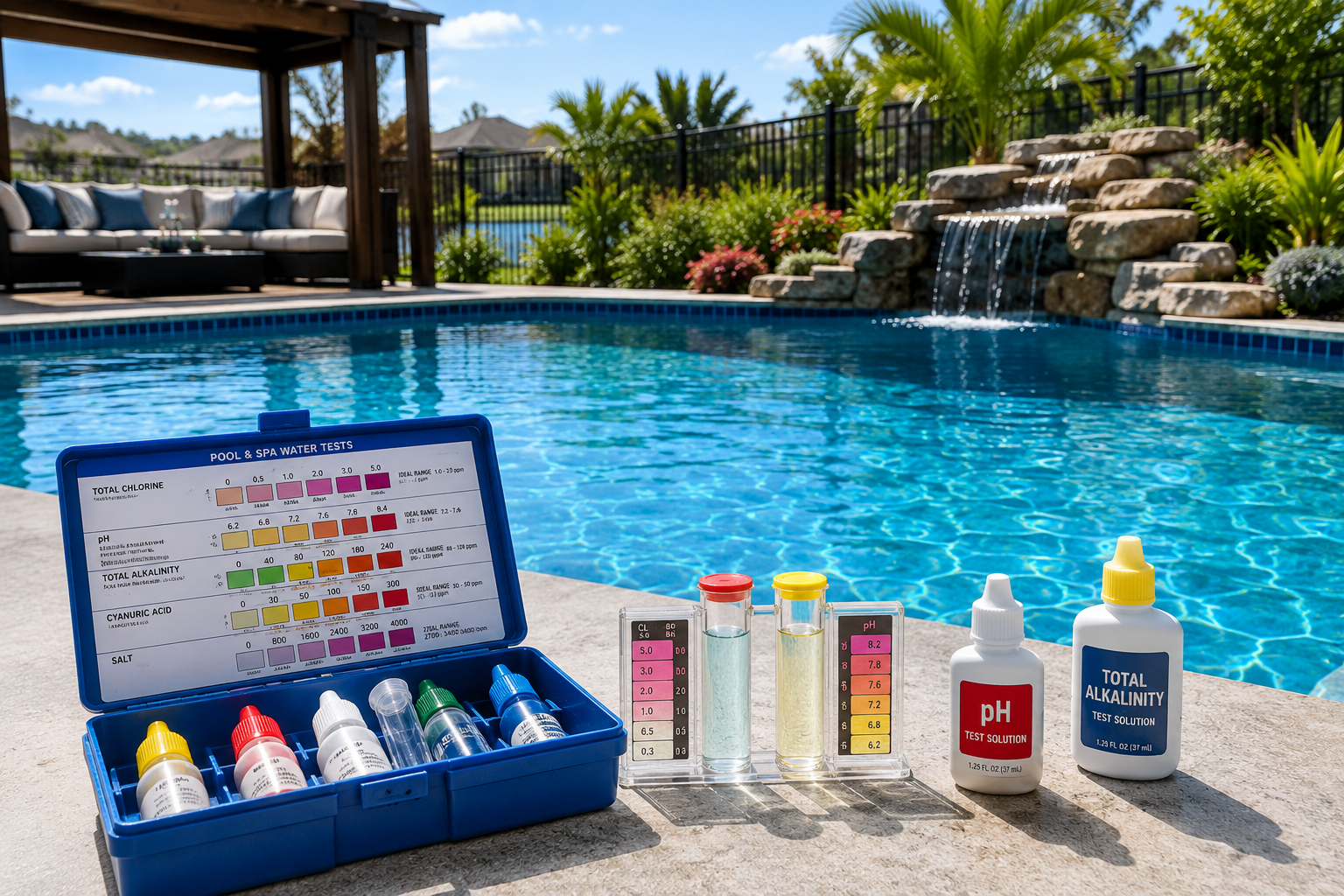
What pool owners should know first
The key principles below help separate routine ownership tasks from model-specific or professional service work.
Sanitizer and pH work together
Chlorine performance and swimmer comfort depend strongly on pH and the presence of stabilizer.
Balance protects equipment
Very corrosive or scale-forming water can damage surfaces, heaters, salt cells and plumbing.
Test before dosing
Use a reliable method, know the pool volume and follow product labels. Never mix pool chemicals together.
The five core readings
Use these points as a practical decision and maintenance framework, then follow the exact manual for your equipment.
Free chlorine
The active sanitizer available to control germs and oxidation demand. CDC recommends at least 1 ppm in pools, or at least 2 ppm when cyanuric acid is used, while local codes and product systems may require different operating targets.
pH
A measure of acidity or basicity. CDC recommends pH 7.0–7.8 for home pools; many equipment and industry programs use a narrower operating range within that band.
Total alkalinity
A measure of the water’s buffering capacity. It influences how readily pH changes and should be managed in context with the sanitizer and surface type.
Cyanuric acid
A stabilizer that slows sunlight degradation of chlorine in outdoor pools. Excessive CYA can make chlorine management more demanding; CDC does not recommend CYA in hot tubs.
Calcium hardness
The concentration of dissolved calcium. Low or high levels contribute to corrosive or scale-forming tendencies depending on pH, alkalinity, temperature and dissolved solids.
How the readings interact
Use these points as a practical decision and maintenance framework, then follow the exact manual for your equipment.
pH and chlorine
As pH changes, the disinfecting effectiveness of free chlorine changes. That is why both readings should be checked together.
Alkalinity and pH
Alkalinity resists rapid pH movement, but an unsuitable level can contribute to persistent pH drift.
CYA and chlorine
Stabilizer protects chlorine from sunlight but also changes the chlorine concentration needed for effective management.
Scale balance
pH, alkalinity, calcium, temperature and total dissolved solids collectively influence scaling or corrosive conditions.
A safe testing routine
Use these points as a practical decision and maintenance framework, then follow the exact manual for your equipment.
Use a dependable test
Follow the kit instructions, use fresh reagents and sample away from return jets and chemical feeders.
Adjust one variable thoughtfully
Make measured additions based on actual pool volume and the product label, then circulate and retest.
Store chemicals safely
Keep products dry, separated and in original containers. Never combine chlorine products or mix chlorine with acid.
Common mistakes to avoid
Frequently asked questions
What pool chemistry should be tested regularly?
At minimum, test sanitizer and pH frequently, then monitor total alkalinity, cyanuric acid and calcium hardness at suitable intervals. Salt, metals, phosphates or total dissolved solids may also matter for specific systems.
What pH does CDC recommend for home pools?
CDC recommends keeping pool pH between 7.0 and 7.8. Follow any narrower range required by local code, the sanitizer system or equipment manufacturer.
How much chlorine should a pool have?
CDC recommends at least 1 ppm free chlorine in pools, or at least 2 ppm when cyanuric acid or stabilized chlorine is used. Operating targets can vary with local requirements and the management method.
What does total alkalinity do?
Total alkalinity represents buffering capacity and helps resist rapid pH changes. It should be adjusted in context because it also affects scale balance and pH behavior.
Why is cyanuric acid used?
Cyanuric acid protects chlorine from rapid sunlight loss in outdoor pools. Too much can complicate sanitation, and CDC recommends not using it in hot tubs.
What happens when calcium hardness is too high?
High calcium, especially with high pH and alkalinity, can contribute to scale and cloudy water. The overall saturation balance matters more than calcium alone.
Can I add acid and chlorine at the same time?
No. Never mix them or add them together in one location. Follow labels, add separately with circulation and allow the required time between products.
Why should I retest after adding chemicals?
Circulation and chemical reactions take time, and the initial dose may not produce the predicted change. Retesting prevents repeated overcorrection.
Related Pool Equipment Guide resources
Use the manual, verify conditions and make measured changes
Learn what free chlorine, pH, total alkalinity, cyanuric acid and calcium hardness mean—and why balanced decisions require more than one number. Match every procedure to the exact equipment model, pool configuration and local requirements. Stop and use qualified service whenever the task involves hazardous voltage, gas, combustion, refrigerant, structural work or an unsafe chemical condition.