
Commercial Pool Equipment
Explore commercial pool equipment for high-flow circulation, filtration, heating, sanitation, automation and water testing in public and facility pools.
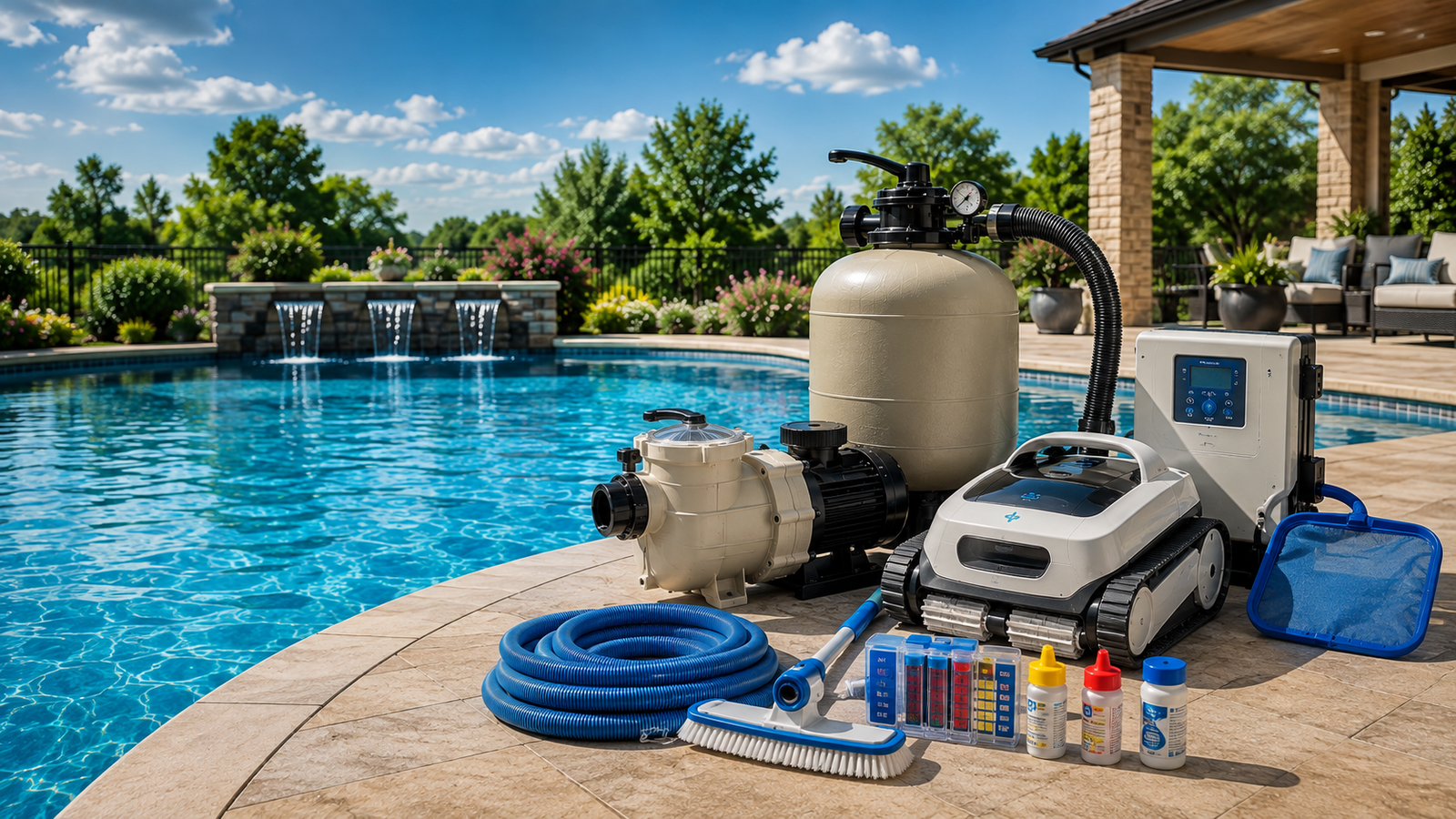
Main categories and priorities
Explore commercial pool equipment for high-flow circulation, filtration, heating, sanitation, automation and water testing in public and facility pools.
Recirculation pumps
Commercial pumps are selected for required design flow, head, duty cycle and redundancy.
High-capacity filtration
Sand, regenerative-media, cartridge and other systems must meet code and water-quality objectives.
Disinfection and chemical feed
Automated feeders, controllers and secondary systems require fail-safes and trained operation.
Compare the main categories
| Category | What it covers | Selection rule | Options |
|---|---|---|---|
| Recirculation pumps | Commercial pumps are selected for required design flow, head, duty cycle and redundancy. | Compatibility first | View Options |
| High-capacity filtration | Sand, regenerative-media, cartridge and other systems must meet code and water-quality objectives. | Compatibility first | View Options |
| Disinfection and chemical feed | Automated feeders, controllers and secondary systems require fail-safes and trained operation. | Compatibility first | View Options |
| Commercial heating | Gas, heat-pump and water-source systems are sized for facility load, recovery and ventilation. | Compatibility first | View Options |
| Monitoring and controls | Flow meters, pressure gauges, chemistry controllers, alarms and records support safe operation. | Compatibility first | View Options |
What to evaluate before choosing
1. Recirculation pumps
Evaluate this category against the exact pool, code and maintenance requirements.
Commercial pumps are selected for required design flow, head, duty cycle and redundancy.
2. High-capacity filtration
Evaluate this category against the exact pool, code and maintenance requirements.
Sand, regenerative-media, cartridge and other systems must meet code and water-quality objectives.
3. Disinfection and chemical feed
Evaluate this category against the exact pool, code and maintenance requirements.
Automated feeders, controllers and secondary systems require fail-safes and trained operation.
4. Commercial heating
Evaluate this category against the exact pool, code and maintenance requirements.
Gas, heat-pump and water-source systems are sized for facility load, recovery and ventilation.
5. Monitoring and controls
Evaluate this category against the exact pool, code and maintenance requirements.
Flow meters, pressure gauges, chemistry controllers, alarms and records support safe operation.
What current documentation confirms
How to choose correctly
Recirculation pumps
Commercial pumps are selected for required design flow, head, duty cycle and redundancy.
High-capacity filtration
Sand, regenerative-media, cartridge and other systems must meet code and water-quality objectives.
Disinfection and chemical feed
Automated feeders, controllers and secondary systems require fail-safes and trained operation.
Commercial heating
Gas, heat-pump and water-source systems are sized for facility load, recovery and ventilation.
Common buying mistakes
Frequently asked questions
How is commercial pool equipment different from residential equipment?
It is designed around code requirements, higher duty cycles, bather load, documentation and facility risk.
What determines commercial pump size?
Required design flow, total dynamic head, turnover, feature demand and redundancy determine selection.
Which filter type is best for a commercial pool?
The answer depends on code, footprint, water use, labor, flow and filtration objectives.
Do commercial pools need automatic chemical controllers?
Requirements vary, but many facilities use controllers with feeders, alarms and manual verification.
How often must commercial water be tested?
Frequency is set by the governing health code and operating method.
Why is redundancy important?
Backup capacity can reduce closure risk when critical equipment fails.
Can residential equipment be used commercially?
Only when listed, rated and accepted for the specific commercial application.
Who should design the system?
A qualified aquatic designer or engineer and licensed trades should handle regulated systems.
Related pool guides
Choose by documented requirements
Explore commercial pool equipment for high-flow circulation, filtration, heating, sanitation, automation and water testing in public and facility pools. Confirm the exact pool conditions and use qualified professionals for regulated electrical, plumbing, structural, gas or safety work.