
Pool Heater Maintenance Guide
A practical routine for protecting water flow, heat transfer, ventilation and freeze-sensitive parts on gas pool heaters and heat pumps.
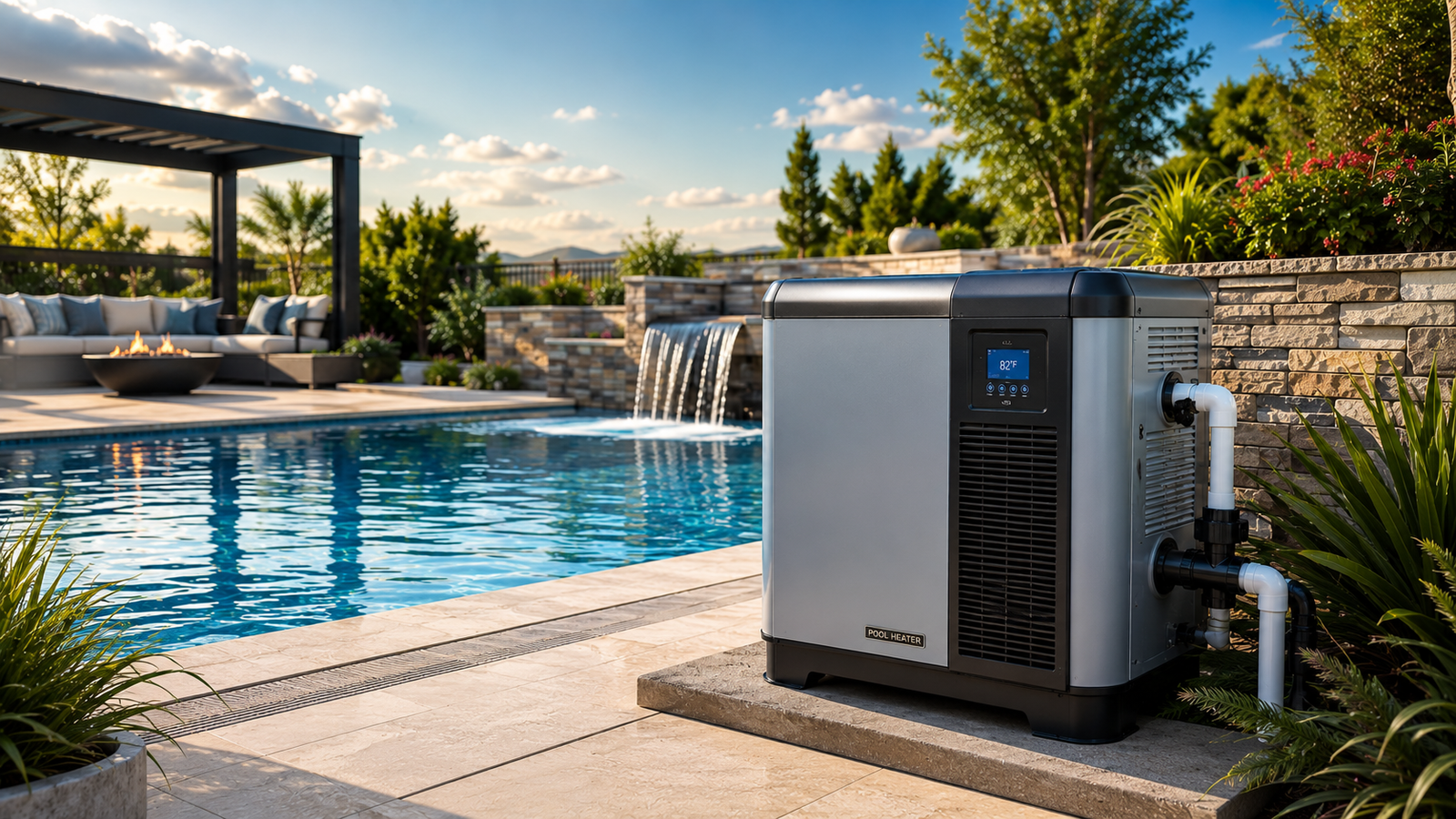
What pool owners should know first
The key principles below help separate routine ownership tasks from model-specific or professional service work.
Start with water flow
A dirty filter, closed valve, blocked basket or low water level can prevent a heater from operating safely.
Keep air paths clear
Remove leaves and debris around heat-pump coils and keep gas-heater combustion and exhaust openings unobstructed.
Escalate fuel and electrical work
Gas, combustion, refrigerant and line-voltage repairs belong to qualified service professionals.
Core maintenance routine
Use these points as a practical decision and maintenance framework, then follow the exact manual for your equipment.
Before every heating season
Inspect the equipment pad, verify open valves, clean pump and skimmer baskets, confirm normal filter pressure and look for water, fuel or condensate leaks.
During regular use
Keep vegetation and stored items away from the cabinet. Check that the heater starts without unusual odors, repeated ignition attempts, excessive vibration or persistent error codes.
After storms or heavy debris
Shut down power before clearing debris. On a heat pump, gently remove loose material from the coil without bending fins; never use harsh chemicals or a pressure washer unless the manufacturer specifically permits it.
At seasonal shutdown
Follow the exact manual for draining, freeze protection and power isolation. Water trapped in headers, exchangers or plumbing can cause expensive freeze damage.
Why flow and chemistry matter
Use these points as a practical decision and maintenance framework, then follow the exact manual for your equipment.
Water flow
Heaters depend on adequate circulation to carry heat away from the exchanger. Low flow can trigger pressure or flow switches and may cause overheating.
Water chemistry
Persistently corrosive or scale-forming water can damage heat exchangers. Test and balance water before extended heater operation.
Bypass and valves
Do not change bypass or valve positions casually. Incorrect routing can starve the heater or expose it to excessive flow.
When professional service is appropriate
Use these points as a practical decision and maintenance framework, then follow the exact manual for your equipment.
Gas heater symptoms
Call a qualified technician for gas odor, soot, flame rollout, repeated ignition failure, damaged venting or combustion-related codes.
Heat-pump symptoms
Professional diagnosis is appropriate for refrigerant icing, compressor trips, fan failure, electrical faults or repeated low/high pressure errors.
Annual inspection
A professional inspection is sensible where the manual, local code, warranty terms or operating conditions call for it.
Common mistakes to avoid
Frequently asked questions
How often should a pool heater be maintained?
Perform visual and circulation checks throughout the swimming season and a more complete inspection before seasonal startup. Follow the manufacturer’s manual for service intervals because gas heaters and heat pumps have different requirements.
Should I clean a pool heat-pump coil?
Loose leaves and debris should be removed so air can move through the coil. Use only the cleaning method allowed by the manufacturer, because aggressive spraying or chemicals can bend fins or damage coatings.
Why does my heater say low flow?
Common causes include a dirty filter, full baskets, low water level, closed valves, air in the system or an underspeed variable-speed pump. If circulation is normal and the code remains, the pressure or flow-sensing system may need service.
Can poor pool chemistry damage a heater?
Yes. Scale can reduce heat transfer, while corrosive water can attack metals and seals. Keep chemistry within the heater manufacturer’s specified range and investigate repeated imbalance.
Should a pool heater be covered in winter?
Use only a cover or winterizing method approved for the model. A cover that traps moisture or blocks required ventilation can accelerate corrosion or create an unsafe condition.
Do gas pool heaters need vent maintenance?
Indoor or specially vented gas heaters require the vent system and combustion-air provisions to remain intact and unobstructed. Any corrosion, loose joints, soot or suspected exhaust leakage requires professional attention.
Can I pressure-wash a pool heater?
Generally avoid pressure washing unless the product manual explicitly allows it. High pressure can damage fins, controls, seals and electrical components.
When should I replace rather than repair a heater?
Consider age, exchanger condition, parts availability, repair frequency, efficiency and installation changes. Obtain a diagnosis and compare the complete installed cost rather than judging by one failed component.
Related Pool Equipment Guide resources
Use the manual, verify conditions and make measured changes
A practical routine for protecting water flow, heat transfer, ventilation and freeze-sensitive parts on gas pool heaters and heat pumps. Match every procedure to the exact equipment model, pool configuration and local requirements. Stop and use qualified service whenever the task involves hazardous voltage, gas, combustion, refrigerant, structural work or an unsafe chemical condition.