
Pool Opening Checklist
Open the pool in a controlled order: clean and remove the cover, restore the water level, reassemble equipment, inspect plumbing, establish circulation, test water and add chemicals according to verified test results and labels.
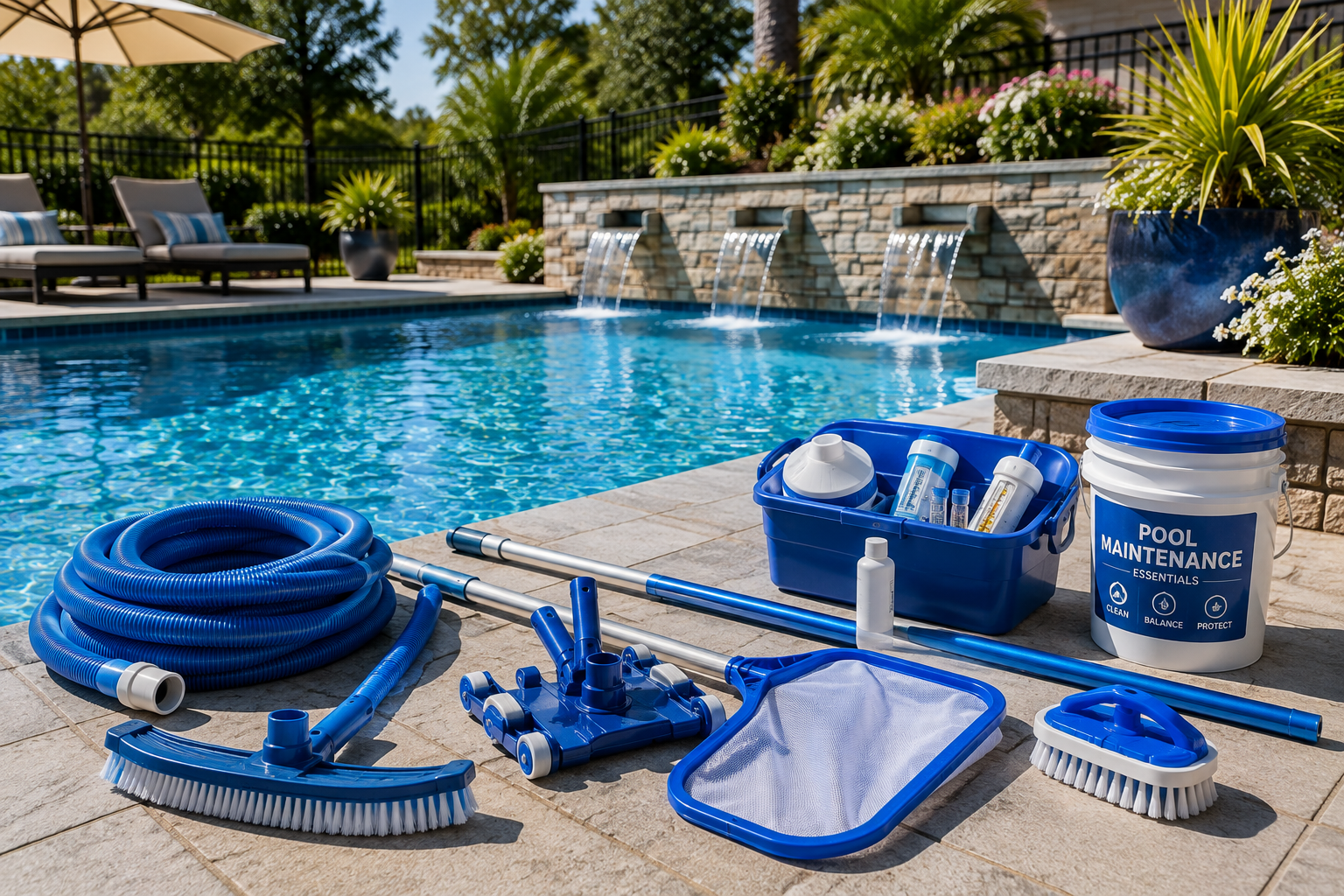
What to focus on
Use these priorities to organize the task, then confirm product-specific procedures in the equipment manuals.
Before removing the cover
Pump off standing water, remove debris and inspect the cover so dirty water does not spill into the pool.
Before starting the pump
Remove winter plugs, reinstall drain plugs, open valves, fill the pump basket and confirm the filter is correctly assembled.
During startup
Watch for leaks, normal prime, return flow and filter pressure. Stop immediately if the pump runs dry or a pressure vessel appears unsafe.
At-a-glance checklist
| Area | Main decision or task | What to verify |
|---|---|---|
| 1. Cover and deck | Clean, remove and dry the cover | Prevent debris and stored water entering the pool |
| 2. Pool and fittings | Restore water level; reinstall baskets and fittings | Check walls, liner, tile and visible plumbing |
| 3. Equipment pad | Reassemble pump, filter, heater and sanitation | Use each manufacturer’s startup steps |
| 4. Circulation | Prime pump and inspect operation | Check leaks, flow and pressure |
| 5. Water care | Test, balance and sanitize | Dose from test results and product labels |
Pool Opening Checklist: practical steps
How to use this guide
Before removing the cover
Pump off standing water, remove debris and inspect the cover so dirty water does not spill into the pool.
Before starting the pump
Remove winter plugs, reinstall drain plugs, open valves, fill the pump basket and confirm the filter is correctly assembled.
During startup
Watch for leaks, normal prime, return flow and filter pressure. Stop immediately if the pump runs dry or a pressure vessel appears unsafe.
Before swimming
Confirm clear water, adequate circulation and disinfectant and pH within applicable guidance.
Common problems to prevent
Frequently asked questions
When should I open my pool?
Open timing depends on climate, water temperature, debris and local freezing risk. Opening before warm water supports heavy algae growth can make cleanup easier, but avoid exposing plumbing to another freeze.
Can I start the pump immediately after removing the cover?
Only after the pool is filled to the proper level, winter plugs are removed, drain plugs and fittings are reinstalled, valves are positioned correctly and the pump is primed according to its manual.
What water tests are important at opening?
Test disinfectant, pH, total alkalinity, calcium hardness and cyanuric acid when applicable. Salt pools also need verified salinity before relying on the controller display.
Should I shock the pool when opening?
Use test results, water condition and the sanitizer product label to decide. Do not add a fixed dose blindly, and keep swimmers out until the product’s re-entry conditions are met.
Why will my pump not prime after opening?
Common causes include low water, closed valves, missing plugs, a loose lid, a dry or damaged lid O-ring, blocked suction or air leaks. Turn the pump off if it cannot establish prime.
When can I turn on the pool heater?
Wait until circulation is stable, the filter is operating normally, valves are correct and water chemistry is within the heater manufacturer’s limits. Follow the heater startup manual.
How should I store the pool cover?
Clean and dry it thoroughly, inspect for damage, fold or roll it as recommended and store it away from pests, sharp objects, chemicals and direct weather.
When is the pool safe to swim in after opening?
Swim only when water is clear enough to see the bottom, circulation is functioning and disinfectant and pH meet applicable guidance and product-label re-entry conditions.
Related pool owner guides
Practical next step
Restore circulation before attempting aggressive water treatment. A careful startup sequence protects the pump and filter, reveals winter damage early and makes chemistry corrections more predictable.