
Pool Equipment Size Guide
Size pool equipment as one connected hydraulic system—not as isolated products. Start with verified pool volume, then account for required flow, plumbing resistance, climate and the equipment manufacturer’s operating limits.
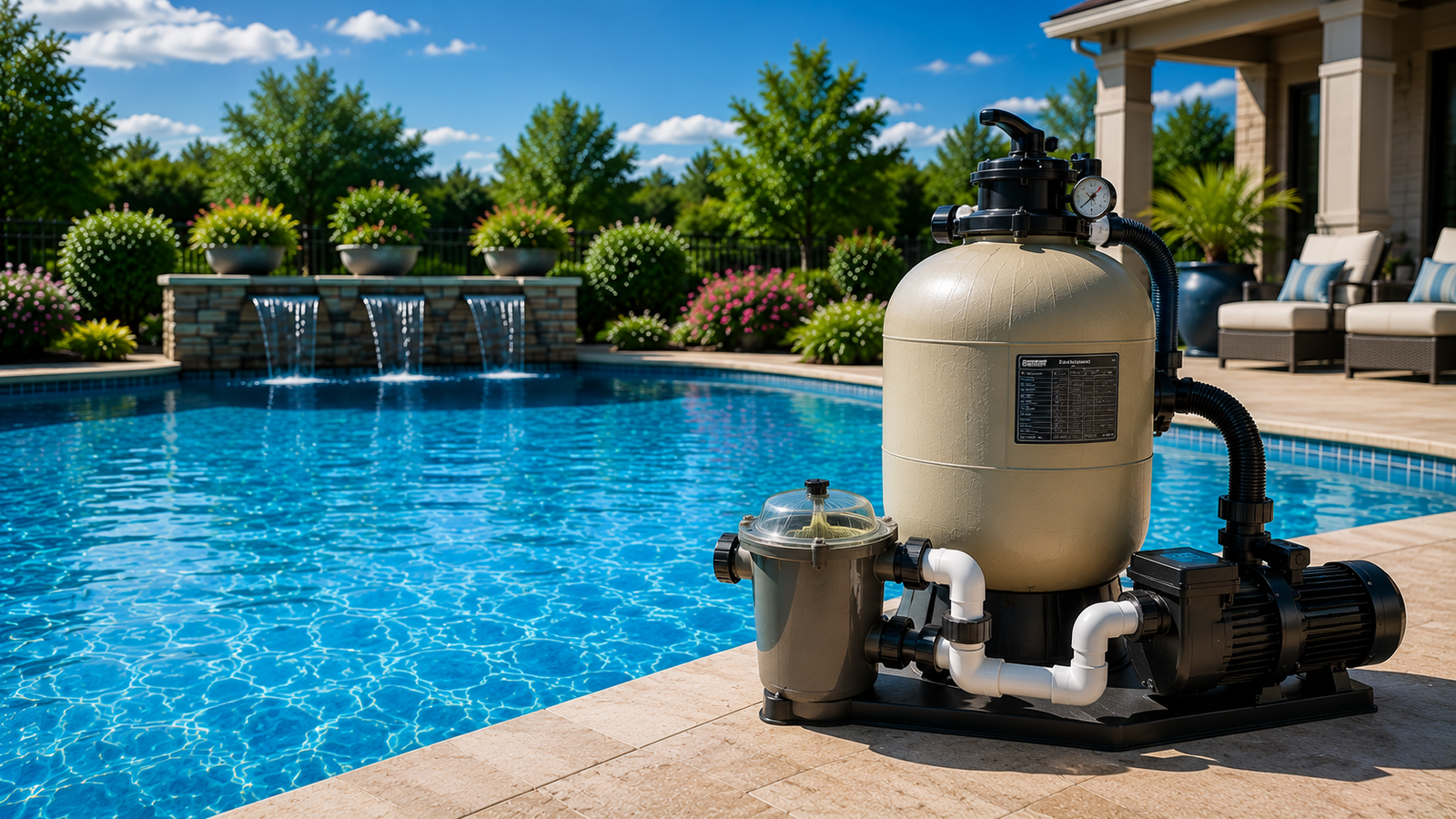
What to focus on
Use these priorities to organize the task, then confirm product-specific procedures in the equipment manuals.
Start with pool volume
Measure length, width and average depth carefully. Irregular pools may need to be divided into simple shapes before estimating gallons.
Set a realistic flow target
Turnover is a planning input, not the only sizing rule. Flow must also stay within the filter, heater, sanitizer and plumbing limits.
Account for total dynamic head
Pipe length, fittings, elevation and equipment resistance reduce actual pump flow. Use a pump curve rather than horsepower alone.
At-a-glance checklist
| Area | Main decision or task | What to verify |
|---|---|---|
| Pool pump | Required flow at calculated head | Pump curve, pipe size, feature demand |
| Pool filter | Design flow and debris load | Rated flow, filter area, cleaning interval |
| Pool heater | Pool volume and desired heat-up | Climate, temperature rise, cover use |
| Salt chlorine generator | Pool volume and chlorine demand | Manufacturer capacity, climate, bather load |
| Plumbing | Expected flow and velocity | Pipe diameter, run length, fittings |
Pool Equipment Size Guide: practical steps
How to use this guide
Start with pool volume
Measure length, width and average depth carefully. Irregular pools may need to be divided into simple shapes before estimating gallons.
Set a realistic flow target
Turnover is a planning input, not the only sizing rule. Flow must also stay within the filter, heater, sanitizer and plumbing limits.
Account for total dynamic head
Pipe length, fittings, elevation and equipment resistance reduce actual pump flow. Use a pump curve rather than horsepower alone.
Leave sensible capacity margin
A filter with additional surface area usually needs less frequent cleaning, but oversizing every component without checking compatibility can waste money.
Common problems to prevent
Frequently asked questions
What information do I need to size pool equipment?
At minimum, confirm pool volume, plumbing diameter, approximate pipe runs, elevation changes and the equipment already installed. For pumps, also estimate total dynamic head or have a pool professional measure system pressure and vacuum.
How do I calculate the flow needed for pool turnover?
Divide pool gallons by the desired turnover hours and then by 60 to estimate gallons per minute. Treat that as a planning value and verify it against local requirements and every component’s published flow limits.
Can a pool pump be too large?
Yes. Excess flow can raise noise, energy use and filter pressure, and it may exceed the limits of heaters, filters or plumbing. A variable-speed pump can help only when it is properly programmed for the system.
Is a larger pool filter better?
Additional filter area can extend the time between cleanings and reduce resistance, but the filter still needs to match the plumbing, pump and installation space. Follow the manufacturer’s sizing and flow guidance.
How is a pool heater sized?
Heater sizing considers pool volume, desired temperature increase, climate, wind, heat loss and how quickly you want the water heated. Covers often reduce the heating load substantially.
What size salt chlorine generator should I choose?
Use the manufacturer’s pool-volume rating as a starting point, then consider warm weather, sunlight and heavy use, which increase chlorine demand. The cell and controller must also match the pool’s salinity and plumbing configuration.
Should I replace plumbing when upgrading a pump?
Not always, but older or undersized plumbing can limit flow and increase head. A professional hydraulic review is useful before installing a higher-capacity pump or adding demanding water features.
Do local codes affect pool equipment sizing?
They can. Electrical, gas, bonding, plumbing, barrier and energy rules vary by location, so verify requirements with the relevant authority and qualified installers before purchasing equipment.
Related pool owner guides
Practical next step
Size the system from verified pool volume and hydraulic conditions, then check every component’s published limits. The best result is balanced flow, adequate filtration area and equipment capacity matched to how the pool is actually used.