
Pool Heating Time Calculator
Estimate ideal heat-up time from pool volume, temperature rise, delivered heater output and an allowance for heat loss.
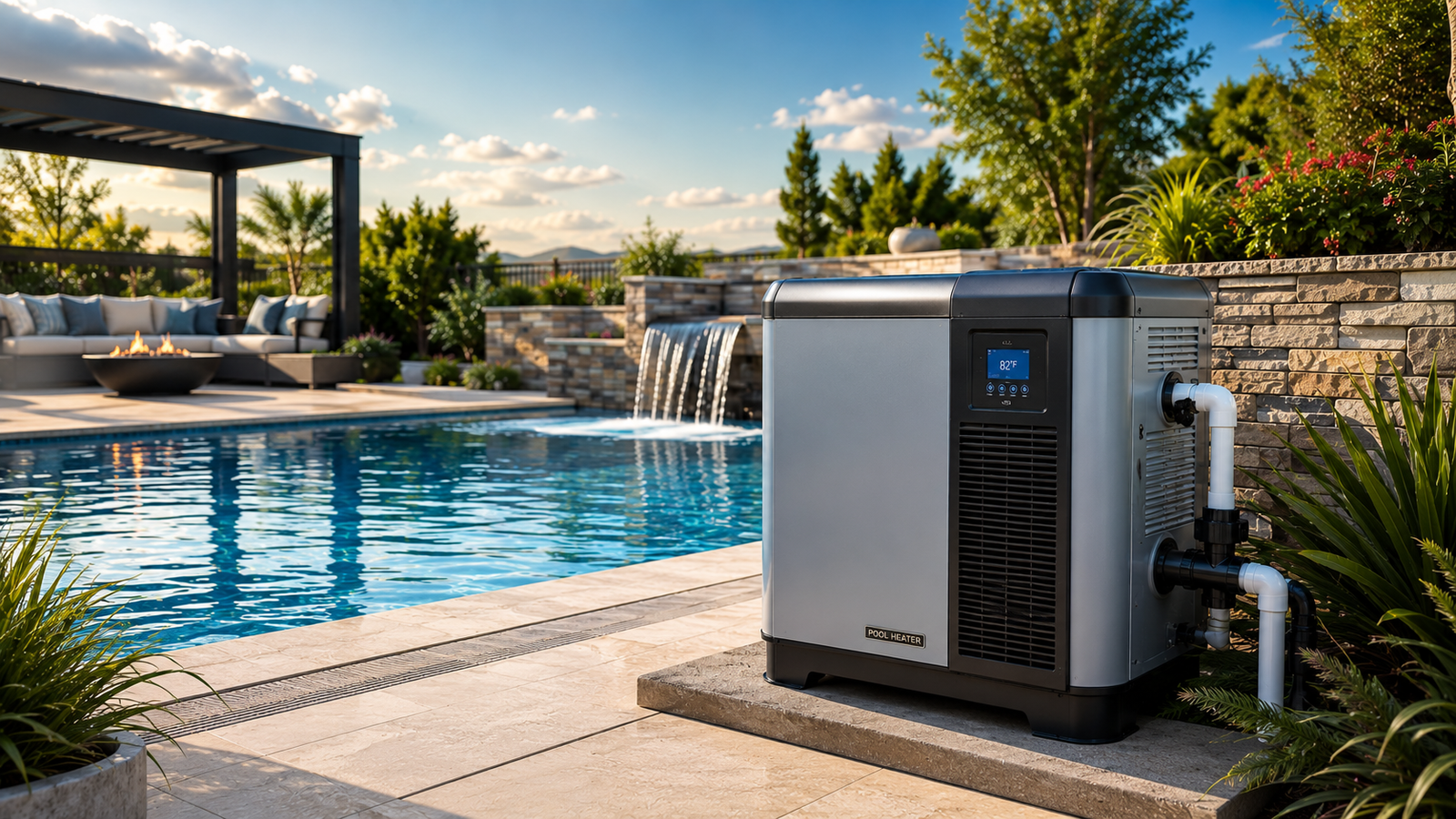
What this estimate can tell you
Use the calculator as a planning tool, then verify product labels, equipment manuals, measurements and local requirements before acting.
One gallon of water weighs about 8.34 lb; 1 BTU raises 1 lb of water by 1°F.
One gallon of water weighs about 8.34 lb; 1 BTU raises 1 lb of water by 1°F.
For gas heaters, do not confuse fuel input with usable output.
For gas heaters, do not confuse fuel input with usable output.
Evaporation is a major heat-loss path; a suitable cover can reduce loss.
Evaporation is a major heat-loss path; a suitable cover can reduce loss.
Pool Heating Time Calculator
Enter the requested values below. Results are estimates and should be checked against current test results, manufacturer instructions and actual system conditions.
Understanding heater output
Gas heaters may list both input and output, while heat pumps list heating capacity under defined air and water conditions. Use delivered BTU per hour for the calculation.
Why actual time varies
The simple heat equation assumes uniform water temperature. Wind, evaporation, cold air, rainfall, uncovered surface area, plumbing loss and heat-pump performance at current conditions all affect results.
Safe equipment operation
A heater must receive flow within its rated range and be installed with the required electrical, gas, venting and bonding provisions. Sizing does not replace professional installation.
Frequently asked questions
How is pool heating time estimated?
Multiply gallons by 8.34 and the desired temperature rise, then divide by delivered BTU per hour. An added heat-loss allowance gives a more realistic planning figure.
What BTU number should I enter?
Use the heater’s delivered output or heating capacity under the relevant conditions, not simply gas input or model-number marketing.
Why does a heat pump take longer in cold weather?
Heat pumps draw energy from outdoor air, so capacity and efficiency generally decline as air temperature drops.
How much does a pool cover help?
A cover can reduce evaporation and related heat loss. The actual benefit depends on cover type, fit, weather and how consistently it is used.
Can I size a heater only from pool gallons?
No. Climate, desired warm-up speed, surface area, wind, season and whether the pool is covered also matter.
Does circulation flow affect heating?
Yes. The heater must operate within its specified flow range, and adequate circulation helps distribute heat evenly.
Why is actual warm-up slower than the calculator?
Heat loss, lower delivered output, inaccurate volume, cold makeup water and poor circulation can all extend heating time.
Is faster heating always more efficient?
Not necessarily. Efficiency and operating cost depend on heater type, conditions, fuel price, heat loss and control strategy.
Related pool guides
Verify before making changes
Use the result as a starting point. Confirm pool volume, retest water when applicable, check every equipment limit, and follow the exact product label or manufacturer manual.