
How Pool Pumps Work
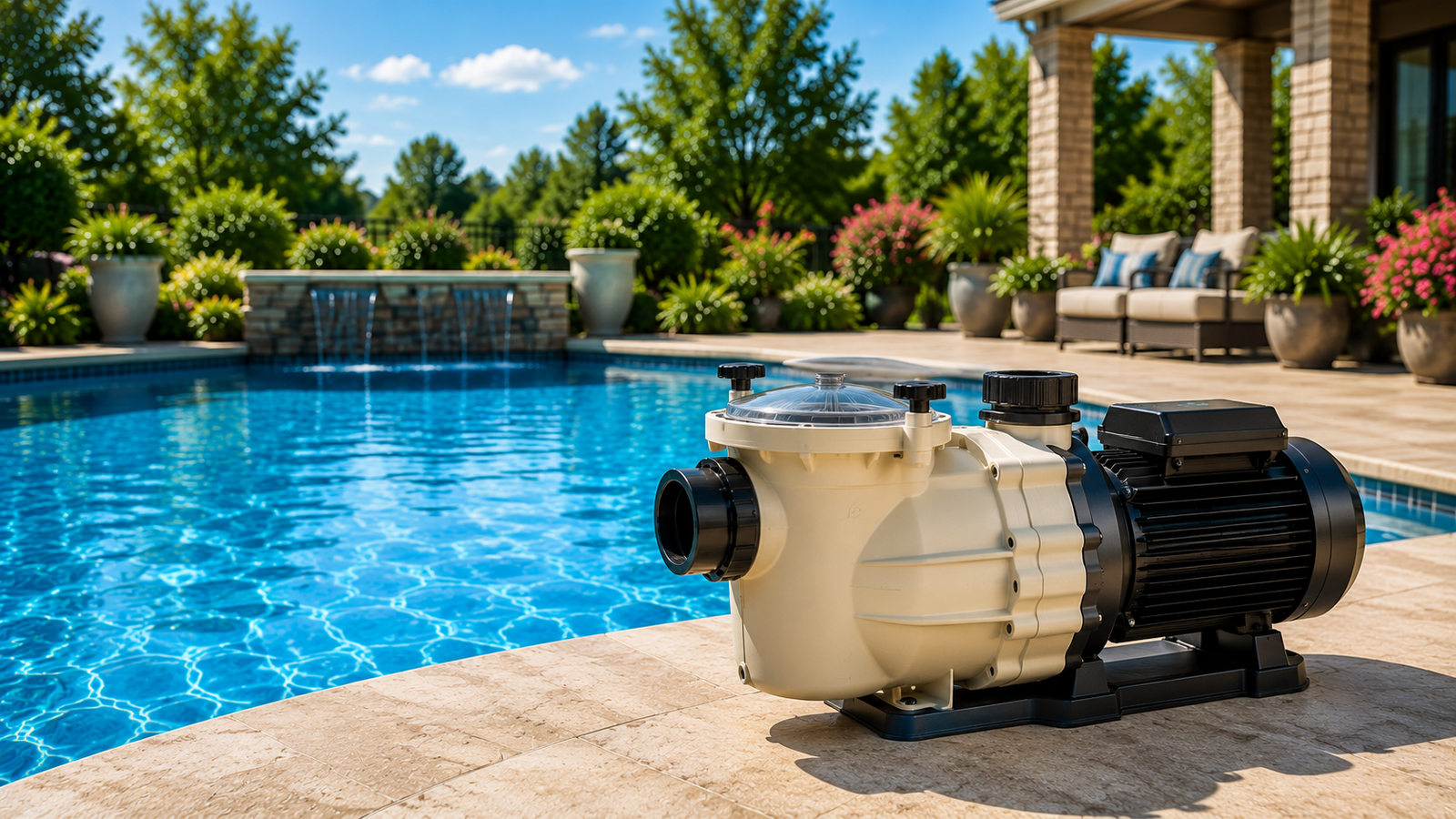
A pool pump creates the pressure difference that moves water from the pool through suction plumbing, the strainer basket, impeller, filter and treatment equipment, then back through the return lines.
What to focus on
Use these priorities to organize the task, then confirm product-specific procedures in the equipment manuals.
Suction side
Skimmers, drains or cleaner lines feed water toward the pump. Air leaks here can disrupt prime.
Pump and impeller
The motor turns an impeller that accelerates water and creates flow through the system.
Pressure side
Water leaves the pump under pressure and passes through the filter and optional treatment equipment.
At-a-glance checklist
| Area | Main decision or task | What to verify |
|---|---|---|
| Skimmer and drains | Collect surface and lower-water flow | Baskets stop large debris |
| Pump strainer | Protects the impeller | Requires an airtight lid and adequate water |
| Impeller and diffuser | Convert motor power into water movement | Flow depends on speed and system resistance |
| Filter and treatment | Remove particles and add heat or sanitation | Each component adds resistance |
| Return fittings | Send water back to the pool | Direction affects circulation patterns |
How Pool Pumps Work: practical steps
How to use this guide
Suction side
Skimmers, drains or cleaner lines feed water toward the pump. Air leaks here can disrupt prime.
Pump and impeller
The motor turns an impeller that accelerates water and creates flow through the system.
Pressure side
Water leaves the pump under pressure and passes through the filter and optional treatment equipment.
Return flow
Cleaned and treated water returns through wall fittings, helping mix chemicals and move debris toward skimmers.
Common problems to prevent
Frequently asked questions
Does a pool pump push or pull water?
It does both across different sides of the system. The impeller creates lower pressure at the inlet, drawing water in, and higher pressure at the outlet, pushing water through the filter and returns.
What does the pool pump impeller do?
The spinning impeller accelerates water from its center toward its outer edge. The pump housing then converts that movement into the pressure and flow needed for circulation.
Why does a pool pump need to be primed?
Most above-water pool pumps need the strainer housing and suction line filled enough to establish continuous water flow. Air leaks, low water or blocked suction can prevent prime.
What causes air bubbles in the pump basket?
Common causes include low pool water, a skimmer vortex, loose pump lid, damaged lid O-ring, leaking drain plugs or suction-side plumbing leaks.
How does the filter affect pump flow?
The filter adds resistance. As debris accumulates, pressure may rise and flow may fall, which is why clean baseline pressure and manufacturer cleaning guidance are important.
Why do variable-speed pumps save energy?
A centrifugal pump generally uses much less power at lower speed. Savings depend on the hydraulic system, run time and required flow, so schedules should be optimized rather than simply extended without measurement.
Can the pump run while the heater is off?
Yes; routine circulation commonly occurs without heating. When the heater operates, the pump must provide the flow specified by the heater manufacturer, and some systems require a post-run cooldown.
How long should a pool pump run each day?
There is no single correct duration. Use water quality, sanitation needs, debris, equipment flow requirements and measured circulation performance to set schedules, then adjust seasonally.
Related pool owner guides
Practical next step
Think of the pump as the heart of a hydraulic loop: it draws water through the suction side, adds energy with the impeller and pushes water through filtration and treatment before the returns complete the circuit.